

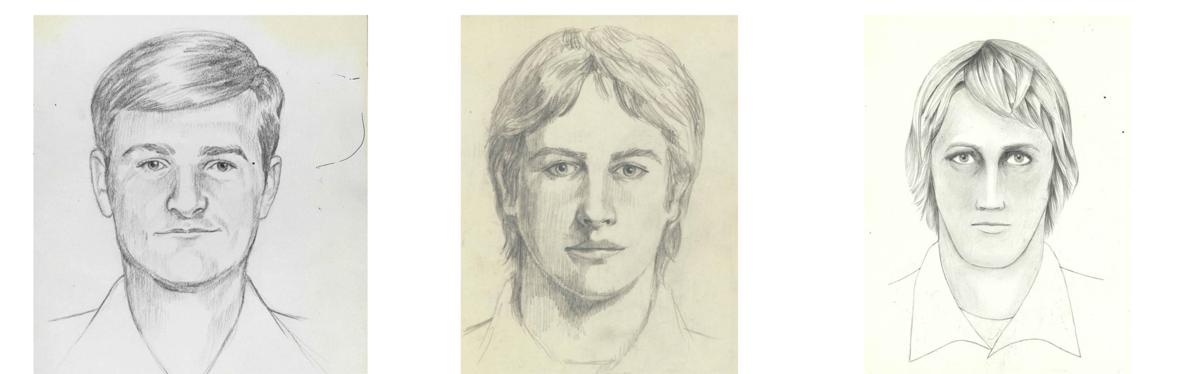
A DNA match led to the arrest of a 72-year-old former police officer in one of the most baffling and sadistic crime sprees of the 1970s and '80s — a string of at least 12 slayings and 45 rapes in California by an attacker dubbed the Golden State Killer, police said Wednesday.

Armed with a gun, the masked attacker would break into homes while single women or couples were sleeping. He sometimes tied up the man and piled dishes on his back, then raped the woman while threatening to kill them both if the dishes tumbled. He often took souvenirs, notably coins and jewelry, from his victims, who ranged in age from 13 to 41.
The match led to Joseph James DeAngelo, who was fired in 1979 from the police department in Auburn, northeast of Sacramento. Despite an outpouring of thousands of tips over the years, his name had not been on authorities' radar before last week, District Attorney Anne Marie Schubert said.
People are also reading…
Q: What crimes are linked to the Golden State Killer?
A: The killer is believed to be responsible for 12 slayings, 45 rapes and more than 120 residential burglaries between 1976 and 1986.
The crimes began in Sacramento then moved south through Oakland, and Santa Barbara and Orange counties.
The Golden State Killer was also known as the Original Night Stalker -- so named to distinguish him from Richard Ramirez, the serial killer dubbed the Night Stalker who terrorized the Los Angeles area in the mid-1980s. The killer also was called the East Area Rapist tied to dozens of sexual assaults in Sacramento County and the San Francisco Bay Area.
At the time of the crimes he was described as being about 5-foot-9 with blond or auburn hair. He appeared to have military or law enforcement training.
DeAngelo was arrested on suspicion of committing four killings in Sacramento and Ventura counties, authorities said.
"Very possibly he was committing the crimes when he was employed as a peace officer," Sacramento County Sheriff Scott Jones said.
The suspect was fired from the Auburn department in 1979 after he was arrested for stealing a can of dog repellant and a hammer from a drug store, according to Auburn Journal articles from the time.
Q: What do we know about the man now arrested?
A: The arrested suspect DeAngelo, who was also a police officer in Exeter, in Southern California, from 1973 to 1976, was taken into custody without incident as officers surprised him at his Sacramento-area home, Jones said.
"This was a truly a convergence of emerging technology and dogged determination by detectives," Jones said.
Neighbors knew DeAngelo as a man who whose angry, curse-filled outbursts would carry through the neighborhood if he couldn't find his keys or something else set him off.
"He liked the F word a lot," neighbor Natalia Bedes-Correnti said.
He never yelled at people, she said, just lashed out when he'd get frustrated.
"He'd be out on his driveway yelling and screaming, looking for his keys," she said. "I could hear him from inside my house yelling and screaming. He was very loud."
But he hadn't had an outburst in several years, she said, and she assumed he was mellowing in old age or receiving professional help.
Q: Who were the victims?
A: By 1978, the man had attacked victims in Oakland, Danville and Walnut Creek. The following year, he killed two in Goleta. Authorities linked him to the slayings of Cheri Domingo, 35, and Gregory Sanchez, 27, using DNA in 2011.
Sanchez was shot and bludgeoned. Domingo died of massive head injuries. Sanchez and Domingo lived in an upscale neighborhood and were killed in bed. Domingo's hands had been tied -- as had the hands of victims at other scenes.
Then there were the 1980 murders. In Ventura, Lyman Smith, an attorney days away from being appointed a judge, and his wife, Charlene, a court clerk, were bludgeoned to death with a fireplace log in their home.
Later that year, Keith Harrington, a medical student at the University of California, Irvine, and his wife, Patrice, a pediatric nurse, were beaten to death with a blunt instrument in their home in Laguna Niguel.
Finally, in 1986, 18-year-old Jannelle Cruz was fatally bludgeoned in her family's Irvine home. That was the last crime linked to him, officials said.
Jane Carson-Sandler was sexually assaulted in 1976 in her home in Citrus Heights by a man believed to be the East Area Rapist. She said she received an email Wednesday from a retired detective who worked on the case telling her they have identified the rapist and he's in custody.
"I have just been overjoyed, ecstatic. It's an emotional roller-coaster right now," Carson-Sandler, who now lives near Hilton Head, South Carolina, told The Associated Press in a telephone interview. "I feel like I'm in the middle of a dream and I'm going to wake up and it's not going to be true. It's just so nice to have closure and to know he's in jail."
Q: Why has the killer been so elusive?
A: Some detectives have spent years trying to crack the case.
Because the attacks spanned the state, it took a while for investigators to link the cases.
In 2011, DNA tests matched evidence linking some Southern California and Northern California cases to the same assailant.
In 2016, the FBI announced a reward in the case and created a web page dedicated to it where the public can view police sketches of the attacker and hear from witnesses and victims' families.
Orange County Detective Larry Pool in 2011 described the years he spent trying to solve the case, calling it his life's mission.
He kept a recording of the killer's voice -- from a phone message to one of his victims -- in the top drawer of his desk.
"He is cunning," Pool said at the time. "He has a degree of tactical soundness to the way he operates. He is able to adjust tactically to improve his effectiveness as a killer."
Pool once thought the suspect could be in prison. But that theory came to seem less plausible as the state's DNA database grew.
As he hunted for the Original Night Stalker in the early 2000s, Pool had a buried man exhumed. The DNA didn't match.
Q: How did the case gain national attention?
A: Writer Michelle McNamara became obsessed with the case and spent year researching it. She wrote an article for Los Angeles magazine was turning it into a book when she died in 2016. Her husband, comedian and actor Patton Oswalt, helped complete the book, which is now a bestseller.
The killer, McNamara wrote: "was the bogeyman in the bedroom, the stranger who knew too much _ layouts of homes, number of children, work schedules. By the mid-'80s, he turned south -- to Ventura, Irvine, Santa Barbara -- and to killing."
McNamara didn't begin learning about the Golden State Killer until 2007, three decades after his last known killing, but she was already obsessed, indelibly marked by an unsolved homicide in her neighborhood when she was an adolescent. "Violent men unknown to me have occupied my mind all my adult life," McNamara writes. "The part of the brain reserved for sports statistics or dessert recipes or Shakespeare quotes is, for me, a gallery of harrowing aftermaths: a boy's BMX bike, its wheels still spinning, abandoned in a ditch along a country road; a tuft of microscopic green fibers collected from the small of a dead girl's back." Before long, she writes, "I was a hoarder of ominous and puzzling details. I developed a Pavlovian response to the word 'mystery.'"

The FBI has long maintained this webpage dedicated to the case of the Golden State killer.
"There's a scream permanently lodged in my throat now," McNamara writes. Years of hunting the killer, talking to victims, thinking about the crimes, had an effect. She recounts a series of thoughtful anniversary gifts from Oswalt, all GSK-themed, and the year she forgot to even give him a card. Like any addiction, there's thrill and danger, intertwined. "What I always think about," McNamara writes, "are experiments that show that animals in captivity would rather have to search for their food than have it given to them. Seeking is the lever that tips our dopamine gush. What I don't mention is the uneasy realization I've had about how much our frenetic searching mirrors the compulsive behavior -- the trampled flowerbeds, scratch marks on window screens, crank calls -- of the one we seek."
Kevin Tapia, now 36, said when he was a teenager, DeAngelo falsely accused him of throwing things over their shared fence, prompting a heated exchange between DeAngelo and Tapia's father. He said DeAngelo could often be heard cursing in frustration in his backyard.
"No one thinks they live next door to a serial killer," Tapia said. "But at the same time I'm just like, he was a weird guy. He kept to himself. When you start to think about it you're like, I could see him doing something like that, but I would never suspect it."


