
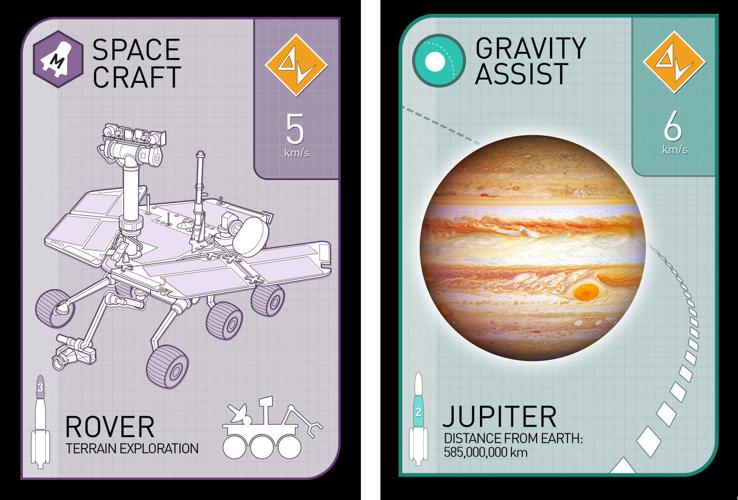
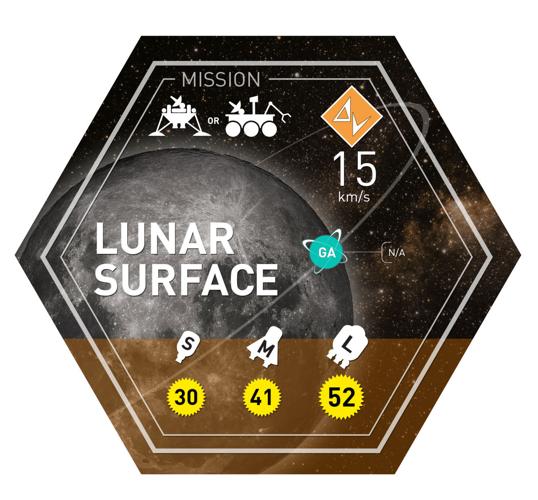
The team building a spacecraft that will sample an asteroid has created a game that will allow players to experience the planning, logistics, challenges and rewards of vying for a NASA space mission.
Finding money to create the game was a challenge in itself.
Dante Lauretta, the principal investigator of NASA’s OSIRIS-REx mission, raised over $20,000 with his company through Kickstarter to create the game, called Xtronaut.
He hopes the game will both educate its users about space science and make some money for additional educational projects connected to the space mission.
In 2013, NASA cut over $1 million dollars from the OSIRIS-REx mission whose goal is to travel to an asteroid called Bennu, gather a sample, and bring it back to Earth. It is scheduled to launch in September 2016.
People are also reading…
The money that was cut was designated for education and public outreach. Lauretta and a colleague founded Xtronaut Enterprises to continue to develop educational materials linked to the mission. The goal is to promote the science behind space exploration.
“We want people to understand what is really happening in outer space these days,” Lauretta said.
The company’s first product, Xtronaut, is a board game in which players race to complete their assigned missions before their opponents can lift off. Lauretta said the game takes about 45 minutes to play and is suitable for kids and adults.
The gameplay simulates the experience of teams proposing a mission to NASA.
“There is intense competition between the different mission teams,” said Lauretta, “Especially in the early stages when you are trying to get selected as the NASA mission.”
Players draw cards to collect parts for their rocket and must ensure that they are building a spacecraft that is able to reach its target.
Lauretta originally created the cards to explain how each component of a rocket is used during a launch. As a board game enthusiast, he realized that he might be able to create a game that teaches players about rocket science.
Rocket parts are not the only cards in the deck. Players can also draw action cards that allow them to sabotage or collaborate with other players.
“Every one of those cards is based on a real experience I had on OSIRIS-Rex,” Lauretta said.
Players can use the financial-audit card to force an opponent to discard a hand or may draw a spare-parts card which allows them to draw more cards.
The government-shutdown card, which causes players to lose a turn, holds a lot of significance to Lauretta and the OSIRIS-REx team.
“We were shut down in 2013 and we lost several weeks of development,” Lauretta said. The shutdown threatened the mission’s goal of collecting a sample of a distant asteroid because they need to launch by deadline.
“We were able to buy back the lost time, but it cost us almost $2 million to do so,” Lauretta said.
After creating the prototype board game, Lauretta played it with his family and with the OSIRIS-REx crew during its regular board-game night.
The prototype became more polished after an agreement with the University of Arizona through Tech Launch Arizona allowed the company to use assets like graphics and illustrations from the OSIRIS-REx mission in the game.
Another agreement, with the United Launch Alliance, allowed the game to include depictions of the actual rockets used during NASA missions.
“The game offers a real simulation, not just in design terms, but in project management challenges,” said Matt Smith, the vice president of engineering and STEM education leader at the United Launch Alliance.
United Launch Alliance also helped refine Xtronuat. The company gave copies to a Colorado high school to test the game.
Lauretta has more ideas for promoting space exploration through his company.
“Xtronaut (Enterprises) has much bigger goals than selling this game but this seemed to be the way we could launch the company and raise some seed capital,” Lauretta said.
The company has partnered with Cox Communications and Planetary Resources to bring space-related educational kits to classrooms and organizations like the Boys & Girls Clubs. Lauretta also has another space-exploration board game in the works that is aimed at more serious board game players.
“STEM education and STEM literacy is a national problem and it’s wonderful to have people like Dante to work with, where the mission will have this level of excitement and visibility,” Smith said.
Although the campaign has reached its $15,000 funding goal, you can still contribute to the Xtronaut Kickstater campaign and preorder the game.
The highest level of support — $1,000 — includes an invite to the launch party in Cocoa Beach, Florida, less than a year from now.
Patrick O’Connor is a NASA Space Grant undergraduate research scholar.