


“The Martian” rocketed into theaters Friday, and University of Arizona scientists see a lot of parallels with the movie’s plot and their scientific research.
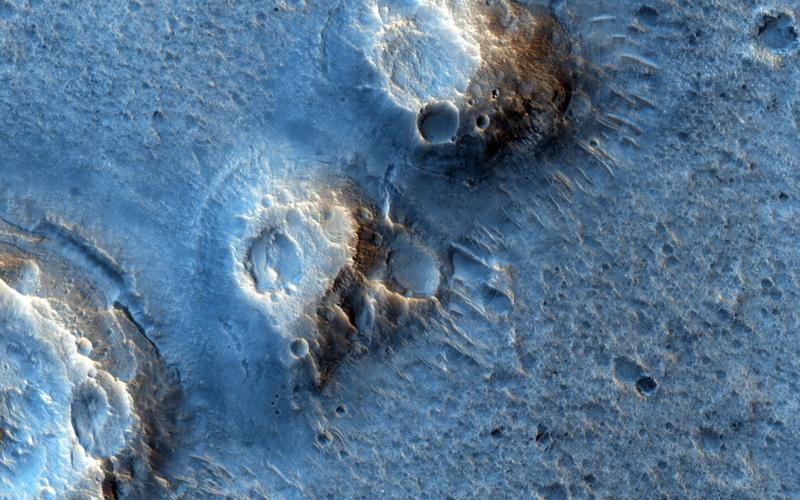
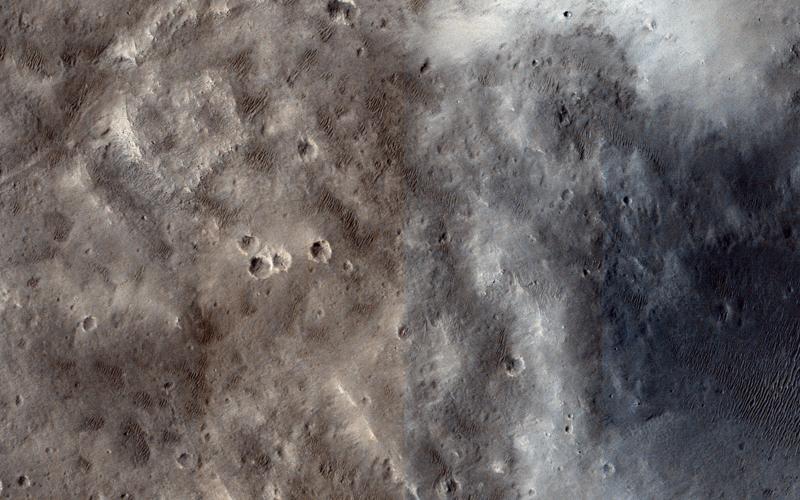
The UA’s High Resolution Imaging Science Experiment camera team provided images of the Martian surface to Andy Weir, author of the book on which the movie is based. Its biosystems engineers, meanwhile, are devising ways to grow food in contained space on alien worlds — the crisis faced by the movie’s protagonist.
In the book and movie, fictional astronaut Mark Watney, played by Matt Damon, is injured during a Martian dust storm. His crew assumes he is dead and leaves him behind with no way to contact Earth.
Eventually, NASA does take notice of him thanks to a large array of satellites orbiting Mars controlled by one lone scientist. That may have been a stretch too far into science fiction.
People are also reading…
“You could more realistically have six satellites and image them a few times a day and that would be challenging,” said Matt Chojnacki, an associate staff scientist at the HiRISE.
It takes a team of five scientists working full time to create the mission plan for the one HiRISE camera on the Mars Reconnaissance Orbiter, he said.
“It’s a long, methodical process, and it would take a small army at Jet Propulsion Laboratory to coordinate that many images,” Chojnacki said.
HiRISE scientists at the UA’s Lunar and Planetary Lab also looked at the surface of Mars described in the book and found that the author’s assumptions about the landscape and geology were not always accurate, Chojnacki said.
What was described in the book as flat and barren was “in reality very rugged and rough,” he said.
After that discrepancy was described on the HiRISE website, Weir reached out to HiRISE principal investigator Alfred McEwen and asked if it would be possible to image some of the landmarks from his novel. Using coordinates provided by the author, the team was able to take images of the fictional landing sites and the route Watney took on a Martian road trip.
Those images and some captions, written jointly by Weir and McEwen, are posted on the HiRISE website.
The HiRISE camera can resolve objects smaller than a meter and show what the landscape would look like if you were standing on the surface.
Chojnacki and his colleagues enjoyed the book and praised its overall realism. Chojnacki particularly enjoyed the author’s description of the long rover rides the main character was taking.
“It would be monotonous and boring as hell,” Chojnacki said.
Space spuds
One of the largest challenges Watney experiences in the story is the lack of food on Mars. His team’s original mission was to be on the Martian surface for one month, and Watney soon realizes he would starve before NASA could rescue him. Being a botanist, he transforms his living space into a potato farm.
“(The potatoes) would have never grown very much with that low light,” said Gene Giacomelli, co-principal investigator of the UA’s Mars-Lunar Greenhouse Project and director of the Controlled Environment Agriculture Center.
Giacomelli and his co-investigator, Roberto Furfaro, director of the UA Space Systems Engineering Lab, are trying to create self-sustained modules that can provide for astronauts on distant worlds.
Giacomelli said the module is “an automatic life-support system. You put plants in it, turn on the lights, and it gives you oxygen, fresh water and food.”
The greenhouse project is entirely hydroponic, so the researchers do not have to struggle with the complexities of soil, as Watney did in “The Martian.”
Giacomelli and Furfaro have also created solar concentrators that concentrate light for plants in the wavelengths in which they grow best.
“The probability of this man surviving is very small,” Giacomelli said, “(but) there is the potential that he could succeed, and that’s the beauty of it and the intrigue to me as a scientist.”
The ability to grow food on Mars makes longer missions more feasible. Greenhouses could be sent in advance of human missions and activated by robots so there is food waiting when the astronauts arrive, Furfaro said.
“We want to minimize the astronaut’s time in (the greenhouse),” said Giacomelli. “They are supposed to be doing science and engineering, not gardening.”
The team has already shown that they can grow sweet potatoes, basil, strawberries, lettuce, tomatoes, cucumbers, beans and cowpeas in a closed system.
One technical challenge that Furfaro is trying to solve is ensuring the greenhouse always has the materials it needs. If you need fertilizer for your plants on Earth, you can run to the store. On Mars, you have to wait for your composting to be ready so you can reuse inedible plant components and waste as compost.
Furfaro also hopes to optimize the greenhouses and crops so they grow as efficiently as possible. He plans to accomplish this by more experimentation.
“It’s very hard to write equations for this,” Furfaro said.
Furfarro and Giacomelli said the efficient techniques they used in the project are translatable to greenhouses on Earth.
When the project was tested at the South Pole, the fresh food raised morale at the research station, Giacomelli said. He said the technology can be customized for the problem it is solving.
“How this will look on Mars is to be determined,” Furfaro said. The team needs to consider the number of astronauts, materials and mission duration before finalizing a design.
One thing is for sure: It won’t look anything like Watney’s improvised attempt at agriculture.
Patrick O’Connor is a NASA Space Grant undergraduate research scholar.


