

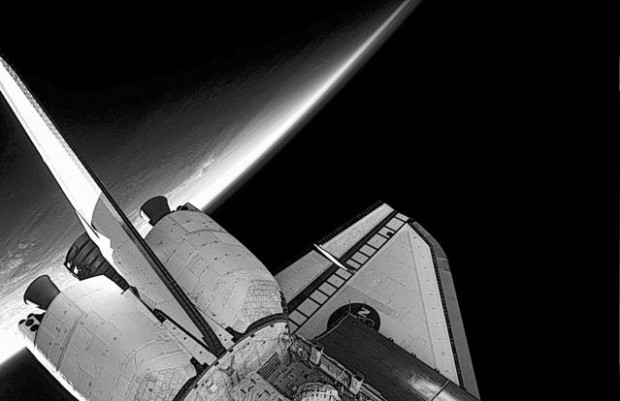
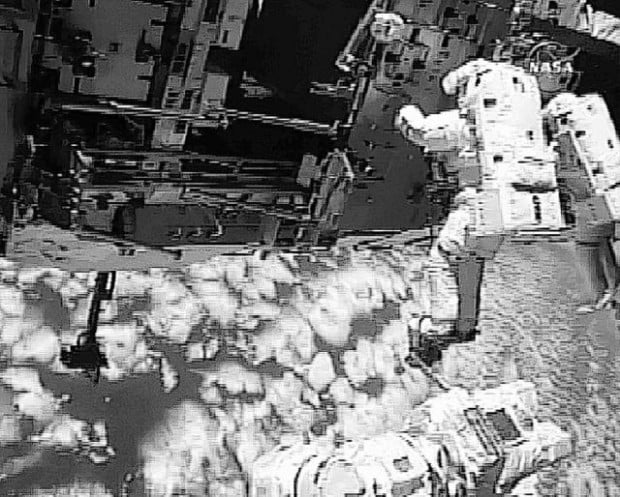
CAPE CANAVERAL, Fla. — An astronaut's ripped glove forced an early end to a spacewalk Wednesday as NASA put off a decision on whether to order risky spacewalk repairs for a deep gouge on shuttle Endeavour's belly.
After nearly a week of agonizing over the gouge, NASA indicated it was close to wrapping up tests and would decide today whether repairs were needed.
Endeavour's commander, Scott Kelly, asked Mission Control which way managers were leaning. The reply: "Unfortunately, we have no idea which way the wind is blowing at the moment."
One of the astronauts who would attempt those repairs, Rick Mastracchio, cut his latest spacewalk short after he noticed a hole in his left glove.
The long rip in the thumb penetrated only the two outer layers of the five-layer glove, and he was never in any danger, Mission Control said. Nevertheless, he was ordered back inside early as a precaution, and his spacewalking partner quickly finished what he was doing and followed him in.
People are also reading…
The unprecedented patching job on Endeavour, if approved, would be performed on the next spacewalk, now set for Saturday, a day later than originally planned to give engineers more time to analyze the situation. That could keep Endeavour and its crew of seven, including teacher-astronaut Barbara Morgan, at the space station at least an extra day.
Preliminary results indicated no need for fixing the gouge, but mission managers were withholding judgment until the completion of heat-blasting tests on the ground.
The 3 1/2-inch-long, 2-inch-wide gouge — the result of a debris strike at liftoff — is in two of the thousands of black tiles that cover Endeavour's belly and guard against the 2,000-plus-degree temperatures of atmospheric re-entry. Part of the gouge, a narrow one-inch strip, cuts all the way through the tiles, exposing the thin felt fabric that serves as the final thermal barrier to the ship's aluminum frame.
The concern is that if too much heat enters the crevice, the underlying aluminum structure might be damaged enough to warrant lengthy post-flight repairs. That, in turn, could lead to future launch delays and disrupt space station construction.


