

Meeting tomorrow’s energy challenges requires imaginative approaches and new techniques for producing, using, storing and saving energy. By 2025, information technology alone will consume 15 percent of the world’s electricity production. It is urgent that we use that power more cleverly.
My research focuses on two ways to make computers more energy-efficient.
First, when electronic circuits are miniaturized, they leak more electric current. This forces computers to constantly check for computational errors, which uses an ever-growing amount of power.
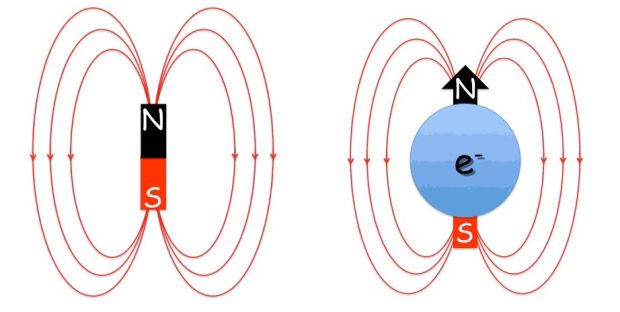
Could we save part of that power? Yes! Computer architectures based on “spintronics” — using the electron’s spin for information processing — are much less prone to errors. My colleagues and I have shown how to measure spins in electronic microcircuits, thereby pointing the way to more energy-efficient computers.
People are also reading…
Second, the miniaturization of computer circuits generates more and more heat. Laptops have become heat generators — and that excess heat reduces computing performance. We want to evacuate that heat and convert it into electrical power — an approach called “thermoelectricity.”
We have proposed new ways to operate standard microcircuits that remove heat at the end of a calculation and then convert that heat into electricity by using a secondary electronic circuit. Both cooling the computer circuits and harvesting the heat render the circuits more efficient.
By combining spintronics and thermoelectricity, we hope to build faster, more energy-efficient computers.


