

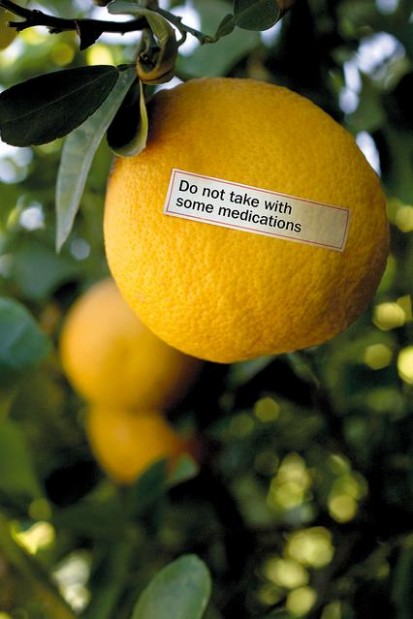
Like so many Tucsonans, John Duncan had a grapefruit tree in his back yard and grew up eating the fruit, or drinking its juice, just about every day.
With one of the Earth's most healthful foods always there for the picking, Duncan never had an inkling that this habit might one day pose a grave threat to his well-being.
But it did. That daily grapefruit has been blamed for the eventual ruining of the healthy kidney given to him for transplant by his sister when his own kidneys failed.
Along with many millions of Americans taking potent prescription medicines, Duncan, 39, simply did not know that grapefruit and grapefruit juice — long touted as being a great source of vitamin C, good for the heart and helpful in weight control — can dramatically change the effectiveness of many drugs.
In Duncan's case, the drug was cyclosporine — the vital anti-rejection drug he had to take every morning to keep his body from kicking out the donor kidney.
People are also reading…
But the "grapefruit effect" goes way beyond transplant drugs. All of the many millions of aging baby boomers taking drugs to control cholesterol or high blood pressure could be harmed by that seemingly innocent glass of grapefruit juice at breakfast.
So, too, are those taking medications for anxiety, insomnia or depression, as well as for pain control, organ transplants and HIV treatment. Even Viagra, the widely used impotence drug, is affected.
More than 30 commonly prescribed drugs now carry a warning against ingesting grapefruit in any form. Although life-threatening effects are rare, and the reaction varies widely with every individual, the danger remains real — and too often unknown — scientists, doctors and pharmacists warn.
"The effect in some of these drugs is quite profound," said Jude McNally, managing director of the Arizona Poison Control and Drug Information Center. "And there are a lot of medicines that have not been tested that may be affected that we don't yet know about.
"You know a lot of prescriptions carry warnings against drinking alcohol, yet people do it all the time," McNally continued. "But grapefruit is different. People often call here, wondering if the grapefruit warning is real. It is. This is not one of the take-it-lightly warnings."
McNally himself stopped drinking grapefruit juice completely once he started taking Zocor, a cholesterol-lowering drug known to be affected by the fruit.
Zocor, along with Lipitor and Mevacor, are among the hugely popular statin drugs that can zoom to high levels in the blood if taken with a glass of grapefruit juice or a few grapefruit wedges, studies have shown.
In some sensitive patients, this sudden and unexpected boost can trigger a painful muscle disorder and possible effects on the heart and kidneys.
What grapefruit does — unlike any other citrus fruit — is inhibit an enzyme in the small intestine that slows down the metabolism of certain drugs. With that enzyme turned off, unexpectedly high levels of these drugs will flood into the bloodstream.
Some drugs, like some patients, react more strongly than others to the grapefruit effect. The levels of the statin drug Mevacor, for example, can jump twelvefold if taken around the same time as a glass of grapefruit juice, while Lipitor gets a much lower spike.
Fortunately, the cholesterol-lowering drug Pravachol is not at all affected by grapefruit, and doctors can prescribe it instead for patients who refuse to give up their daily enjoyment of the citrus.
"Oh boy, do they ever resist it — they beg you. So many seem almost addicted to the stuff," said Dr. Gordon Ewy, director of the University of Arizona's Sarver Heart Center. As a cardiologist, Ewy constantly warns patients about the potentially toxic effects of grapefruit combined with many of the drugs he prescribes — including some blood pressure and anti-arrhythmia drugs, as well as the statins.
"I think it's a bigger problem here than in other parts of the country," he said. "So many of us have grapefruit trees right out the back door."
Although most of these drugs carry printed warnings telling patients to avoid eating grapefruit entirely, Ewy says he allows half a grapefruit "once in a while."
"But daily? No. That's out. I certainly wouldn't do it," he said.
Although the most common effect of grapefruit is to intensify a drug's side effects, such as headaches and dizziness, sometimes the result can be life-threatening. Taken with some widely used blood pressure drugs known as calcium channel blockers, the citrus can lower pressure below safe levels and trigger tachycardia — a dangerously fast heartbeat.
One of the deadliest interactions occurred with Seldane, an allergy drug. That medicine was taken off the U.S. market after a 29-year-old man died just hours after taking Seldane with two glasses of grapefruit juice. The drug hit toxic levels in his blood, fatally destabilizing the rhythm of his heart.
Several years ago, as the mechanism of this effect was becoming better understood, the Mayo Clinic warned: "Interaction between grapefruit juice and certain drugs can be unpredictable and potentially dangerous. … (This) is particularly worrisome for the elderly, who are more likely to take medications."
Grapefruit's action on Viagra — an impotence drug that's so popular with older men — is slightly different. Although it does boost the drug's blood levels, this somehow tends to slow down the drug's intended result — quite the opposite of what its users want.
Although "the grapefruit effect" has been known to scientists for more than a decade, many people taking affected drugs today remain unaware of it.
"Too many people just don't see it as a big deal, the way they do, say, a peanut allergy, which they know can kill so quickly," said John Belobraydic, pharmacy manager at a Walgreens drugstore on Campbell Avenue.
When Duncan received his sister's kidney, in 1988, doctors didn't know his daily glass of grapefruit juice would boost the level of his rejection drug so high that it would damage that fragile kidney.
But they — and he — are well aware of it now. With a new donor kidney functioning perfectly, Duncan has sworn off his beloved grapefruit for good.
"You could say I've developed an aversion to it," he said. "But I do miss it."
● Medicines that interact with grapefruit juice, sorted by type of drug and the medication's generic name. (The brand name is in parentheses.)
High blood pressure
l felodipine (Plendil)
l nifedipine (Procardia, Adalat)
l nimodipine (Nimotop)
l nisoldipine (Sular)
l nicardipine (Cardene)
l isradipine (DynaCirc)
High cholesterol
l atorvastatin (Lipitor)
l lovastatin (Mevacor)
l simvastatin (Zocor)
Anxiety, insomnia, depression
l buspirone (BuSpar)
l diazepam (Valium)
l midazolam (Versed)
l triazolam (Halcion)
l zaleplon (Sonata)
l carbamazepine (Tegretol)
l clomipramine (Anafranil)
l trazodone (Desyrel)
Immunosuppression
l cyclosporine (Neoral, Sandimmune, SangCya)
l tacrolimus (Prograf)
l sirolimus (Rapamune)
Protease inhibitors (for HIV)
l saquinavir (Fortovase, Invirase)
l ritonavir (Norvir)
l nelfinavir (Viracept)
Impotence
l sildenafil (Viagra)
Anti-arrhythmia
l amiodarone (Cordarone, Pacerone)
Pain control
l methadone (Dolophine)


