
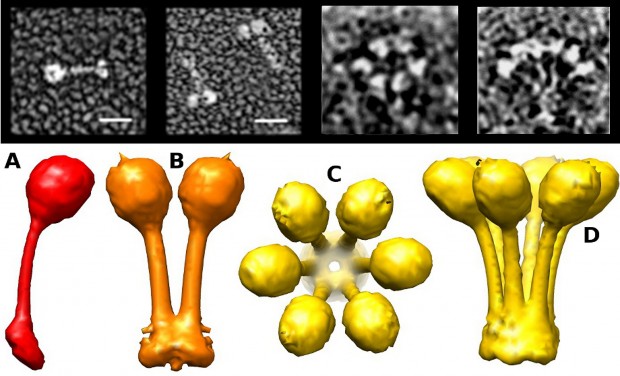

In addition to the changes we can see with our eyes when a person becomes overweight, changes also occur in the person's blood and cells. One of these changes is a decline in the blood levels of a hormone called adiponectin.
My colleagues and I study how adiponectin levels are linked to type 2 diabetes.
Adiponectin is released into the blood by fat cells. There are different versions of adiponectin. Each version is put together like a 3-dimensional puzzle from a collection of identical pieces called subunits. The largest version is made from 18 subunits. Having more of the 18-subunit adipo-nectin lowers a person's risk for type 2 diabetes.
We wanted to know how fat cells put subunits of adiponectin together to make the final complex. We discovered that the tendency of all molecules within a cell to react with oxygen, called the cell's ''redox state,'' is crucial for forming 18-subunit adiponectin.
People are also reading…
Once we figured this out, everything starts to make sense.
When a person's weight exceeds the healthy range, the redox state within the person's fat cells is altered negatively. When that occurs, the fat cells cannot make 18-subunit adiponectin. Less 18-subunit adiponectin in the blood is linked with an increased risk of type 2 diabetes.
Our next step is studying how increased body weight causes the redox state of cells to change.
About the scientist
Tsu-Shuen Tsao is an assistant professor of chemistry and biochemistry at the University of Arizona. His work focuses on the connection between obesity and diabetes. He studies the biochemistry of molecules released by fat cells to understand how the molecules change as cells store more and more fat. His findings paved the way for understanding how the levels of a beneficial fat cell hormone called adiponectin decrease as people gain excessive weight.