

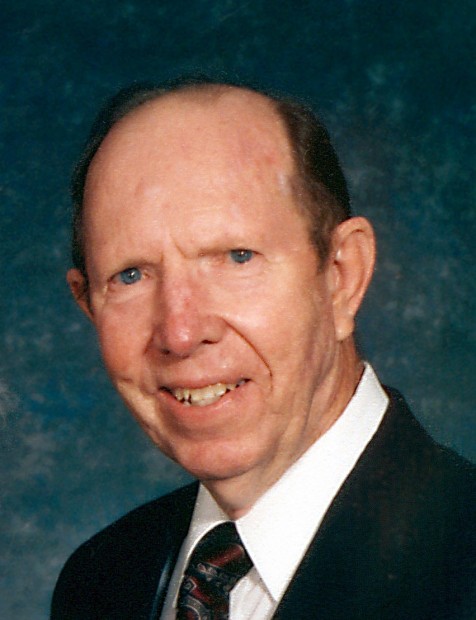
A longtime Tucsonan who performed Arizona's first open-heart surgery and was an associate dean at the University of Arizona College of Medicine has died at 89.
Dr. Robert M. Anderson died Friday at Tucson Medical Center. Services will be held at 1 p.m. this Friday at Trinity Presbyterian Church, 400 E. University Blvd.
While at the UA, Anderson served as the chief of cardiothoracic surgery at University Medical Center. From 1981 to 1986, he was an associate dean at the College of Medicine.
"When he started here at the medical school, he was one of the premier cardiovascular surgeons here and statewide," said cardiologist Dr. Gordon A. Ewy, director of the UA's Sarver Heart Center and a professor and chief of cardiology at the UA College of Medicine.
"Bob was our first cardiovascular surgeon," Ewy said. "We worked together, and from a personality point of view, he was the nicest guy. He was a multitalented individual, some of which I didn't know about until later. He made his own violins and played them, which is just amazing."
People are also reading…
Born in Spokane, Wash., in 1920, Anderson did undergraduate work at UCLA and the University of Southern California before earning his medical degree in 1946 from the Marquette University School of Medicine in Milwaukee. After concluding his military service as an Army captain in 1949, he pursued a surgical residency and a fellowship in Santa Barbara, Calif.
In December 1959, he performed the first open-heart surgery in Arizona, at St. Mary's Hospital in Tucson. He successfully repaired a hole in the heart of an 8-year-old girl, according to a news release from the UA College of Medicine.
The release says that during the late 1950s, Anderson designed one of the earliest and most widely used heart-lung machines, which made open-heart surgery possible by providing blood and oxygen to the body while the heart was stopped for surgical repair.
In July 1962, Anderson moved his family from Los Angeles to Tucson, where he continued his surgical practice and research.
Ewy said Anderson made major contributions to the understanding of the physiology of the cardiovascular system and heart failure. Among other things, he worked on the development of an artificial pump heart machine that was a precursor to the current artificial hearts, Ewy said.
Anderson was on a team of local surgeons who discovered that, contrary to past complicated theories, the heart is a completely passive-filling pump with continuous inflow and pulsatile outflow with no regulation over the circulation rate.
His seminal work was in developing an innovative heart machine that mimicked those unique characteristics. The findings were published in the American Heart Journal.
"The understanding of the mechanical nature of the heart as demonstrated by this pump makes total heart replacement just a matter of engineering, since we now know the pump requirements," Anderson told the Tucson Citizen in January 1967.
In 1970, Anderson was named to the highest category of membership in the American College of Cardiology.
A January 1971 Arizona Daily Star article quoted Anderson as telling more than 200 Southern Arizona high school students that to become a good doctor, a driving determination to being a physician was more important than a high IQ.
"What is needed is that driving force and a willingness to dedicate one's life to your fellow man," he told the students.
He also told them that he didn't perform heart transplants because the art had not yet been perfected.
"Life has both length and breadth - if all you give a patient is six months of agony, it's not worth it," he said.
After retirement, he continued his work as an educator through his Web site, "The Gross Physiology of the Cardiovascular System," which has had more than a half million hits, his family said. The site uses Anderson's mechanical model to explain the often misunderstood factors that determine cardiac output.
Anderson's family said he was a pianist, a violin maker and the designer of his family's Tucson home. He also wrote two books: "Techniques in the Use of Surgical Tools" and "The Science of Tennis."
"We're all here a finite period of time, and then we're gone," Ewy said. "Hopefully we contribute something while we are here, and certainly he contributed a lot - not only to family and friends, but to the beginning of the medical school here, to students and to those of us fortunate enough to have him on the faculty with us.
"It's the kind of impact we all hope to make someday," he said.
Anderson is survived by his wife, Alice; four sons; 12 grandchildren; and 14 great-grandchildren.
Contact reporter Stephanie Innes at 573-4134 or sinnes@azstarnet.com


