





Enjoy the elegant trogon, a longtime summer visitor to Southern Arizona that now is increasingly staying for the winter.
But don't get too attached to the purple finch, because that mountain bird's Arizona population has dropped 45 percent since the 1960s.
These birds represent two sides of a dramatic northward movement for many bird species nationally over four decades due to climate change, according to a recent National Audubon Society study. Some bird species have shifted their ranges hundreds of miles north both into and out of Southeastern Arizona, one of the nation's top five bird-watching hot spots.
The researchers found major increases in Arizona populations of various kinds of swallows, warblers, hummingbirds and other birds that spend winters in Mexico. Some Mexican-based birds not counted in the Audubon study have in recent years moved into Arizona for the first time. They include the flame-colored tanager, the Sinaloa wren and the rufous-capped warbler. Just last week, another Mexican resident, the gray-collared becard, was seen in Arizona for the first time, in the South Fork of Cave Creek Canyon in the Chiricahua Mountains. Mountain birds move north
People are also reading…
For mountain-based specialists such as the finch, brown creeper and pygmy nuthatch, Southeast Arizona's warmer, drier weather has meant a slow trip to Utah and points north. In addition, even some of the Mexican species now increasing in Southern Arizona could eventually decline if global warming deepens an already prolonged drought and dries streams, springs and other water sources they need, Audubon officials said.
It's possible that one reason mountain birds have moved north is that drought has stressed southwestern U.S. forests, making them less habitable to birds, said Scott Wilbor, a Tucson Audubon Society conservation biologist. The drought reduces humidity, increases fire risks and reduces availability of bird prey such as insects, Wilbor said.
When these birds leave Arizona for Utah or Colorado, "the misconception is that the birds are moving further north, but that's no big deal because they are OK where they are moving. My point is that we don't know if they are OK where they are moving," he said.
When you get small springs and wet meadows drying up and less prey is available, the mountain birds ship north, Wilbor said.
"Go to the Patagonias, the Santa Ritas and the Huachucas; you can go to visit the springs that are shown on the map and you can see that they are dried up," Wilbor said. Wetlands are a hot spot
The well-watered sites that still exist in Arizona are becoming more and more important to the birds left behind, he said. Places such as Cave Creek Canyon and Sonoita Creek are drawing many of the Mexican rarities that have arrived in recent years.
For the trogon, the oaks and cool waters of Madera Canyon have always been a draw. But warmer weather in recent years has attracted it to Madera as early as February, when a trogon flew into view daily in pyracantha bushes near the Madera Kubo Bed and Breakfast.
"He comes in early on some days, later on others, flies into the bushes and gobbles down the berries," Cora Lansky, an owner of the B&B, said at the time.
The flame-colored tanager, another Mexican specialty, started coming to the B&B six years ago in March and April, she said. This is the only part of the state where the bird can be reliably seen, although it also has appeared infrequently in the Huachuca and Chiricahua mountains.
At the Sweetwater Wetlands, on Tucson's Northwest Side, you can see plenty of bird species whose populations are either increasing or arriving in Tucson earlier than ever. They include the common yellowthroat, a warbler, the Harris' hawk and the summer tanager, which this year showed up in February, at least a month early. In May of last year, a trogon showed up at the wetlands for the first time. It also has been seen in Sabino Canyon within the last two years.
In artificially supported waters such as the wetlands — which are nourished by treated sewage effluent — birds will continue coming in large numbers even with climate change, Wilbor said. But the warmer, drier weather doesn't bode well for natural river systems such as the San Pedro River and Cienega Creek, which are some of Southeast Arizona's richest bird areas, he said.
"Arizona will continue to be a hot spot for some of these rarities now coming up from Mexico," Wilbor said. "But as far as the overall bird community, we will be experiencing declines in the forest, in riparian areas and eventually the desert."
Last weekend, for instance, a group of Audubon Society volunteers did some surveying in the Patagonia Mountains near Patagonia and found a trogons, northern goshawks and other interesting bird varieties in mature pine oak woodland areas that were getting good water from springs, drainages and wetland plants. In drier areas where trees had died back, they didn't see as many birds, Wilbor said. Impact of changed landscape
The new Audubon report has another implication, said a Tucson researcher: that over time, the very identity of natural areas that people fell in love with a few decades ago no longer will be the same.
"You can imagine a trail that you like to hike around, at Saguaro National Park, or a natural area that you have really fallen in love with. What is likely to happen as temperatures warm and conditions change, the trees, plants and animals we are familiar with in that area will move somewhere else," said Abraham Miller-Rushing, coordinator of the USA-National Phenology Network, a national organization headquartered at the University of Arizona that studies the effects of climate change on bird, fish and mammal migration and plant development.
The report also offers a warning sign to humans, because birds and people depend on the same ecosystem for their survival, said another UA researcher, Aaron Flesch.
"These things are moving at paces we've never seen before in our lifetimes or before our lifetimes," said Flesch, of the UA School of Natural Resources. "It suggests that changes in climate could affect agriculture, production of resources, whatever. Birds are just a really good barometer for understanding influence of climate and other biotic conditions on the living world. Birds are detectable. People keep track of birds."
Indeed, Miller-Rushing added, as temperatures keep getting warmer in Arizona, probably some people won't want to live here, either.
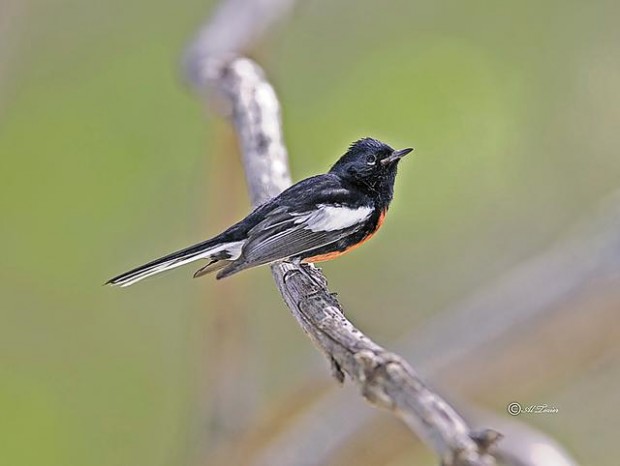
Arizona bird sightings on the rise since 1966 . . .
Elegant trogon
Painted redstart
Cactus wren
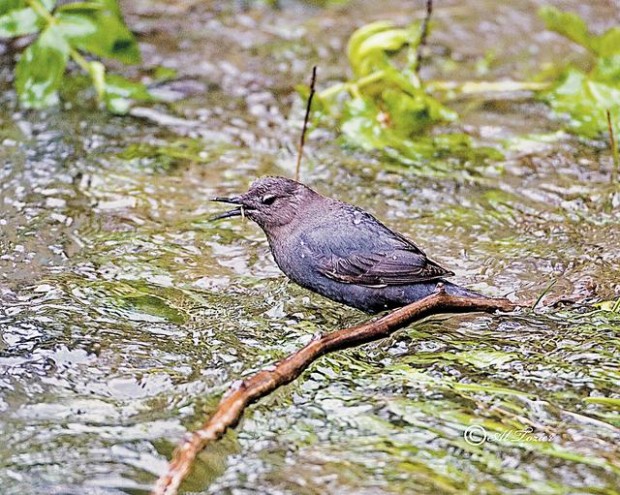
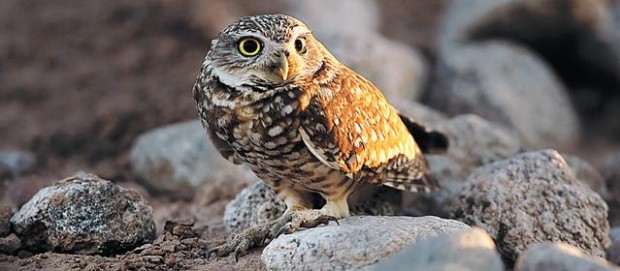
. . . and those On the decline
American dipper
Clark's nutcracker
Northern pygmy owl
On StarNet: Our Critters of Southern Arizona database at azstarnet.com/special/critters includes several birds found locally.
On StarNet: Upload your photos of birds that you spot to StarNet's reader galleries at go.azstarnet.com/birds
The report
Overall, the Audubon report's results show how "the heavy hand of humanity is tipping the balance of nature and causing ecological disruption in ways that we are just beginning to predict and comprehend," said Greg Butcher, Audubon's director of bird conservation.
Audubon analyzed results of the society's annual Christmas Bird Counts from the winters of 1966-67 to 2005-06, from more than 50 Arizona locations and more than 2,000 nationally.
Some details
• Nationally, 177 of 305 bird species that commonly spend winters in the United States moved north in that 40-year period.
• During this period, average January temperatures rose by 4.6 degrees Fahrenheit in the lower 48 states.
• Nineteen Arizona species increased over that period, while 12 declined. Of the 19 increasing species, however, only three are currently widespread in the United States: the cactus wren, the common yellowthroat and the black vulture.
• Percentagewise, the changes in Arizona birds were quite steep. Mountain species dropped by 74 to 95 percent. The lowland species rose by 112 to well over 1,000 percent.
• The Arizona birds studied have moved anywhere from 37 miles north, in the case of the American dipper, to 433 miles north for the purple finch.


