

Our rivers will run free again. Our homes and our grandest engineering feats will crumble. Our dogs might not survive, but our cats will — bad news for billions of birds.
This is the world without Homo sapiens, the dominant species for — so far — a blink in geologic time.
Author Alan Weisman's home base was Tucson when he was roaming the globe gathering information for "The World Without Us," the prodigiously researched and well-reviewed book that asks the simple question: What would the Earth be like if human beings vanished?
Weisman, who now lives in Massachusetts but returns to Tucson yearly to teach international journalism at the University of Arizona, found that nature would reclaim mankind's contributions in short order, although a human-caused ecological imbalance would exist for some time to come.
People are also reading…
The climate change we've initiated would take thousands of years to play out. Radiation from waste stockpiles, munitions and 441 exploding nuclear reactors would unleash clouds of radioactivity and affect the evolution of species left behind.
In Arizona, some of the initial changes would come along our river systems. Dams, including the massive structures of Glen Canyon, Hoover and all the lesser dams of the Colorado, would fail and crumble. The Colorado River would flow again to its delta on the Gulf of California.
"Glen Canyon is going to be a goner," Weisman said in a telephone interview. "I don't expect any dam to be standing in 200 to 250 years."
All the world's rivers, unleashed, would begin restoring nutrient flows to the ocean.
In the book, Weisman imagines the Tucson Convention Center, its roof eroded by wind and rain, filling with silt from the flooding Santa Cruz.
"The rivers would definitely roar again, even given the drought that the Southwest is facing," Weisman said. "Rivers will do what they always do — sweep through and flood everything, including all that Rio Nuevo stuff. That will be the first to go," he said.
Most of Tucson's houses would not last long, Weisman said. "All of those cheap frame-and-stucco adobes, they're not going to last long at all. Same with adobe, if it's not maintained. I had an adobe house in Tucson for many years. Maintain it or it's subject to forces that gradually erode any hillside."
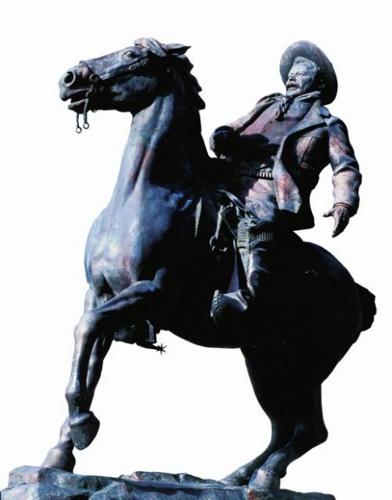
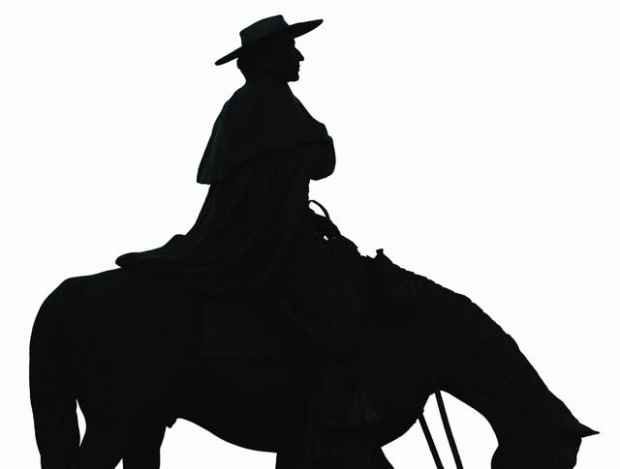
We know from archaeological records that bronze and cast iron will last. So Father Eusebio Kino and Pancho Villa may one day be the only evidence of our arts and culture. The sculptures of Luis Jiménez, who crafted colorful statuary from fiberglass, may have a shot at immortality as well, Weisman said.
Our biggest engineering accomplishment will dry up and silt over easily. The $5 billion Central Arizona Project, without us around to pump water at 14 stations between Tucson and Lake Havasu, will cease its uphill run long before Lake Havasu empties into the Gulf of California.
Weisman's book, though, doesn't focus on Arizona. Global in scope, it reveals our unsupportable demands on an Earth that would be clearly better off without us — and more resilient than you might imagine.
Weisman found in Chernobyl, where birds returned within a year of the explosion and reactor fire that broadcast deadly radiation worldwide in 1986, that nature returns and adapts. Chernobyl voles, a species of rodent, have accelerated their sexual maturation to deal with a radiation-shortened life span.
Even poisoned, the ecosystem there seemed more diverse, more lively, than it had been when man operated the power plant.
Weisman's 1994 article about Chernobyl for Harper's magazine was the seed for this larger exploration of the state of the Earth without us.
The book is full of examples where nature thrives in our absence — truce zones in Cyprus and Korea; a primeval forest on the border of Poland and Belarus; a Pacific reef, far from land.
It's laced with cautionary tales from places — the Amazon, Africa — where mankind threatens mass extinctions of other species.
The unnatural ease with which we change landscape is clearly illustrated in his writing about the island of Manhattan, whose 40 streams would reassert themselves quickly. Right now, Weisman found, they are kept at bay by the daily pumping of 13 million gallons of water from the New York City subways.
With those pumps stilled, the foundations of Manhattan's skyscrapers would quickly corrode.
Weisman doesn't specify what might have caused our disappearance under such a scenario — some mutated Ebola virus, an environmental incursion that renders us sterile, or maybe the Rapture, which some Christians believe will bring a mass exodus to heaven.
He's clearly not rooting for such a thing, though he does devote some ink to the Voluntary Human Extinction Movement.
Weisman hopes for some middle ground — a human race that learns to demand less and offer more toward the Earth's overall health.
We've repented our role as slaughterer of species and poisoner of water and air, but we haven't stopped it. We are just now beginning to recognize our larger impact as usurpers of habitat and changers of climate.
His hope is that by looking clearly at our impacts, we can lessen them and correct our headlong rush into creation of an unlivable world — that we can head off our own extinction.
Did you know . . .
Tucson's Pancho Villa statue is displayed in the park Downtown between West Broadway and West Congress Street called Veinte de Agosto Park, which is Spanish for Aug. 20, the date commemorating Tucson's founding in 1775.
It was sculpted by Julian Martinez, a leading Mexican artist who also created Tucson's Father Eusebio Kino statue, which sits at Kino Parkway and East 15th Street.
Here's how the Tucson Pima Arts Council's "Guide to Public Art in Tucson" describes the Villa statue's history:
"It was presented as a gift to the state of Arizona by Agrupacion Nacional Periodista, a Mexican press organization, and the Mexican government. The work has proven so popular that copies have been requested by Los Angeles, El Paso and the state of New Mexico.
"Pancho Villa (1878-1923, real name: Doroteo Arango) was a bandit who became a hero of the 1910 revolution in Mexico and a figure of controversy along the border ever since he occupied the border town of Agua Prieta in 1920 and threatened the neighboring Arizona city of Douglas.
"At the (1981) dedication, Governor Bruce Babbitt accepted the work before a large gathering of Mexican dignitaries, but Byron Ivancovich, descendant of an old Tucson family, filed an unsuccessful suit against the city, complaining that the statue 'constitutes a public nuisance by glorifying a murderer ...'
"Before it arrived in Tucson, the 7-ton bronze was taken on an 1,800-mile, two-week ceremonial journey to 10 cities in Mexico and the Southwestern United States."


