

Seeing javelina scampering through yards and across streets in the early morning can be a thrill for some and a nuisance for others, if the animals are tearing up gardens or slowing traffic.
But a series of Internet posts describing the slaughter, and even torture, of javelina and other wildlife that wandered into the wrong yard has touched off a state investigation and brought a promise from popular Web site Craigslist to help catch those responsible.
In one post, the writer describes poisoning 25 to 30 javelina this year alone, then using the carcasses to poison bobcats.
Another post describes shooting a javelina in the hindquarters and then letting the animal writhe in agony for hours before using it as "bobcat bait."
"He's squealing now," the post says. "LOL (laugh out loud) Sucker will not die. I'll let him wither another hour or so and then put him out of his misery. Will use him for bobcat bait tonight."
People are also reading…
It's unclear how legitimate the posts are, but they've caught the attention of the state's Game and Fish Department.
It's against the law to kill javelina except during designated hunting seasons. There are limits on how many you can kill. And poisoning animals is particularly damaging because other animals that feed on the carcasses will also be poisoned.
"As far as this goes, this is a pretty important one," said Mark Frieberg, a wildlife manager with Arizona Game and Fish. "If their motive is just to get people excited, that's what they are getting."
The posts were made on Craigslist's "rants and raves" section on Aug. 29. They were done so anonymously with identification numbers masking the e-mail addresses used to post the messages. While the posts about shooting the javelina and laughing at its anguish had a "thrill of the kill" tone, the post about poisoning 25 to 30 javelina was dispassionate, almost like a how-to instruction guide.
"My kids play in the yard and I worry about their safety I poison dog food and meat and throw it out. Have killed off a bunch of intruders around my place," the post says.
"I'm thinning them out though. They're not so prevalent any more. I've probably killed 25 to 30 Javelina alone this year," it says, adding that the poison appears to have eliminated the bobcat population, too.
Frieberg said he and other investigators based in Phoenix had yet to speak with Craigslist about the posts, but their plan is essentially to backtrack through the Web site to find the e-mails, and through them to find Internet-provider addresses and ultimately the identities of the writers.
In an e-mail, Craigslist's Jim Buckmaster said the site's staff would be "happy to assist" and asked Game and Fish to contact them.
"Unlawful activity has no place on Craigslist, and we remove inappropriate listings when they are reported to us," Buckmaster wrote. "In addition, Craigslist users can remove any listings they find inappropriate using our flagging system."
Mike Tully, an animal-welfare advocate and an attorney who specializes in cyber bullying, said some of the posts might have been made just for shock value. But he said investigators have to assume the claims are real.
"My feeling about information like this on the Internet is that the most logical approach is to take it at face value and assume it's true," he said.
That's how Lisa Bates, the executive director and founder of the Tucson Wildlife Center, is taking it.
"This is the first time I have seen it in Tucson," she said of the Internet claims. "And I would like it to be the last."
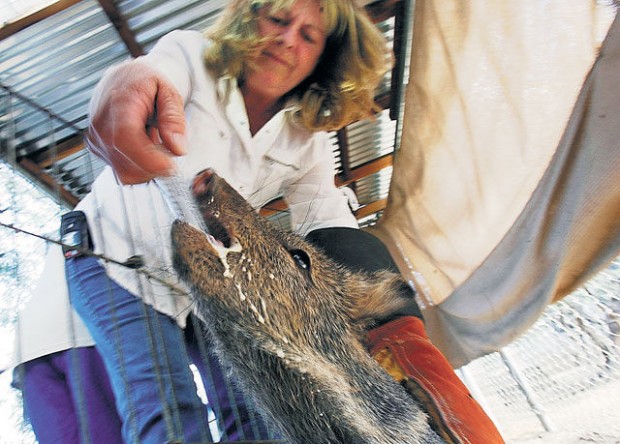
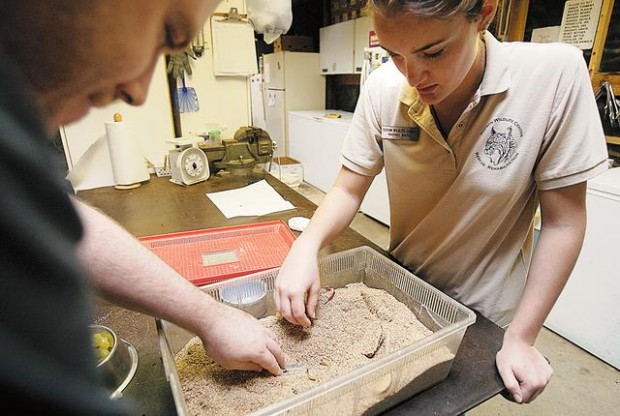
Bates rehabilitates wildlife and returns animals to the desert. Her group is currently caring for about 20 javelina, among other wildlife.
She said it's not common for people to intentionally hurt wildlife, but it does happen. This year, Tucson Wildlife has seen about six or seven javelina that have been shot with a bullet or arrow. Birds are more common victims, she said.
Tucson Wildlife also sees quite a few poisoned animals, but those are rarely intentional.
"Intentional stuff we actually see at the Wildlife Center is mostly illegal gunshots or bow-and-arrow poaching," she said.
The poaching of javelina is alluring for pretty much the same reason that javelina sightings are a Tucson way of life: There are plenty of them, and they are common in the city, particularly at its edges.
Although herbivores, javelina can be menacing or simply nuisances because they tear up gardens and trample through yards, Bates said.
But there are plenty of humane ways to deal with a herd. Most are drawn to an area because they are being fed or are munching on someone's garden. So the best way to deal with a javelina herd is to take their food away, Bates said.
"Don't feed the javelina. Don't feed the wildlife," Bates said. "Healthy people can empathize with other animals. Then you look for humane solutions to protect your territory."
Reporting wildlife poaching
To report the poaching or abuse of wildlife, call the Arizona Game and Fish Department's Operation Game Thief hot line at 1-800-352-0700. The hot line is open 24 hours a day.
Did you know
Javelina are medium-sized herbivores that travel in herds. Although they look similar, javelina are not pigs. Javelina have a scent gland near their backsides, which they rub on rocks and tree stumps to mark territory.
Source: Arizona-Sonora Desert Museum


