


Fire, flood and forest closures shut down recreational tourism in large swaths of Arizona early this summer, and the effects linger even as access to the forests is restored.
With a month to go before the kids go back to school, businesses that cater to outdoor recreation are trying to spread the word that the fires are out and the forests reopened in many parts of the state.
Tourism was a $17.7 billion business in Arizona in 2010, according to the Arizona Office of Tourism. Most of that money is made in the hotels, golf resorts and restaurants of Arizona's urban areas, but tourism is a larger percentage of the economy in rural counties and mountain destinations where much of the lure is access to national parks and forests.
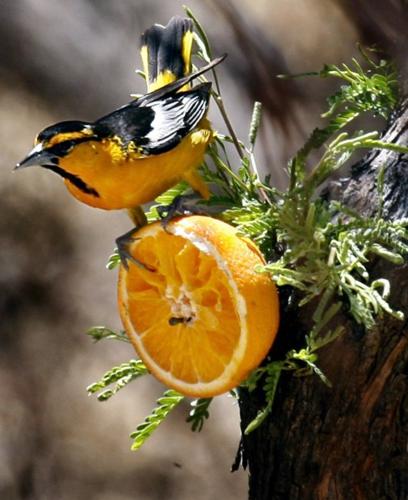
In Southern Arizona, the monthlong closure of the Coronado National Forest and big June fires in the Chiricahua and Huachuca mountains continue to put a damper on ecotourism - especially on the affluent and growing niche of birding.
People are also reading…
Two bird festivals and an ornithologists' conference will be held in Southern Arizona in August, and planners are juggling field trips to avoid areas still closed by the Horseshoe 2 and Monument fires.
Sierra Vista's Southwest Wings has had more than a dozen cancellations for its 20th anniversary festival Aug. 3-6 because of the fires, said organizer Gordon Lewis. Registration stands at 90 - about half what it would be in a good year, he said.
Lewis said he tried to talk some people into coming despite the damage done to some sites by Mother Nature.
It's a tough sell in spots.
High in Miller Canyon in the Huachuca Mountains, Tom Beatty's birding cottages will be closed for up to two years.
Beatty's, which holds the record for most hummingbird species spotted in one day, has become a must stop on the birding circuit.
Beatty and son Tom Jr. stayed behind when the Monument Fire hit Miller Canyon and managed to keep their rental cabins from burning. Subsequent floods and debris flows buried the part of his apple orchard that hadn't been burned and damaged some cabins.
Beatty's dour post-flood assessment of birding in Southern Arizona ruffled some feathers on the Arizona-New Mexico birding website.
After detailing his losses in the July 10 flood, Beatty announced: "If I was coming to SEAZ (southeast Arizona) to bird this year, I would not."
Donna Ramaeker has the opposite message.
Fire flowed around Ramaeker's Rail Oaks Ranch at the mouth of Carr Canyon, and a month later flooding in Miller Creek flowed through the basement of her home.
Her cottages are still standing, and she's ready to get back to business after a summer in which she had evacuated from two homes, lost $5,000 in revenue and lost appliances in her basement when mud and ash flowed through.
Birders are faithful folks, said B&B owner Tony Battiste. He rapidly built his retirement business over the past eight years on return visitors and if they return this year, they will be rewarded, he said.
The forest has been devastated in parts and may never be the same, but the birds are thicker than ever at his Battiste Bed, Breakfast and Birds, he said, partly because his feeding stations serve as emergency replacements for damaged habitat.
His only fire damage came from the ash and smoke, he said.
In the upper reaches of Ash Canyon, where the fire burned most furiously, Mary Jo Ballator reports a similar scene.
Her home and single bed-and-breakfast unit survived. "It's very sobering to see how close it came to just destroying everything," Ballator said.
The forest around her is burned and bleak, but the birds visiting her feeders are still colorful and profuse, she said.
Nobody has called to cancel, but Ballator said the fire will "have a negative effect overall."
The Western Field Ornithologists, which holds a conference in Sierra Vista Aug. 17-21, warns on its website that some planned tours will be switched and some expected species not available.
"On the other hand," the website message says, "the birds that are around may well be concentrated into areas of remaining habitat and surprises may be found as a result of unexpected movements of some species."
In the Chiricahua Mountains, time and money was spent defending the jewel of the Chiri-cahuas, the South Fork drainage of Cave Creek, home to elegant trogons, record numbers of raptors and a wide diversity of flora.
The B&Bs of Portal and the guest ranches of Cave Creek itself are intact, as is much of the canyon.
You couldn't go there, however, until last week when the South Fork road was opened to pedestrians.
Summer is usually an off-season for birders, but not for birds.
That was the reason behind Tucson's first birding festival, said Paul Green, director of the Tucson Audubon Society.
"The whole driver is to get people into Tucson when the hotels are empty," he said.
The festival, Aug. 17-21, has attracted 60 registrants from 12 states in its inaugural year, said Erin Olmstead, festival coordinator.
Green said the fires won't greatly affect the Tucson festival, but he also noted that the naturalists who attend such things will be interested over time in "seeing how we might clearly track how the birds are using the forests as they recover. That, in itself, can be a real draw for people."
Kay Daggett, marketing manager for the city of Sierra Vista, said the Southwest Wings festival will focus this year "on the environmental changes and how different critters adapt."
Daggett said ecotourism is "huge for our area. It's probably the single largest draw."
Fortunately, she said, there are plenty of areas untouched by fire, such as Ramsey Canyon and others on the north end of the Huachucas, as well as the San Pedro Riparian National Conservation Area.
Daggett and Robert Carreira, director of the Center for Economic Research at Cochise College in Sierra Vista, both said the fires may have given a short-term economic boost to the area's economy.
Hotels and restaurants were full in usually sleepy June with evacuees and contractors on the fire.
For the long haul, the health of the ecotourism economy will depend on how visitors react to the fire-damaged landscape. It's an important question, said Carreira. Lodging, restaurants and bars account for 24 percent of all taxable sales in Cochise County, he said.
It's not all tourists, but they are a growing sector. Visits to natural settings, such as Chiricahua National Monument and the forests, grew by double digits even during the recession, he said.
"It looks like it's on the mend, but we still have our challenges as far as perception goes," said Daggett. "We just have to let everybody know we're open for business."
What's open and what's closed?
White Mountains
All of the towns near the Apache National Forest are accessible.
Alpine, Nutrioso, Eagar, Springerville and Greer - all evacuated at some point during the Wallow Fire - have been back in business for weeks.
The Apache National Forest is closed, but some popular recreation areas, such as Big Lake and Greer Lakes, are open. The White Mountain towns of Pinetop-Lakeside and Show Low were never affected directly by the fire, but smoke and forest closures affected business. There are currently no forest closures in the surrounding Sitgreaves National Forest.
Apache-Sitgreaves National Forest website: www.fs.usda.gov/asnf
The White Mountain Apaches are open for business at Sunrise Resort and elsewhere on the reservation. The tribe closed access to the Black and Salt rivers because of flash flooding.
Southern Arizona's Sky Islands
All of the ranger districts in the Coronado National Forest are open now that monsoon rains have arrived, with closures in areas affected by the fires and subsequent flooding.
Coronado National Forest website: www.fs.fed.us/r3/coronado
Monument Fire areas
The forest portion of the Huachuca Mountains from Ash Canyon on the south to Miller and Carr canyons is closed. The remainder of the Sierra Vista Ranger District of the Coronado National Forest is open.
Coronado National Memorial is open, but trails and picnic areas are closed, as is the road over Montezuma Pass.
Website: www.nps.gov/coro
Horseshoe 2 Fire areas
A limited reopening of roads and trails on the Portal side of the Chiri-cahua Mountains was announced last week, but all roads and trails within the burned area are closed.
The Chiricahua National Monument is open, but most trails there remain closed.
Website: www.nps.gov/chir
Contact reporter Tom Beal at tbeal@azstarnet.com or 573-4158.


