

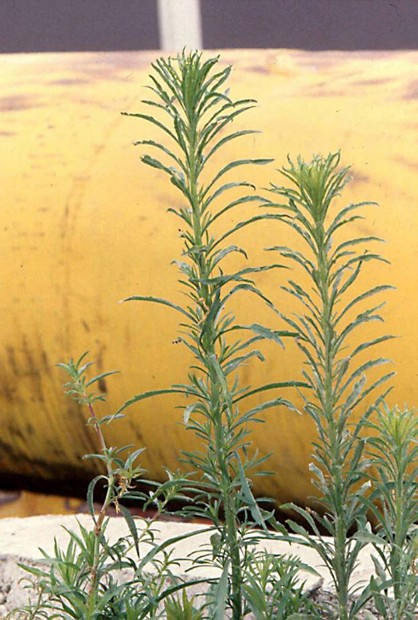
CHAMPAIGN, Ill. - When the weed killer sold as Roundup was introduced in the 1970s, it proved it could kill nearly any plant while still being safer than many other herbicides, and it allowed farmers to give up harsher chemicals and reduce tilling that can contribute to erosion.
But 34 years later, a few sturdy species of weeds resistant to Roundup have evolved, forcing farmers to return to some of the less environmentally safe practices they abandoned decades ago.
The situation is the worst in the South, where some farmers now walk fields with hoes, killing weeds in a way their great-grandfathers were happy to leave behind.
Some species, such as Palmer amaranth in Arkansas and water hemp and marestail in Illinois, grow fast and big, producing tens of thousands of seeds.
The U.S. Environmental Protection Agency considers Roundup to have little toxicity to people and animals, and aside from the plants it's sprayed on, it's less of a threat to the environment because it quickly binds to soil and becomes inactive.
People are also reading…
But with any herbicide, the more it's used, the more likely it'll run into individual plants within a species that have just enough genetic variation to survive what kills most of their relatives.
St. Louis-based Monsanto maintains the resistance is often overstated.
"We believe that glyphosate (Roundup) will remain an important tool in the farmers' arsenal," Monsanto spokesman John Combest said.
That said, the company has started paying cotton farmers $12 an acre to cover the cost of other herbicides to use alongside Roundup to boost its effectiveness.


