

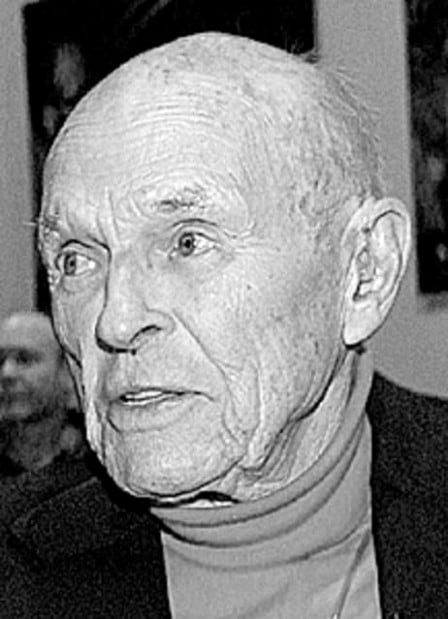
SANTA FE, N.M. — Frederick L. "Dick" Ashworth, the weaponeer in charge of the atomic bomb dropped on Nagasaki, Japan, at the end of World War II, is dead at 93.
He died Saturday during heart surgery at the Arizona Heart Hospital in Phoenix, friend Glen Smith said.
Services are set for 1 p.m. Thursday at Santa Fe National Cemetery.
Ashworth, who retired in 1968 as a Navy vice admiral, was assigned to the Los Alamos-based Manhattan Project, which developed the world's first atomic bomb.
He was a member of the B-29 bomber crew that dropped the second atomic bomb on Japan on Aug. 9, 1945, assigned as the weaponeer — the person in charge of the bomb.
Smith said that about a year ago, Ashworth wrote his own obituary, including one short paragraph about the Nagasaki mission. He described himself as "a member of the crew of the Army Air Forces B-29 'Bockscar,' responsible for the successful functioning of the 'Fat Man' atom bomb during the attack on Nagasaki, Japan."
People are also reading…
Ashworth was "very unassuming, modest and efficient," Smith said. "There were many people that he contacted in everyday life that thought he was an ordinary grandfather."
Ashworth, in an August talk to a Los Alamos historical group about the mission, said it was "fraught with problems," including clouds that hid the primary military target, the potential for a crash landing with the bomb aboard and low fuel after the bomb exploded.
Army Gen. Leslie R. Groves, who oversaw the Manhattan Project, "insisted on having someone in that airplane who had a technical background on the bomb, what it was supposed to do, what it was like when you were trying to monitor the various components of the bomb while in flight," Ashworth said. "And make decisions, more importantly."
The attack on the southwestern Japanese city came three days after the United States carried out the world's first atomic bombing on nearby Hiroshima in an effort to force the Japanese into surrender.
The city of Kokura had been selected for the second bomb, but the weather there was bad so the B-29 — named Bockscar after its usual commander, Frederick Bock — flew on to Nagasaki.
Clouds almost saved Nagasaki, too, according to Richard Rhodes' book, "The Making of the Atomic Bomb." As weaponeer, Ashworth had to decide whether to bomb by radar or jettison the bomb, worth several million dollars, in the sea.
Then the clouds parted enough to give the bombardier a 20-second glance of the target city. The bomb was dropped through the cloud hole.
The crew heard a radio report while returning to base that the Japanese had approached the Swiss Embassy about surrender, Ashworth said.
"That gave us a pretty good inkling that maybe, by golly, the war might be over," he said.
Japan surrendered on Aug. 15.
Ashworth was born Jan. 24, 1912, in Beverly, Mass., and graduated from the Naval Academy in 1933.
He did military liaison work with the Atomic Energy Commission and commanded the Navy's Sixth Fleet, then based in France.


