
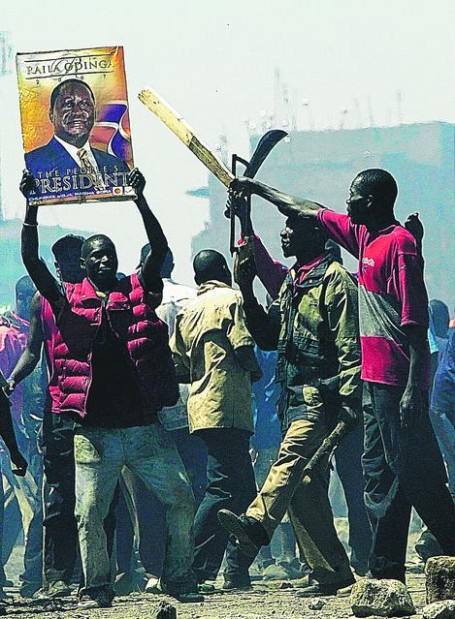
NAIROBI, Kenya — Sixteen-year-old Dan Mugambi stands guard at a bridge in his Nairobi slum, one skinny hand on his machete, ashes caught in his hair.
Behind him, hundreds of angry young men — armed with knives, machetes, saws and shovels — scream as they watch homes burn. These men belong to Kenya's dominant Kikuyu tribe.
Across the bridge, where members of the rival Luo tribe have gathered, comes even more screaming, equally enraged.
The two groups exchange insults and stones, each waiting for the other to attack. The fighting has been fierce. People are slashed with machetes, their homes torched. The desire for revenge is strong.
The Luos "have burned our homes," Mugambi said. "I will cut any who come across that bridge."
A wave of violence over a disputed presidential election has laid bare the ethnic rivalries under the surface of this East African country. The fighting has exposed tribal resentments and divisions between those who have benefited from the country's recent economic boom and those who have not.
People are also reading…
The bloodshed has cast a dark shadow over this popular tourist destination, previously one of Africa's most stable democracies. With politicians so far unwilling or unable to control the ethnic hatreds, the violence is now raising questions over whether prosperous Kenya can keep avoiding the bloodbaths of its neighbors Rwanda, Uganda and Sudan.
At least 300 people have been killed and 100,000 displaced since Mwai Kibaki, the incumbent president and a Kikuyu, was declared the winner of the Dec. 27 presidential election by a thin margin. Fiery opposition leader Raila Odinga, a Luo, called the election a sham, and international observers also have questioned the fairness of the vote count.
Odinga's supporters, especially fellow Luos, poured into the streets even before Kibaki was announced the winner Sunday and hastily sworn in for a second term. Police shot many rioting Odinga supporters, as Luos began to torch Kikuyu homes.
Members of the two tribes have lived as neighbors. But with so many homes burned over the past few days, they are beginning to separate into enclaves.
Poverty, politics and history all play their part in this violence. Many of Kenya's 42 tribes accuse the Kikuyu, the largest tribe, of shutting others out of business and politics. Two out of three of Kenya's presidents have been Kikuyu — though its longest-serving president, Daniel arap Moi, came from a small tribe from western Kenya.
Although Kikuyus control much of the retail sector and are proud of their reputation for entrepreneurship, they insist they don't stop anyone else from making money.
In recent years, Kenya has seen record economic growth, but the mushrooming high rises and luxury cars inspired resentment among the millions left behind. Odinga's campaign slogan was whittled down to a single cry — "change."
Thieves and thugs have compounded the postelection chaos.
Other developments
• Kenyan opposition leader Raila Odinga vowed to go ahead with a "million man" protest rally today that many fear could worsen a wave of political and ethnic violence.
• U.S. Secretary of State Condoleezza Rice asked both sides to resolve their differences peacefully, the State Department said.
SOURCE: The Associated Press

 U of A president declines to sign shared governance contract with faculty