

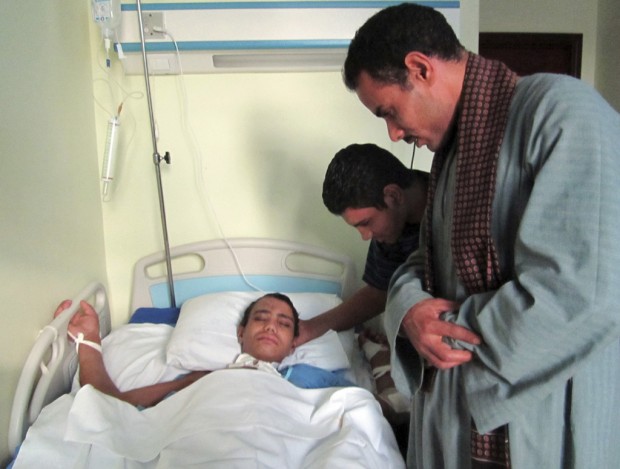
ALEXANDRIA, Egypt - When Abdullah Shehata's father died, the 15-year-old dropped out of school and looked for work, a quest that took him from his impoverished home province of Assiut to the potato fields outside this ancient Egyptian port city.
On the evening of Jan. 29, four days into the uprising that would unseat President Hosni Mubarak, Shehata and his brother heard of youth protests in Alexandria and were eager to join. They left their work in the fields, hopped into the back of a pickup and rumbled toward the city.
As the brothers approached the demonstration, a stray bullet struck Shehata in the head, piercing his skull. He survived, but with permanent brain damage, and is now among the 6,400 Egyptians the government says were wounded during the revolution.
While the 846 people who were killed in the anti-Mubarak protests are remembered in hundreds of posters and video tributes, there's little public discussion of the thousands of people, like Shehata, who will need expensive medical treatment for the rest of their lives. They've been promised state compensation, but so far what little help they receive comes from overwhelmed local aid groups and handouts from relatives.
People are also reading…
Medical workers and families of the wounded say the interim government must do more to meet the needs of Egypt's new generation of wounded "veterans." The vast majority are young men who will never work again because of eye injuries, brain damage and other long-term health problems.
"There's a severe negligence toward the wounded," said Hamdy Khalaf, 36, a cousin of Shehata's who visited his hospital room on a recent day. "What's going to become of this man? He got injured during the revolution, for the sake of the country, and now he's got no job; he's crippled and he's getting no help."
In Alexandria alone, where 85 people were killed, an estimated 700 were wounded. Most of those, said Marwa el Dereini, the director of the Future Protectors Association, an Alexandria nonprofit aid group, will require long-term care.
For now, the most critical cases are shuttled from hospital to hospital, doctors and victims' advocates say, each facility worse than the one before, as cash runs out for the expensive private treatment centers. The bureaucracy involved in being admitted to a military hospital is so daunting that few families try.
Public hospitals, typically dismal places where infections and bedsores are common, are supposed to be free. But families said they were forced to provide their own medicine, bandages and linens.
"We should help the families of the martyrs," said Wael Mousa, 33, referring to those killed in the protests. He's an accountant who volunteers with another Alexandria nonprofit group that's helping Shehata's family. "But, at the same time, we can't wait for the injured to become martyrs."


