

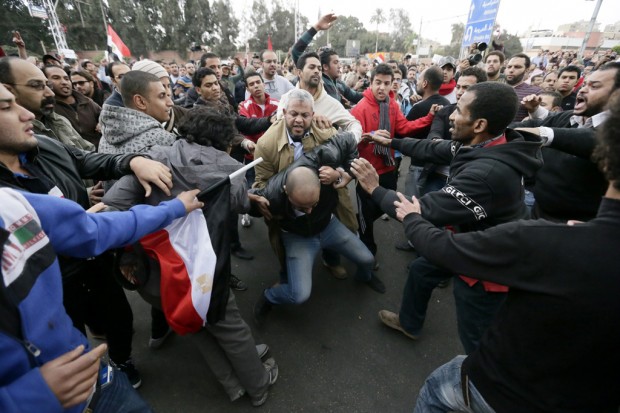
CAIRO - Prosecutors demanded Thursday that deposed President Hosni Mubarak be sentenced to death by hanging for the violent crackdown nearly one year ago that left more than 800 protesters dead during the stunning popular revolt that inspired rebellions across the region.
"The law calls for the death penalty for premeditated murder," Mustafa Khater, one of a five-member prosecution team, told the federal court during closing arguments in Mubarak's trial. "We feel the spirits of the martyrs flying over this hall of sacred justice."
The legal team linked Mubarak to the deaths through a chain of command. Khater said orders from police officials resulted in the slaying of protesters between Jan. 25 and Feb. 11, the day Mubarak was forced from power. Khater also asked that former Interior Minister Habib el-Adly, who is being tried with Mubarak, receive the death penalty.
People are also reading…
No police officer can make a decision "without getting back to their superiors," Mustafa Suleiman, the chief prosecutor, told Judge Ahmed Refaat in a courtroom at the Police Academy on the outskirts of Cairo. "El-Adly could not have given the order to fire on demonstrators without being instructed to do so by Mubarak."
Mubarak, el-Adly and six Interior Ministry aides face murder-related charges. Mubarak's sons, Alaa and Gamal, once his father's apparent heir, are charged with corruption and abuse of power. The defendants' closing arguments will be heard when court resumes on Jan. 9.
Despite the prosecutors' rousing rhetoric, many Egyptians believe the toppled 83-year-old president will escape the death penalty. Scenes of Mubarak, his sons and el-Adly entering court in training suits and sunglasses, and the defendants' apparent confidence in the dock, suggested to many that Mubarak is receiving special treatment from a police state he controlled for nearly 30 years.
The euphoria of Mubarak's first court appearance in August has given way to cynicism. Hundreds of families of those killed during the revolution have expressed exasperation by long trial delays and embarrassing moments for the prosecution when several key witnesses recanted earlier statements and testified that they knew of no orders from Mubarak for police to shoot protesters.
Witnesses came from the top echelons of the Mubarak government, including Mohamed Hussein Tantawi, a Mubarak confidant who now heads the ruling Supreme Council of Armed Forces; former intelligence chief and Vice President Omar Suleiman; and ex-Interior Ministers Mahmoud Wagdi and Mansour Essawi. Prosecutors argued Thursday that testimony by Suleiman and Wagdi proved that Mubarak gave el-Adly the order to use excessive force.
The prosecution added that even if Mubarak didn't order the killings, he should be held responsible because he was the president and ultimately responsible for the actions of the state. "Mubarak can never, as the top official, claim that he did not know what was going on," Suleiman said.
The prosecutor then directly addressed Mubarak, who was reportedly ill and lying on a gurney in the defendants' cage, telling him: "If you hadn't issued those orders yourself, then where was your outburst of rage over the lives of your own people?"


