

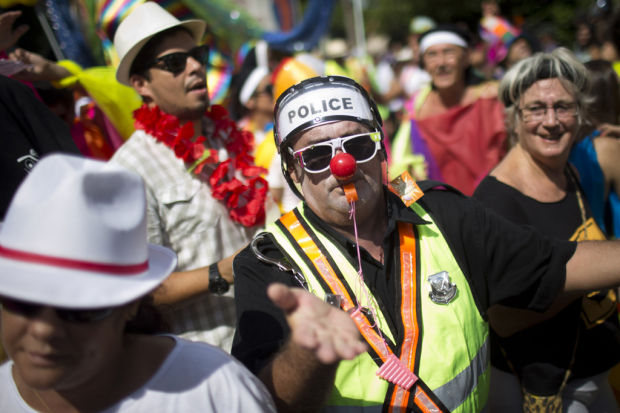
RIO DE JANEIRO - As samba queens got final touch-ups on their sequins and feathers and hundreds of thousands of revelers took command of Rio's streets for Carnival's opening on Friday, Leo Name was hunkering down. The self-avowed Carnival Scrooge stocked up on frozen TV dinners and hoped he won't have to set foot outside his apartment during the five days of festivities.
Appalled by the monumental proportions that street parties have taken on in recent years with the influx of an estimated half million visitors to the city of 6 million people, many locals flee Rio or lock themselves away for the duration.
Fans of Carnival dismiss them as blasphemous curmudgeons. But Name and others like him insist theirs is a rational response to an event that shutters businesses, snarls traffic and sees public spaces overrun by beer-guzzling revelers who think any place is a good space to urinate.
People are also reading…
"Over the past years, the crowds have gotten so thick that I couldn't even make it to the metro and wasn't able to buy bread at the supermarket, which is literally downstairs from my place," said Name, a geography professor at Rio's Pontific Catholic University. "I felt like I was under siege."
It wasn't always like that. For decades, Rio was fairly calm during Carnival. Residents who could afford it took advantage of the public holiday to go on vacation, and the city's pace slowed.
Carnival celebrations were mostly restricted to the well-regimented parades at the Sambadrome, where spectators now pay from $78 to $1,032 a person to marvel at the over-the-top floats, the musicians' unflagging enthusiasm and the fancy footwork of dancers decked out in not much more than a sprinkling of rhinestones and a puff of ostrich feathers.
"When I was a kid, I used to go to three, four or even five movies a day during Carnival because the cinemas had these special discounts to try to drum up an audience," said the 35-year-old Name. "It was great. The city was empty, the metro was empty, the streets were empty, and there were no lines anywhere."
But Carnival has spilled into Rio's streets with the resurgence of "blocos" - raucous, heavy-drinking street parties that regularly draw tens or hundreds of thousands of people.
This year, organizers are hoping Rio's biggest bloco, "Bola Preta," or Black Ball, which in 2012 attracted an estimated 2 million people to the historic city center, will enter the Guinness Book of World Records as the world's biggest street party.


