

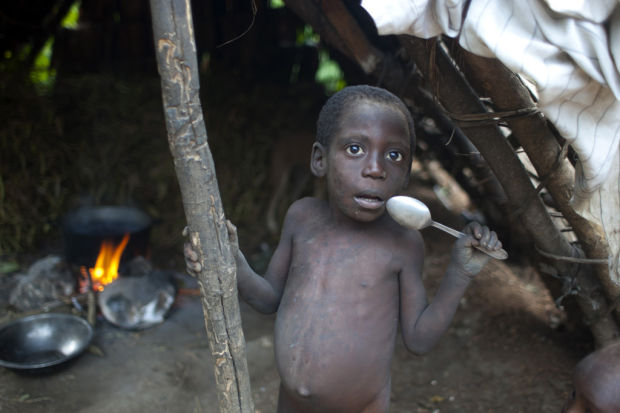
BELLE ANSE, Haiti - The hardship of hunger abounds amid the stone homes and teepee-like huts in the mountains along Haiti's southern coast.
The hair on broomstick-thin children has turned patchy and orangish, their stomachs have ballooned to the size of their heads and many look half their age - the tell-tale signs of malnutrition.
Mabriole town official Geneus Lissage fears that death is imminent for these children if Haitian authorities and humanitarian workers don't do more to stem the hunger problems. "They will be counting bodies," Lissage said, "because malnutrition is ravaging children, youngsters and babies."
Three years after an earthquake killed hundreds of thousands and international donors promised to help Haiti "build back better," hunger is worse than ever. Despite billions of dollars from around the world pledged toward rebuilding efforts, the country's food problems underscore just how vulnerable its 10 million people remain.
People are also reading…
In 1997 some 1.2 million Haitians didn't have enough food to eat. A decade later the number had more than doubled. Today, that figure is 6.7 million, or a staggering 67 percent of the population that goes without food some days, can't afford a balanced diet or has limited access to food, according to surveys by the government's National Coordination of Food Security. As many as 1.5 million of those face malnutrition and other hunger-related problems.
"This is scandalous. This should not be," said Claude Beauboeuf, a Haitian economist and sometime consultant to relief groups. "But I'm not surprised, because some of the people in the slums eat once every two days."
Much of the crisis stems from too little rain, and then too much. A drought last year destroyed key crops, followed by flooding caused by the outer bands of Tropical Storm Isaac and Hurricane Sandy. Haiti has had similarly destructive storms over the past decade, and scientists say they expect to see more as global climate change provokes severe weather systems.
Klaus Eberwein, general director of the government's Economic and Social Assistance Fund, said: "We are really trying our best. It's not like we're sitting here and not working on it. We have limited resources."
He attributed Haiti's current hunger woes to "decades of bad political decisions" and, more recently, to last year's storms and drought.
"Hunger is not new in Haiti," Eberwein said. "You can't address the hunger situation in one year, two years."


