

YIDA, South Sudan - First they ate leaves. Then they ate roots, soaked for five days and boiled until they were just edible. Now many have eaten the planting seed - and their futures with it.
There is no food left in Sudan's Nuba Mountains, so the stream of tens of thousands of hungry refugees pouring across the militarized Sudan-South Sudan border has almost doubled in the past two months.
The Yida camp now holds 31,000 refugees and is bracing for thousands more, as desperate families rush to make the five-day trek south from Sudan on foot before seasonal rains arrive, turning the rough dirt road muddy and impassable, and choking off food deliveries for months.
Back in their homeland, the refugees have endured bombardment from Sudanese warplanes and a crisis-level food shortage they blame on Sudan's president. Aid groups say Sudan - a mostly Arab nation - is intentionally trying to starve the black residents of the Nuba Mountains.
People are also reading…
Refugees report the deaths of young and old back home.
"There's no food where we live. People are eating the leaves of trees," said Amira Tia, who arrived at the camp last week after walking in green flip flops for four days with her four children.
"Every morning they go to the bush to collect leaves. There is also a root of a tree that if you soak it for five days and then boil it, it is edible," she said.
Sudan does not allow aid from U.N. or international groups to be delivered to Nuba, and no official assessments have been done about the conditions there.
Geoffrey Pinnock, the World Food Program's emergency officer in Yida, fears that unknown.
"What we hear from refugees is that things are bad and getting worse," he said. "Some people haven't had solid food in two months and then walk five days" to reach the camp.
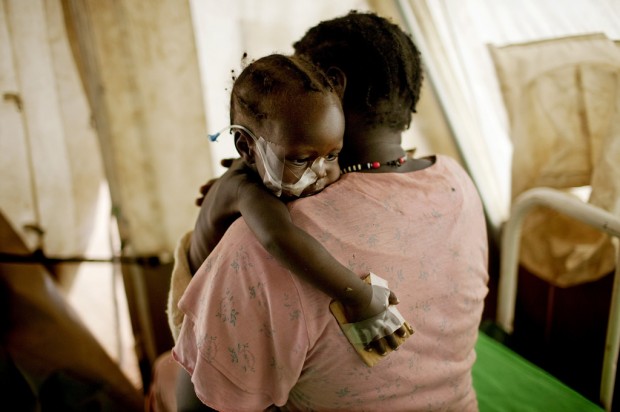
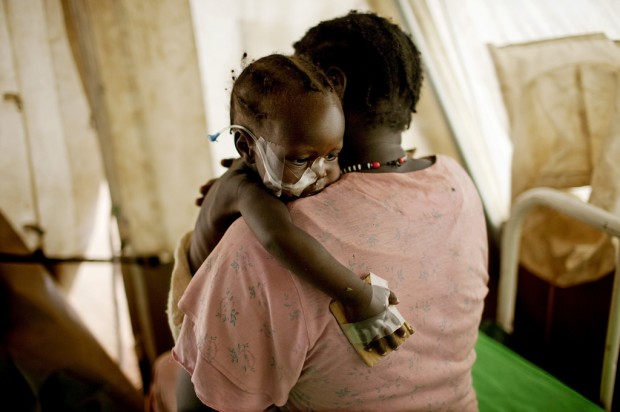
Muniara Kamal walked for six days, carrying her 9-month-old daughter, Safa, who swatted feebly at flies while getting medical care. Tia said the group she was walking with was attacked by Sudanese Antonov bombers twice. One man was cut in half by shrapnel, she said.
When South Sudan voted to break away from Sudan last year after decades of war, the people of the Nuba Mountains were caught in the middle. They are black, like those of the south, not Arabs like the northerners of Sudan. Now a full-on war is under way in their homeland.
Even once they reach the relative safety of the camp, the threat of war remains. South Sudan's military is on alert in case border skirmishes with Sudan escalate into a full-scale conflict.
The Yida camp is far more militarized than aid workers would like. South Sudan troops move through, as do northern rebel groups fighting Sudan. U.N. and other aid workers say the rebel fighters use the camp for food and rest.
International aid groups have dug deep foxholes in their compounds in case Sudan bombs again.
New arrivals must walk within 20 yards of an unexploded bomb dropped by a Sudanese aircraft in November that landed on the road leading to the camp from the north.
The rate of new arrivals has risen rapidly in recent days. Aid workers and Nuba leaders say 15,000 or even 30,000 more Nuba could reach Yida in coming weeks.


