

WASHINGTON - The Obama administration was investigating whether Pakistan knew Osama bin Laden was hiding deep inside the country as House Speaker John Boehner and top lawmakers insisted the U.S. maintain close ties with the sometimes reluctant ally in the war on terror.
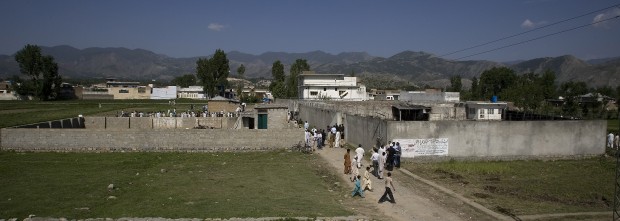
The killing of Osama bin Laden at a compound just miles from Islamabad prompted furious questions about whether Pakistan was complicit in protecting the mastermind of the Sept. 11 attacks. Several Republicans and Democrats in Congress have raised the possibility of cutting off U.S. aid to Pakistan.
John Brennan, White House counterterrorism adviser, said the administration is "not accusing anybody at this point, but we want to make sure we get to the bottom of this." He said they were looking at whether bin Laden had a support system in Pakistan that allowed him to remain in the country. He made the comments in an interview with National Public Radio.
People are also reading…
Amid the harsh criticism of Pakistan, Boehner and others said this was not the time to back away from Pakistan.
"I think we need more engagement, not less," he said. "Al-Qaida and other extremist groups have made Pakistan a target. … Having a robust partnership with Pakistan is critical to breaking the back of al-Qaida and the rest of them."
Boehner said it was premature to talk about cutting off U.S. aid to Pakistan. When pressed on the level of funds, however, he said it was imperative that the U.S. have an "eyeball to eyeball conversation about where this relationship is going."
Pakistani leaders denied suggestions that their country's security forces had sheltered bin Laden.
Sen. Dianne Feinstein, D-Calif., the head of the Senate Intelligence Committee, said Congress may consider cutting the almost $1.3 billion in annual aid to Pakistan if it turns out the Islamabad government knew where bin Laden was hiding.
The No. 2 House Democratic leader, Rep. Steny Hoyer of Maryland, said if Pakistan doesn't ease doubts about its dedication to fighting terrorists, Congress should explore whether it makes sense to reduce U.S. aid to that country.
"I don't know whether it would be effective or counterproductive, we'll have to look at that," he told reporters, adding, "It needs to be looked into."
Sen. Lindsey Graham, R-S.C., a member of the Senate Armed Services Committee, acknowledged the frustration of his colleagues.
"But at the end of the day, if you want to create a failed state in Pakistan, one of the best things to do is sever relationships. It is not in our national security interest to let this one event destroy what is a difficult partnership but a partnership nonetheless," Graham said.
The Obama administration pushed back on talk of punishing Pakistan.
White House spokesman Jay Carney told reporters Tuesday that the U.S. is committed to cooperating with Pakistan despite questions about who in the Islamabad government may have known that bin Laden was in hiding in his compound in Abbottabad.


