

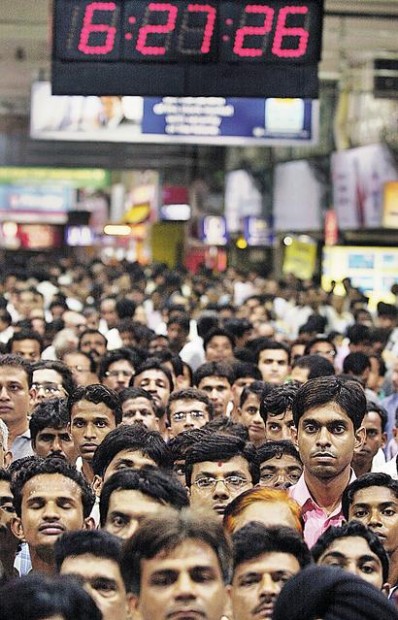
MUMBAI, India — India's financial center came to a halt Tuesday as trains, cars and pedestrians paused during the evening rush hour to remember the moment one week ago when bombs ripped through the city's commuter rail network.
Sirens wailed at 6:24 p.m. — the time the first of seven bombs shook the rail lines — followed by two minutes of silence in this proudly frenetic city of 16 million people.
Trains stopped. Cars froze at intersections in dense traffic. On sidewalks and street corners, large crowds gathered, unmoving and silent, in memory of the 207 people killed.
"I don't know anyone who died," said Ratna Phalni, 24, who came to the railway station in suburban Mahim, scene of one of the blasts, where officials joined President A.P.J. Kalam to bow their heads in memory of the dead. "But tomorrow it could be me, or someone I know."
People are also reading…
The minutes of silence came as the death toll from the attacks rose to 207, making it the deadliest terrorist bombing since the Sept. 11, 2001, attacks in the United States.
Also Tuesday, police said five men were arrested in northeastern India and will be questioned to see if they are connected to the blasts.
The total number of deaths rose Tuesday from 182 after officials counted victims who died after being taken to hospitals in Thane, a nearby town.
While police are still trying to determine who was behind the attack, an organization calling itself Lashkar-e-Qahhar said in an e-mail to a local TV station that 16 people took part in the bombings in Mumbai, and that one was killed.
But "all the remaining 15 … are totally safe, and celebrating the success of this mission and also preparing for the next mission," said the e-mail. It advised Muslims not to go near main historical and government sites.


