As we approach Memorial Day this year with an ongoing conflict in the Middle East, we are sure to hear a great deal about sacrifice.
Some of what we hear will be sincere, some will not, but all of it will fit uncomfortably into the context of a modern society that no longer has a context for thinking about sacrifice.
Consider the following news stories mentioning sacrifice.
A sports headline announces that Los Angeles Sparks player “Kelsey Plum makes an important sacrifice” by signing a one-year contract for $999,999 instead of $1.4 million so the team can sign additional players.
Actress Laverne Cox, in an interview for People magazine, says “All the preparation and all the sacrifices I’ve made are worth it when I’m on set.”

Laverne Cox attends her "A Very Barbie Birthday" celebration at Magic Hour at The Moxy Hotel Rooftop in May 2022 in New York.
Advice columnist Carolyn Hax asks, “When does changing for a partner become too big a sacrifice?”
People are also reading…
A spring gardening article informs its readers that “pollinator-friendly gardens don’t have to sacrifice style.”
Today, most people use the word “sacrifice” to mean giving something up for the sake of something else we want even more.
You want a bigger car? You might have to sacrifice some gas mileage.
That’s not a sacrifice. It’s a trade.
When Ukraine's President Volodymyr Zelenskyy remarked recently that in order to occupy Donbas, Putin “would have to sacrifice between 300,000 and 1 million people,” he is implying that Putin is spending his people in the same way that he spends money and bombs. Those soldiers are just another commodity.
We know that we live in a thoroughly secularized environment when a word that literally means “to make something sacred” is used as a preferred term for the calculus of exchange.
This time of year, falling between Lent and Memorial Day, is a good time to reflect on just what sacrifice means, and whether we lose anything when the religious origins of the word are forgotten.
Many people today are skeptical of the religious connotations of the word, and with good reason. The language of sacrifice is often used to manipulate. When that happens, entire generations come to feel that their leaders are hypocrites.
That happened in 1933 when, in the decade following World War I, students at Oxford University debated and then passed what came to be known as the Oxford Oath, swearing, “This house will under no circumstances fight for its King and country.” In 1935, 60,000 American college students signed a similar resolution.
Those young men were not disloyal, but they were deeply suspicious of the motivations of their national leaders. They were not going to be talked into sacrificing their lives for the sake of political gamesmanship.
Yet, when it became evident that their nation was under threat, they overwhelmingly signed up to defend their country. After war broke out in 1939, 2,632 out of 3,000 Oxford students signed up during a recruitment rally.
Traditionally, to sacrifice meant to set something apart for the divine. In many ancient cultures, animal and grain sacrifices were made as a way of communicating with the gods. The Olympic games, for example, would begin with the athletes swearing an oath over the blood of a boar that was sacrificed to Zeus. Roman armies began their campaigns with elaborate ritual sacrifices.
But it wasn’t just high-profile events like wars or the Olympics that occasioned sacrifice. In reading Greek and Roman texts, one finds sacrifices to be a daily occurrence. People would make a gift to the gods — often fruit, milk, honey, wine, or oil — on the occasion of an anniversary or in fulfillment of an oath.
When Christianity came on the scene, a radically new idea was introduced to the ancient world. The Apostle Paul wrote, “I urge you … to offer your bodies as a living sacrifice, holy and pleasing to God — this is your true and proper worship.”
In Christian churches today, the season of Lent persists as a time to set something one values aside as a way of reflecting on how one might become a living sacrifice. Such reflection is important, prompting us to ask, on a regular basis, “What is my life worth?” and “What would I be willing to give my life for?”
Next month, we will once again observe Memorial Day, setting aside a day to remember those who have died in service to our country.
But the question of sacrifice is something we should reflect upon every day, asking how we are preparing ourselves for the time when we are called upon to give something up for the sake of others.
When we think of sacrifice as a gift, not an exchange, then we experience the truth of the words of St. Francis of Assisi: “for it is in giving that we receive.”
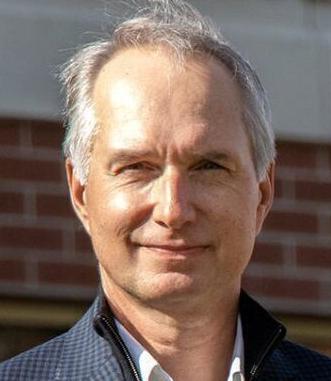
Richard Kyte is director of the D.B. Reinhart Institute for Ethics in Leadership at Viterbo University in La Crosse, Wis., and co-host of "The Ethical Life" podcast.
Richard Kyte is the director of the D.B. Reinhart Institute for Ethics in Leadership at Viterbo University in La Crosse, Wisconsin. His new book, “Finding Your Third Place: Building Happier Communities (and Making Great Friends Along the Way),” is available from Fulcrum Books. He also cohosts “The Ethical Life” podcast.