

When I started deer hunting at 12 years old, I was always restless.
My dad would direct me to go to a certain spot in the woods and remind me to be quiet. Off I would clomp in my oversized Pac boots and heavy red hunting coat. I would stand as still as I could for about 10 minutes, waiting for a deer to show up. When nothing happened, I would start walking back and forth, flapping my arms to stay warm. After an hour or so of that I would wander off to explore the woods, making enough noise to spook all the wild creatures in the county.
I rarely saw a deer, and when I did, it would be running away in the distance. It was years before I learned to welcome the stillness around me and deep within me.
In “Walden”, Henry David Thoreau remarks that “You only need sit still long enough in some attractive spot in the woods that all its inhabitants may exhibit themselves to you by turns.”
People are also reading…
I have been hunting pretty much consistently for over half a century now, and as I reflect on my most memorable experiences, I note that nearly all have occurred during times of stillness.
Just a couple weeks ago, sitting in the woods in far northern Minnesota, I spied something making its way toward me across the forest floor. It was twice the size of a squirrel, with a black bushy tail and a long, lean body covered in short brown fur. Despite running back and forth through a thick layer of crunchy, frost-covered leaves, its progress was silent.
As it got near, it suddenly jumped six feet off the ground onto the trunk of a large poplar, attaching itself horizontally, looking all around. It wasn’t until it turned its white face toward me that I recognized it as a pine marten.
Its little black eyes looked directly at me. I didn’t so much as twitch. Then it hopped silently onto the ground and scampered off, still in search of its morning meal.
Over the years I have been rewarded by stillness as a pair of bucks locked antlers not more than 20 feet away, as a doe played tag with her fawn, as a family of beaver kits wrestled for over an hour on an ice shelf, as an owl swooped down while I was sitting in tall grass, nearly taking off my cap, as a mink swam between my legs holding a trout in its teeth.
That last sight happened as I was standing in a stream waiting patiently for trout to rise in the pool just upstream. One finally did, but it had already been caught by a stealthier and more persistent angler.
Thoreau was writing about the many ways nature rewards silence, not just with the creatures that appear in the woods but also with the creatures of one’s own mind that are revealed when we put the noise of our lives behind us.
Putting that noise behind is even harder now than it was in Thoreau’s day, and for that reason, even more urgent.
As our devices for communication and entertainment have become more personalized and portable, they have also become harder to escape. It takes a deliberate effort to put the noise behind us and settle down into the stillness of the natural world.
One of the chief reasons we need to protect and preserve the remaining undeveloped land within our reach is not just to give us space for more activities, but to give us more opportunities to quiet ourselves.
As Aldo Leopold says in “A Sand County Almanac”, “Recreational development is a job not of building roads into lovely country, but of building receptivity into the still unlovely human mind.”
The work of building receptivity into one’s mind can be practiced wherever one can get far enough away from distractions to sit quietly for a time, letting the inhabitants of the woods appear in turn.
As the days shorten and the nights get cold, take a few moments now and then to be still. Watch the world around you with no earbuds feeding you artificial noises, no screens to distract your eyes, no windshield to block the sounds of wingbeats or the touch of the wind.
Learn to love the silence. See what creatures reveal themselves to you. Bring wholeness back into your life.
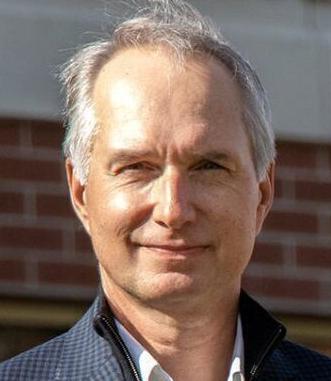
Richard Kyte is director of the D.B. Reinhart Institute for Ethics in Leadership at Viterbo University in La Crosse, Wis., and co-host of "The Ethical Life" podcast.
Richard Kyte is the director of the D.B. Reinhart Institute for Ethics in Leadership at Viterbo University in La Crosse, Wisconsin. His new book, “Finding Your Third Place: Building Happier Communities (and Making Great Friends Along the Way),” is available from Fulcrum Books. He also cohosts “The Ethical Life” podcast.
