The following is the opinion and analysis of the writer:

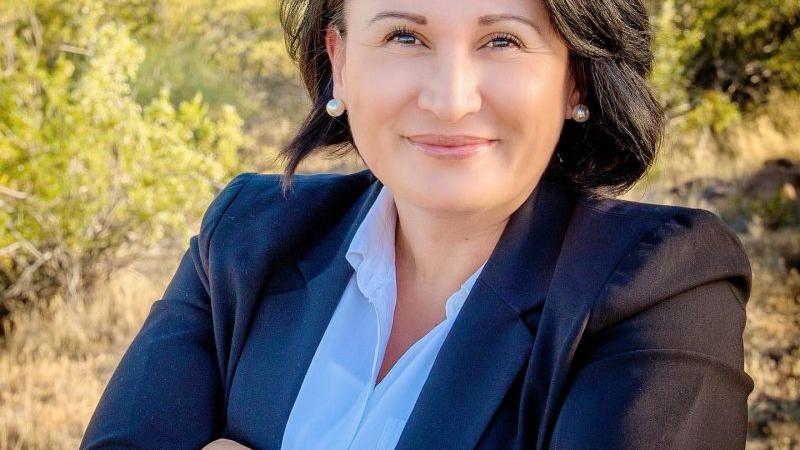
Esber Andiroglu
Since 2000, Arizona and surrounding states have experienced a historic drought that has led to a 19% average decrease in the flow of the Colorado River, the region’s primary water source. Approximately one-third of this decline is attributed to rising temperatures. According to the National Climate Assessment, the Southwest region is expected to see a temperature increase of between 2.5 degrees to 5.5 degrees Fahrenheit from 2041-70, meaning water scarcity in the Southwest is likely to get worse.
As Mark Taylor from the Central Arizona Project aptly stated, “Arizona is no longer experiencing just a drought; it’s facing a shortage.” Considering growing populations and environmental concerns, adopting effective water conservation practices now is more critical than ever to ensure the safety and well-being of our society.
People are also reading…
Navigating the waters in Arizona
We are currently at a critical moment where it’s crucial for many southwestern U.S. cities, especially cities in Arizona, to adopt effective water conservation practices. For instance, due to a groundwater shortage, Governor Hobbs recently announced limitations on permits for new home construction that relies on well water in certain parts of Maricopa County. Tucson has attempted to bank water underground, but its reserves only cover about five years of demand, which is far from adequate for the long term. Still, in a recent climate score study that evaluated Arizona municipalities, Tucson scored an impressive five out of five. Among several reasons for the high score, the study highlights that the municipality has adopted the International Code Council’s 2018 building regulations as well as provisions to address residential graywater reuse and commercial rainwater harvesting.
The water crisis in Arizona, the southwestern U.S. and many parts of the world is extremely dire, and immediate policy-level action is needed to prevent communities and residents from suffering the consequences of worsening water scarcity. To genuinely make a positive impact on water resources, cities like Tucson and Phoenix should prioritize proven conservation solutions that enhance water efficiency. These solutions could involve more efficient plumbing fixtures and appliances that reduce water consumption, promoting water reuse and rainwater harvesting and optimizing landscape design. It’s worth noting that there is a demand for water-efficient homes, as evidenced by the interest of new homebuyers.
Building codes for conservation
Building codes, which are activated for all new construction and major renovations, can play a pivotal role in helping address Arizona’s water crisis at the localized level. Given the extent of their contribution to risk mitigation, FEMA views building codes as the most effective community resilience measure around. The extent to which codes impact construction makes them a particularly powerful tool for promoting water conservation measures. The International Green Construction Code (IgCC) and the National Green Building Standard, along with specific standards like the CSA B805/ICC 805 – Rainwater Harvesting Standard, address crucial steps—like fixture efficiency, reuse, and site management—that cities need to take in the very near term. Some cities have already taken proactive steps, like Scottsdale, which adopted the IgCC earlier this summer. Tempe is also currently considering IgCC adoption.
It’s crucial to remember that while the challenge is acute, our solutions must be rooted in sound building science. My colleagues and I recently published a refutation of a study from an organization that claims that changing pipe sizing alone generates significant water conservation, a premise that lacks scientific validation. Such actions are at best unproductive and at worst counterproductive because they fail to offer real solutions toward addressing our urgent water challenges. It’s imperative that we rely on accurate information and scientifically supported solutions to guide our efforts, ensuring a sustainable water future for Arizona and beyond.
Recognizing widespread impact
The ongoing historic drought in Arizona, exacerbated by rising temperatures, highlights the pressing need for effective water conservation practices across the state and the country. With climate projections indicating a further increase in temperatures, the severity of water scarcity is set to worsen, necessitating immediate action. Building codes offer a promising avenue to implement proven water conservation measures and must be a priority in addressing this crisis.
Follow these steps to easily submit a letter to the editor or guest opinion to the Arizona Daily Star.
Esber Andiroglu is a University of Miami Associate Professor of Practice in the Dept. of Civil, Architectural and Environmental Engineering with a secondary appointment at the School of Architecture. He is the Director of MS in Construction Management Program offered by College of Engineering. He is a registered professional engineer and a LEED AP accredited educator with academic focus on building environmental systems, water resources and sustainability areas.