
Every morning I shave with a Gillette Tech safety razor. Manufactured sometime between 1938 and 1945, it still looks and shaves as good as it did when it came out of the box. I picked it up at a flea market for $15.
I switched over to safety razors after my last electric razor died. I didn’t relish shelling out the amount of money Norelco wanted for a new razor, and I was intrigued by the advertisements from companies like Harry’s and Dollar Shave Club, promoting a subscription service for their disposable cartridges. I tried them for a while, but I didn’t like having to throw away a cartridge every week. At somewhere between $2 and $3 per cartridge, that works out to $100-150 per year, a cost that makes even the fanciest electric razors seem like a bargain.
I was looking for something that would both save money and reduce waste, and I found it in the nearly 100-year-old technology of the Gillette safety razor using double-edge blades that cost 15 cents apiece. That works out to be about $8 per year. Also, there are no plastics — either in the packaging or the product itself — to throw away.
People are also reading…
When King Gillette came up with the idea for the safety razor, he wasn’t looking for a way to reduce waste; he was looking for a way to increase it. His other inventions were successful but not profitable because they were too durable. He wanted to make something like the bottle cap, something customers would purchase, throw away, and purchase again. That, of course, is the basis of today’s disposable economy, but in 1903, it was a radical idea.

An advertisement in the June 9, 1939, La Crosse Tribune extols the virtues of the "New Gillette Tech Razor!"
It shows how far we have moved away from Benjamin Franklin’s advice to be frugal, that even the products considered wasteful 100 years ago are considered frugal today. Come to think of it, who even uses the word “frugal” anymore?
The manufacture of non-durable goods (like T-shirts, sandals, paper towels, plastic cups, diapers, and toothbrushes) is a significant contributor to the nation’s gross domestic product. We have become comfortable with throwing away pens when they run out of ink, throwing away running shoes when the tread is worn, throwing away a computer mouse when the clicker stops clicking.
We live in an all-you-can-eat, all-you-can-drink, all-you-can-buy culture. And much of what we buy goes surprisingly quickly from the checkout counter to the landfill. Some of the goods we toss away every day get recycled back into the manufacturing process, but distressingly, only about 9% of the world’s plastic gets recycled.
The result is a society awash in waste and drowning in debt.
According to a recent report from the Federal Reserve, in the fourth quarter of 2024, the total household debt in the U.S. reached an all-time high of $18 trillion. American credit card debt now stands at a record $1.2 trillion, having increased by $4.41 billion over the last four years alone. During that same period, our national debt increased from $28 trillion to $36 trillion.
For over 2,000 years, ever since Plato wrote “The Republic”, temperance was considered one of four cardinal virtues. The others are wisdom, courage and justice. We still talk about those three, but temperance is so out of date as to be nearly unintelligible. Like “frugality,” we don’t use the word because we don’t think about it. Yet, there are very good reasons for considering it to be a foundational virtue, that is, something we cannot neglect without doing ourselves great harm.
Temperance is the virtue of self-restraint. It is the ability to enjoy oneself without overindulgence, to leave half a sandwich for later, to have one drink rather than three or four. It is the ability to be satisfied when one has less than one desires but all one needs.
Plato regarded temperance as an especially important virtue in a democratic society because democracy is a government of self-rule. Those who have no capacity for self-restraint are unable to rule themselves wisely, courageously, or justly. In fact, he predicted that a democracy that could not control its desires would eventually find itself in crisis, and the citizens would voluntarily hand power over to someone who promised to fix their problems.
Our nation’s national debt mirrors our household debt. We are a society that not only fails to practice temperance; we don’t even know what it is. We have proven ourselves incapable of self-restraint.
The actions taken by Elon Musk and DOGE over the past few weeks to rid the federal government of waste are extreme. Many would say those actions are reckless and cruel as well. I would agree with that assessment and add only that the actions are inevitable.
Once we begin to practice self-restraint, we will earn the right to govern ourselves as well. Until then we are going to get what we get. I fear the lessons will be hard-earned.
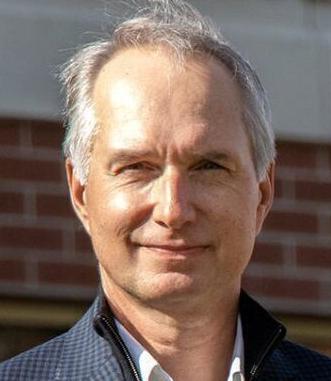
Richard Kyte is director of the D.B. Reinhart Institute for Ethics in Leadership at Viterbo University in La Crosse, Wis., and co-host of "The Ethical Life" podcast.
The Ethical Life is a reflection on the ways that ethical thinking influences our actions, emotions and relationships. Richard Kyte is the director of the D.B. Reinhart Institute for Ethics in Leadership at Viterbo University in La Crosse.