

I am a proud, unapologetic idealist.
I believe in the power of ideas entertained inside our heads to change the world outside our heads. And I believe when we hold onto ideas collectively — ideas like justice, goodness, generosity, kindness — we can accomplish great things in our communities and our nation.
At the same time, I am disheartened by what I perceive as a loss of idealism all around me; in our politicians, in our media personalities, in our leading academics.
I’m not sure when Americans started losing their idealism, but I do know that the small Midwestern town in which I was raised in the 1960s was populated by people who shared a mindset of hopeful determination.
By the time I went off to graduate school in the 1980s, the mood was decidedly cynical. Cleverness and irony were regarded as sophisticated; sincerity was considered a product of naivete. Nobody wanted to be considered naïve, and so nobody talked about how the things we were studying could make the world better, could make our nation better, or even make our own lives better.
People are also reading…
If anything, the academic temperament has deteriorated even further since then. Two scholars who reviewed articles appearing in the nation’s leading American Studies journal, published by my alma mater, The Johns Hopkins University, found that “80% of articles published between 2022 and 2024 were critical of America, 20% were neutral, and none were positive.”
This is not an isolated case. Cultural scholarship has, for many years now, focused more on criticism than construction.
But it isn’t just academics. Our movies are more likely to feature destructive antiheros like John Wick than genuine heroes who lift up the people around them. Politicians talk openly about how collaboration with members of the opposing party is a weakness.
As if actually getting something done, like passing laws that have a chance of surviving well into the next administration, is not what politicians are elected to do in the first place. And maybe they are not. Maybe they are elected to defeat the opposition. But that right there is a pretty cynical notion of politics.
Our national loss of idealism struck me forcefully as I was reading through a series of columns written by my great-grandfather in the 1930s. He was writing about the people and events in the little North Dakota town of Melville. His words describe living through the economic hardship of the Great Depression, the devastation of drought during the Dust Bowl, the ravages of sickness that would pass through the towns, the heat of the summers and the bitter cold of the winters. And through it all there is an indomitable cheerfulness, a hope that things will get better, a fierce determination to make things better.
They formed clubs to organize activities. They looked out for their neighbors. They invited political candidates of all parties to visit their town and listened to them with polite civility. They did not allow hardship to harden their hearts. They did not settle into complacency.
Critics of idealism will complain that it is unrealistic. They point out how difficult things are, how much corruption there is in the world, how nothing really changes except the rich get richer and the poor get poorer. They scoff at those who think they can change things for the better. They point out that they were once deluded optimists as well, but they have come — through the hard lessons of life — to know better. What they really mean is they have given up.
I am well aware of the dangers of having unrealistic expectations. I think we do our children a disservice when we tell them they can be anything they want to be, or when we say things like “If you can dream it, you can achieve it.” Yes, it is true that dreams sometimes come true; but sometimes they don’t. And we should be honest about that. Having things turn out the way you wish in life is often a matter of luck.
We should be realistic that things often don’t turn out the way we plan or even hope. We ought to be realistic about the fact that there are people in the world determined to do harm. We should be realistic that our history is replete with failures and shortcomings and broken promises.
But we should also be realistic about the fact that great things happen; and when they do happen, they happen because of a combination of things coming together — perseverance, courage, intelligence, patience and a determination to reach a goal.
It is easy to be hopeful when everything is going well, and it is understandable that people become negative when opportunities dwindle and the future looks uncertain. But that’s when we need idealism the most, when we need citizens who are convinced that together we can do what is right and good and worthwhile. Genuine idealism creates opportunities; it doesn’t depend on them.
When we abandon idealism, we abandon the possibility of a better future. Let’s not do that to our children.
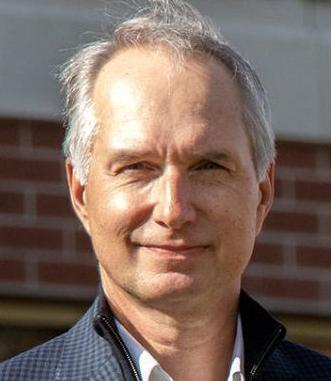
Richard Kyte
Richard Kyte is the director of the D.B. Reinhart Institute for Ethics in Leadership at Viterbo University in La Crosse, Wisconsin. His new book, “Finding Your Third Place: Building Happier Communities (and Making Great Friends Along the Way),” is available from Fulcrum Books. He also cohosts “The Ethical Life” podcast.
