There is an old joke about a young man who gave up everything to search for the meaning of life.
He had heard tales of a solitary monk living on the top of a remote mountain who had the answers he was looking for. He searched for years and years, and finally after many fruitless attempts, diversions and dead ends, he found the old monk. Breathless with anticipation, he hardly dared ask the question that had pushed him for so long. “Divine master,” he asked, “what is the meaning of life?”
The ancient sage looked upon the young man, paused for a few moments, and then said solemnly: “Life is a fountain.”
The young man looked at him incredulously. He could hardly speak. When he finally found his words, he shouted in exasperation, “Do you mean to tell me that I wasted years of my life, gave up everything, my home, my career, my family and all you have to say is that 'life is a fountain?'”
People are also reading…
The old monk looked at him with surprise, “What? You mean it’s not a fountain?”
The truth behind the joke is that people will often go to great lengths to discover something that will give their lives purpose and meaning, yet the answers they find are either incomprehensible or disappointing.
When I was in my 20s, I thought that if I only read enough books, consulted enough great thinkers, I would gain insight into the meaning of life. Over the past 40 years or so I have certainly learned a great deal, but mostly I’ve learned that there is no single, simple answer to the question. Instead, I found that meaning can be found in many things, and the most profound meaning is discovered in the simplest, everyday things, whenever one acts out of genuine love, connecting one’s life to goodness, beauty, or truth.
What does that mean in practical terms?
We find connection to goodness whenever we do something useful for someone, when we serve a meal, or help relieve someone in distress, or give a gift that is genuinely needed.
We find connection to beauty whenever we notice a spiderweb glistening in the morning dew, or listen to a loon calling at night, or feel the touch of the year’s first snowflake on an upturned face.
We find connection to truth whenever we listen to someone describe their concerns, or learn how to make sourdough bread, or speak up even though we are afraid to do so.
Yet, finding those connections is harder than it has ever been.
Most people today have greater access to information — not just books and articles, but news sites, podcasts, blogs, and videos — than any previous generation. There is, if anything, too much information, too many places to look, too many opportunities for distraction along the way. And there is always the next “big thing” just around the corner that promises to solve all our troubles.
The tech companies are promising that AI will improve our lives, making us more “creative,” “connected,” and “productive.” They hold out the promise of a more productive economy, more leisure time, more knowledge, better health, greater efficiency. But when it comes to developing something like wisdom, digital technologies tend to make us more dependent, disconnected and lethargic. Those who are thoroughly enmeshed in the digital world have proven especially vulnerable to increased anxiety, loneliness and depression.
That’s partly because the highly engaging digital world of chatbots, games and videos takes attention away from where we are most likely to find meaning — in simple interactions with other people and the natural world.
That is why I am skeptical of the many promises made by the tech industry to transform our lives. As technology advances, it gives us power to move faster, to do more, to accomplish greater things. But we seem to know less than ever about what direction to move. What are the great things that make our lives worthwhile?
We have countless people in the world today highly invested in fixing the problem of the day — the latest environmental cure, the pharmaceutical marvel — or in obtaining some position of influence whereby they can have the kinds of impact they think the world needs.
The answer to the question of the meaning of life lies in the realization that real importance does not require traveling around the world, having 10,000 followers, inventing a revolutionary new device, or rising to the top of some organization.
Real importance always lies close at hand. It lies in every smile, every hug, every word of sincere encouragement, every gesture of loving attention.
The salvation of the world comes one life at a time, and it always comes through love.

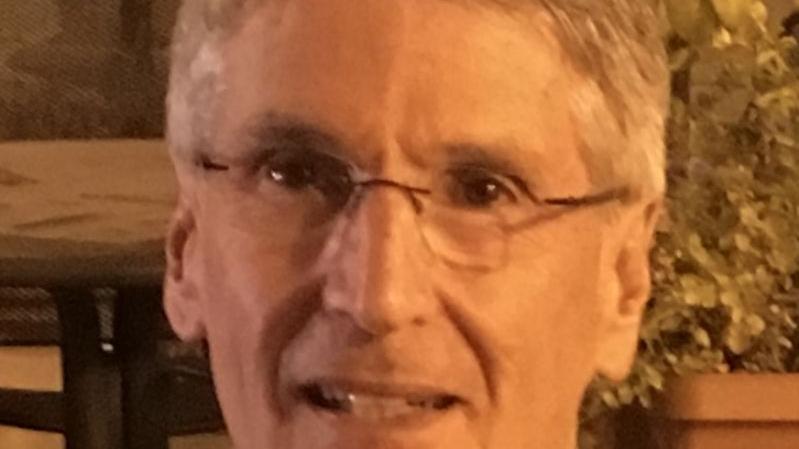
Richard Kyte is director of the D.B. Reinhart Institute for Ethics in Leadership at Viterbo University in La Crosse, Wis., and co-host of "The Ethical Life" podcast.
Richard Kyte is the director of the D.B. Reinhart Institute for Ethics in Leadership at Viterbo University in La Crosse, Wisconsin. His new book, “Finding Your Third Place: Building Happier Communities (and Making Great Friends Along the Way),” is available from Fulcrum Books. He also cohosts “The Ethical Life” podcast.