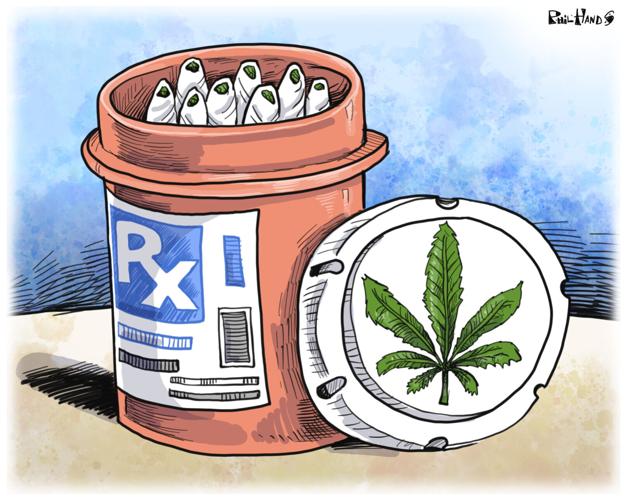
I have spent my career caring for patients with chronic pain, dementia and other conditions that drain the quality of people's lives and the resources of our health care system. Too often, I’ve prescribed medications that are costly and dangerous, carrying high risks of dependency and death.

Mikhail Kogan
Many of my patients already use another option: medical cannabis. The plant is one of the most effective and safest treatments for a host of chronic conditions.
Yet many patients must choose between paying rent or paying out of pocket for cannabis because insurance companies refuse to cover it. Insurance coverage for medical cannabis is not a radical idea. It is the next logical step.
Together, the epidemics of chronic pain and dementia consume a staggering share of Medicare and Medicaid budgets. They also drive patients toward the drugs fueling our overdose crisis.
People are also reading…
Cannabis can be an exit strategy. A study by New York State and CUNY researchers found 30% to 50% reductions in opioid use when patients substitute with cannabis. Unlike opioids or benzodiazepines, cannabis has no recorded overdose deaths. Broader adoption could save tens of thousands of lives annually.
For patients with dementia, cannabis can improve sleep, appetite, mood and agitation symptoms — often allowing them to reduce or stop medications that have debilitating side effects.

The oft-heard claim that cannabis “lacks data” is outdated. A comprehensive research review by the National Academies of Sciences, Engineering and Medicine in 2017 classified cannabis as an evidence-based treatment for chronic pain, multiple sclerosis and chemotherapy-related nausea.
Research has expanded since then, with international models from Israel to Canada demonstrating measurable benefits and cost savings.
We also have growing patient-reported outcomes — structured data gathered directly from people using cannabis. These outcomes capture what clinical trials often miss — improvements in daily functioning, sleep, mood and quality of life.
Federal agencies are stuck in a catch-22: The Food and Drug Administration cannot approve cannabis because products vary batch to batch. Yet without FDA approval, insurers won’t cover it. Patients are left to rely on advice from poorly trained dispensary staff, pursue an unsupported trial-and-error approach or go without.
Hospice programs provide a model for covering cannabis. They receive a daily payment from Medicare to cover all palliative needs.
Integrative pain programs, such as those offered at the University of Vermont, are another example. They often are approved for insurance reimbursement and have been shown to yield significant savings.
We should explore Medicaid waivers to allow cannabis coverage for chronic pain, anxiety and substance-use disorder.
Critics argue that cannabis is unsafe or that coverage would invite abuse. Most of those claims are based on recreational smoking and not carefully dosed for medical use.
Cannabis is not appropriate for adolescents. But for adults, especially older adults, the benefits often far outweigh the risks.
Financial cost is another consideration. By reducing emergency room visits, imaging, physician appointments and dangerous drug interactions, insurance coverage would save money. Insurers are already paying for the consequences of chronic pain and dementia. Covering cannabis is in their financial interest.
Nearly 75% of U.S. adults live in states with legal cannabis access. We know cannabis works for many conditions. We know it’s safer than most alternatives. The data is growing and patients are demanding it.
What we lack is political will.
As a physician, I cannot ignore treatments my patients are already using and benefiting from. Insurance companies should not ignore them, either.
Covering medical cannabis is logical, ethical and necessary. And it will save lives.
Kogan is an associate professor of medicine and chief medical officer of the Center for Integrative Medicine at George Washington University. He is co-author of “Medical Marijuana: Dr. Kogan’s Evidence-Based Guide to the Health Benefits of Cannabis and CBD.” He wrote this for InsideSources.com.