Whenever a social conflict proves intractable, you can be sure there is an underlying problem that remains unexamined. Such is the case with the present national controversy over immigration.
The unexamined problem bedeviling the United States today is that we have no shared understanding of citizenship. That’s why we have had no significant revision of our immigration laws for over 35 years. It’s why we can’t agree on how to teach civics in our schools. It’s why we can’t agree on how to conduct our politics.
Think of our nation as a club. If the existing members don’t know why they are in the club or what their responsibilities are, how can they agree on criteria for accepting new members?
Let’s start at the foundations.
Democratic citizenship, more than anything else, implies self-governance. That means a certain amount of political freedom from external authority, but it requires substantial internal authority from every member of society. The political freedom we enjoy as citizens comes at the cost of living our lives according to an agreed-upon set of social norms, without which a free society cannot sustain itself.
People are also reading…
If we lived in an autocracy, disagreements over political issues would be resolved by those in power “putting down” the opposition. Coercion would be the means of resolution.
But in a democracy, the only legitimate way out of disagreement is persuasion. We attempt to convince our opponents, not “defeat” them. The more we use the language of coercion, the more we move toward some form of autocracy as a legitimate form of government in the minds of the people.
Because the United States has been a democracy for such a long time and because our influence in the world has been so great, we tend to think a free society is the default and anything else is an aberration. It has made us complacent.
For most people in the world today, government by force is the norm. Authoritarian rulers control 91 countries. Of the 88 countries that hold free and fair elections, only nine countries have democracies over 100 years old. The democratic governments of 33 countries are less than 30 years old.
What that means is that even in many democracies, most people have grown up accustomed to autocracy; democratic norms and sensibilities are still in the process of being formed.
That makes it even more troubling that those same norms are so rapidly eroding in countries like the United States, where democratic sensibilities should be most deeply established.
This is no idle concern. Pay attention to the upcoming midterm elections and notice how often candidates promise to “fight” for the interests of their voters and how little they talk about “representing” their constituents. The words we use matter because they shape our expectations. The words we use paint a picture of ourselves, and we gradually come to resemble the picture.
Along with a commitment to persuasion, another norm of democratic citizenship is respect for one another. Because we share with our fellow citizens the grave responsibility of maintaining the health of our society, we owe each other respect. That means treating one another with civility, not demeaning, taunting or attempting to humiliate others just because we disagree with them; even when those disagreements are substantial.
Citizens also have an obligation to stay informed about what is happening in their communities and in the nation. That does not require diving deeply into every news story, but it does require paying attention to where and how one gets one’s news, taking care to get factual and relevant information.
And finally, citizenship requires participation. Not just voting, but also attending town hall meetings, volunteering in one’s community, serving on juries, helping out at school functions. The ways of participating are numerous, and there are roles for people with a wide range of different experiences and talents. But doing what one can to further the common good is nevertheless a responsibility of citizenship, not just a nice thing to do if one is so inclined.
It should come as no surprise to anyone that a nation that has so long neglected to train its children in the virtues of citizenship should now be experiencing a constitutional crisis. We have institutions of long establishment along with laws stipulating the conduct of those institutions, but we no longer have individuals running those institutions who govern themselves according to the standards of conduct that a democracy requires.
What, did we think if we simply raised our children to be whatever they want to be, to do whatever they want to do, that somehow our nation would just take care of itself?
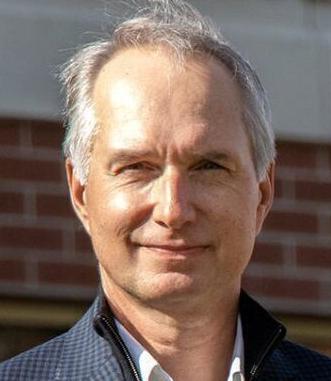
Richard Kyte is director of the D.B. Reinhart Institute for Ethics in Leadership at Viterbo University in La Crosse, Wis., and co-host of "The Ethical Life" podcast.
Richard Kyte is the director of the D.B. Reinhart Institute for Ethics in Leadership at Viterbo University in La Crosse, Wisconsin. His new book, “Finding Your Third Place: Building Happier Communities (and Making Great Friends Along the Way),” is available from Fulcrum Books. He also cohosts “The Ethical Life” podcast.