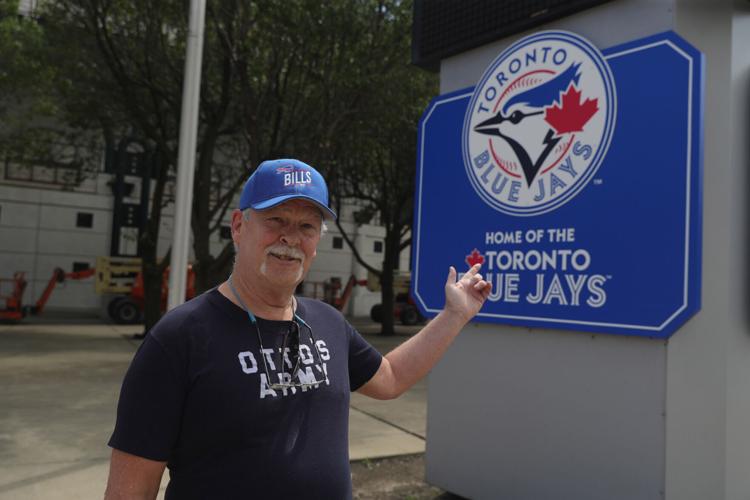
The message came from Bobby Deese. He’s built a Twitter reputation as a Buffalo Bills fan who hoists the team flag at such places as the Eiffel Tower or the Leaning Tower of Pisa, or even in the footsteps of The Beatles at London’s Abbey Road.
Deese, a retired air traffic controller in Florida, wasn’t reaching out about the Bills. The Toronto Blue Jays – unable to compete in their own city because of the pandemic – are scheduled to begin playing "home" games Tuesday at Sahlen Field.
When Deese found out, he thought about three words.
Otto! Otto! Otto!

Bobby Deese’s friends like to joke that you can take Bobby out of Buffalo but can’t take the Buffalo out of Bobby. Deese, a Buffalo native who is now retired in Florida, is trying to take his Buffalo spirit worldwide with his Bills flag. He has traveled to more than 10 countries and snapped a photo with his flag.
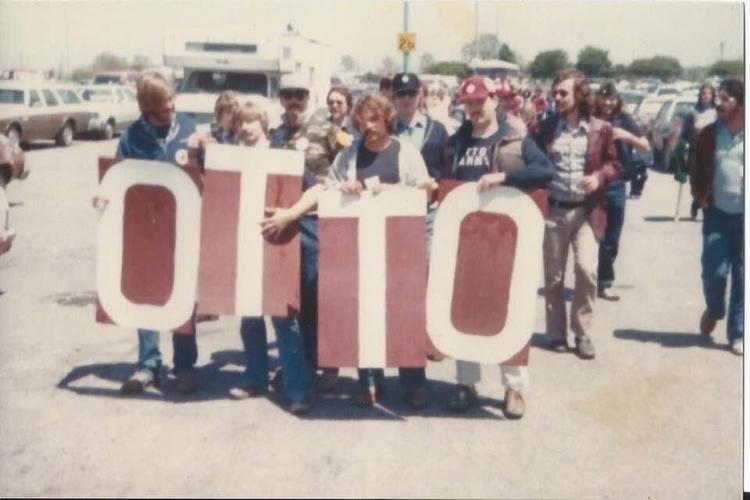
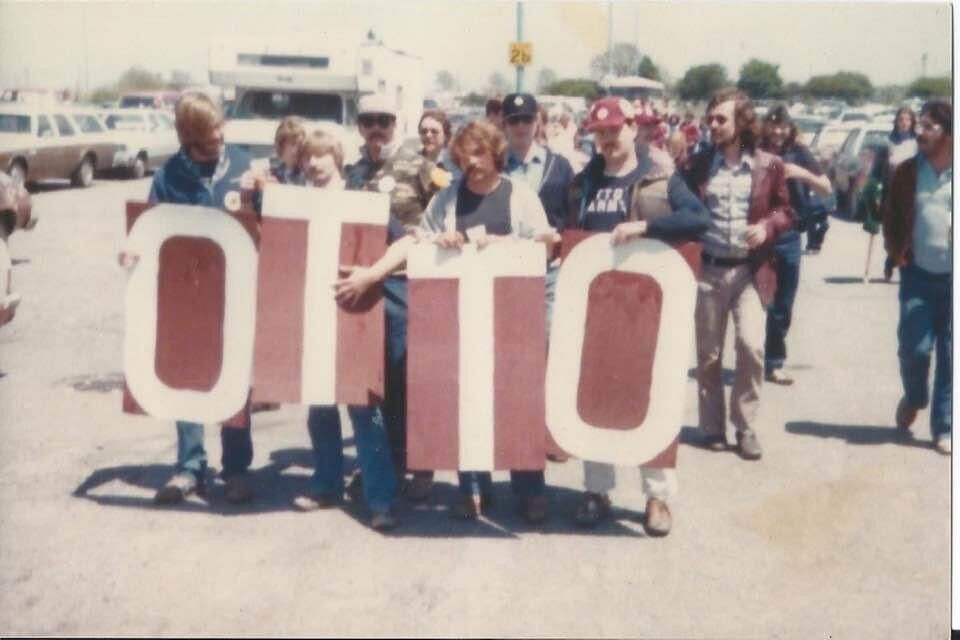
He was part of the Buffalo-based “Otto’s Army,” named in honor of Otoniel “Otto” Velez, an original Blue Jay. It was founded more than 40 years ago by Pat Mohan, best known as "Mo," a former letter carrier and pizza delivery guy from the Kensington-Bailey neighborhood who died in 2016 of colon cancer, in North Carolina.
People are also reading…
Deese connected me with Dan Grimm, a key member, who provided a copy of an informal book Mohan wrote for his buddies about Otto's Army. That led me to memories from Mike Durning, who paused from shooting 9-ball at Classic Cue to take the call, as well as fellow pilgrims Russell “Buddy” Barnum, J.J. Joyce, Denis Loughran, Dan Welch and Steve Rogers, who was there with "Mo" at the absolute beginning.
Now, with most of them in their late 60s, they remember Mohan as a born organizer, whether it involved his beloved slow-pitch softball or bus excursions to Toronto.

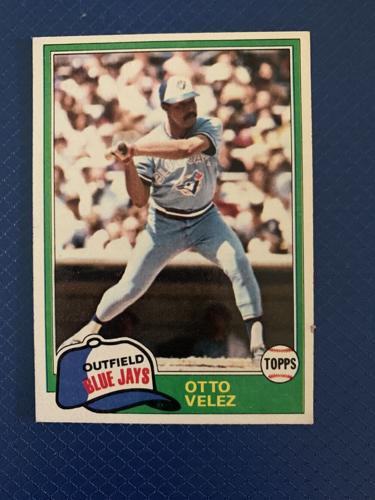
An Otto Velez baseball card from his days with the Toronto Blue Jays. (Courtesy of Otto Velez)
“Once he got something in his head,” Barnum said, “he always kept it going.”
Velez was a rookie with the New York Yankees in 1973 when Mohan, an Air Force veteran on the way home from Mardi Gras, made a stop in Fort Lauderdale, at a place called Magna Haven.
It was a boarding house popular with carnival workers, and a temporary home for some young guys from Buffalo seeking a break from snow and a staggered economy. Barnum said it cost $20.80 a week for a bunk and a locker that gave them a cheap staging place to watch spring training games.
He is part of a sprawling collection of friends that go back far enough to remember Mohan as a kid, working on his dad’s ice cream truck. More connections were built in Little League or high school. Decades later, the regulars still try to gather for a Super Bowl party.
Mohan’s book describes the fateful day in Florida when he and a few others left Magna Haven to watch a spring training game between the Yankees, Mohan’s favorite team, and the Baltimore Orioles. In the first inning, a young Yankee outfielder made a monster peg, a strike that nailed Baltimore’s Al Bumbry at home plate.
The Buffalo contingent, stunned, “scrambled through our game programs to see who made this incredible throw,” Mohan wrote.
In that instant, for him, the mystical occurred. It was Velez, a 22-year-old from Ponce, Puerto Rico known as "Otto the Swatto," who went on to be a .251 hitter during a big league career that ended 11 seasons later. He hit 78 home runs, including four in a single double-header. While he was never a big star with a big name, he had something else.

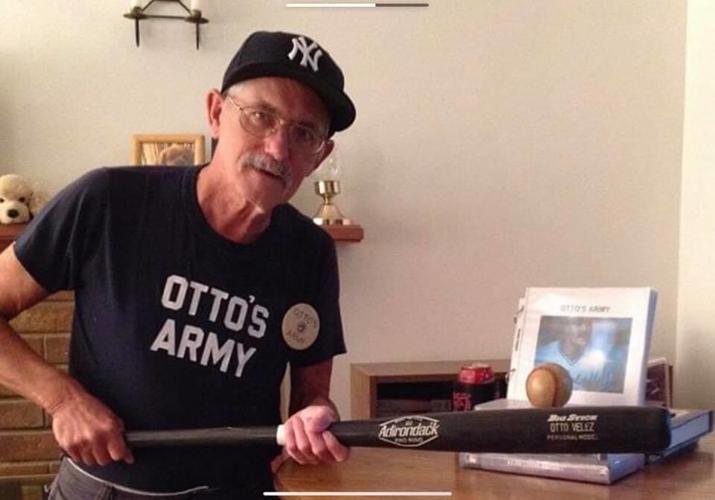
The late Pat Mohan, with his collection of Otto Velez gear from the Otto's Army days. (Image courtesy Dan Grimm)
Otto’s Army.
He was almost exactly the same age as the guys from Buffalo, many raised in the Kenfield Homes housing project, and they stuck with him through it all. They fashioned the idea from "Arnie's Army," the passionate disciples of golf's Arnold Palmer. Once Velez was called up to the Yankees from Syracuse, Mohan and companions would chant his name on journeys to Yankee Stadium.
The real furor began when the Blue Jays – new to the American League in 1977 – selected Velez in the expansion draft. Mohan, in a city just finished with the snowiest winter in its history, was exuberant. “Think about this,” he wrote. “Buffalo, only 90 miles from Toronto, is home to Otto’s Army. What could be better?”

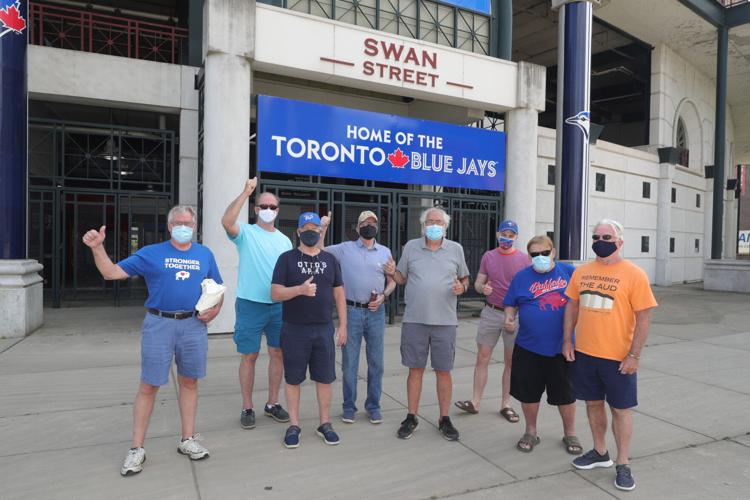
Some of the Otto's Army regulars, left to right, at Sahlen Field: Dan Grimm, Michael "Durf" Durning, John "JJ" Joyce, Denis "Locki" Loughran, Dan Welch, Kevin Deese (son of Bob Deese), Steve Rogers and Russ "Buddy" Barnum.
Velez greeted the move by hitting so well to start off that he was named in April as the AL’s “Player of the Month.” When his first son was born, Otto’s Army sent a telegram of congratulations, part of building up to a monumental day:
On a cold spring morning, with an ample supply of beer awaiting pickup across the bridge in Canada, Grimm – who handled field marshal duties for the group – recalls how a tour bus left Buffalo carrying 45 souls. That journey would spin into many trips – and to signs painted on bed sheets, to a parrot that learned to say Otto’s name, even to a song for the seventh inning stretch that began:
“Take me out to see Otto.”
Throughout the years Velez spent with Toronto, the faith of his Buffalo loyalists never dwindled. They had T-shirts and buttons carrying his name. They saw him in Detroit, where the fans – confusing Otto-mania with allegiance to the Blue Jays – pelted the group with chunks of food until security intervened.
On an otherwise quiet day in Cleveland’s old and vast Municipal Stadium, the Army’s constant plea for their favorite eventually led the 7,000 or so in the place to offer a standing ovation when Velez came up to pinch-hit, as the chant echoed to every corner of the place.
"Otto! Otto! Otto!"

Dan Grimm: The coming of the Blue Jays brings him back to the heyday of Otto's Army.
The regulars recall how Velez would respond by sometimes tipping his hat, how he once walked onto the field and gave them a bow.
In 1982, he was released by the Blue Jays and started the season with Charleston, then of the International League. Mohan and a few buddies drove to Rochester to see him play in a minor league game against the Red Wings.
Velez noticed. He came over to shake their hands. In his book, Mohan said he asked himself if Velez must have questioned their sanity. In any event, it was the last time they saw him. He made it to Cleveland, where he had only two hits and then retired.
For years, Mohan continued playing his beloved softball. He met and married Margo Henkel, who had moved to Buffalo from North Carolina. They later returned to that state, where Margo realized with a jolt one day that her husband had swelling around his stomach.
It was the first sign of the cancer that would take his life. Today, she knows what the coming of the Blue Jays would have meant in their house.
“He just loved Otto,” she said, “and he used to say he wanted to find out how he was doing.”
She lost "Mo" before he had an answer to that question, which left it up to us. I found an article that noted Velez went on to coach in Puerto Rico at the Roberto Clemente Sports City, named for one of baseball’s greatest players. I sent an email to the organization, wondering if anyone there still kept in touch.
A response arrived quickly from Luis Clemente, Roberto’s son and president of a foundation named for his dad. He described Velez as a youth coach of extraordinary importance, “a life-changer” for many young ballplayers.
Luis – whose father, a revered humanitarian, died on a mission to help earthquake victims – offered praise that was about as good as it gets.
“Otto is so committed,” Luis said. “He’s one of the greatest people I ever met.”

Otto Velez and his wife Maria, in a recent image. (Courtesy Otto Velez)
He provided a phone number to reach Velez, now 69, who is most comfortable speaking Spanish. After our first contact, I turned to Dennis Harrod, a friend, to serve as translator. He made another call and learned Velez is a grandfather and a widower now married to his second wife, Maria.
While “the pandemic has shut things down for now,” Velez said, he fully intends to teach and coach baseball again.
The closest he ever came to Buffalo was a quick visit to Niagara Falls. But Velez vividly remembers his followers from this city, recalling how they “came in groups on buses” and “motivated me to do my best in every game.”
Almost four years after the death of Pat Mohan, who always wondered what his favorite Blue Jay thought of the whole deal, Velez laughed during our first conversation on the phone when asked what he recalls most vividly about the Army.
“Otto! Otto! Otto!” he replied, which to Margo and the faithful was another perfect strike, straight to home.