

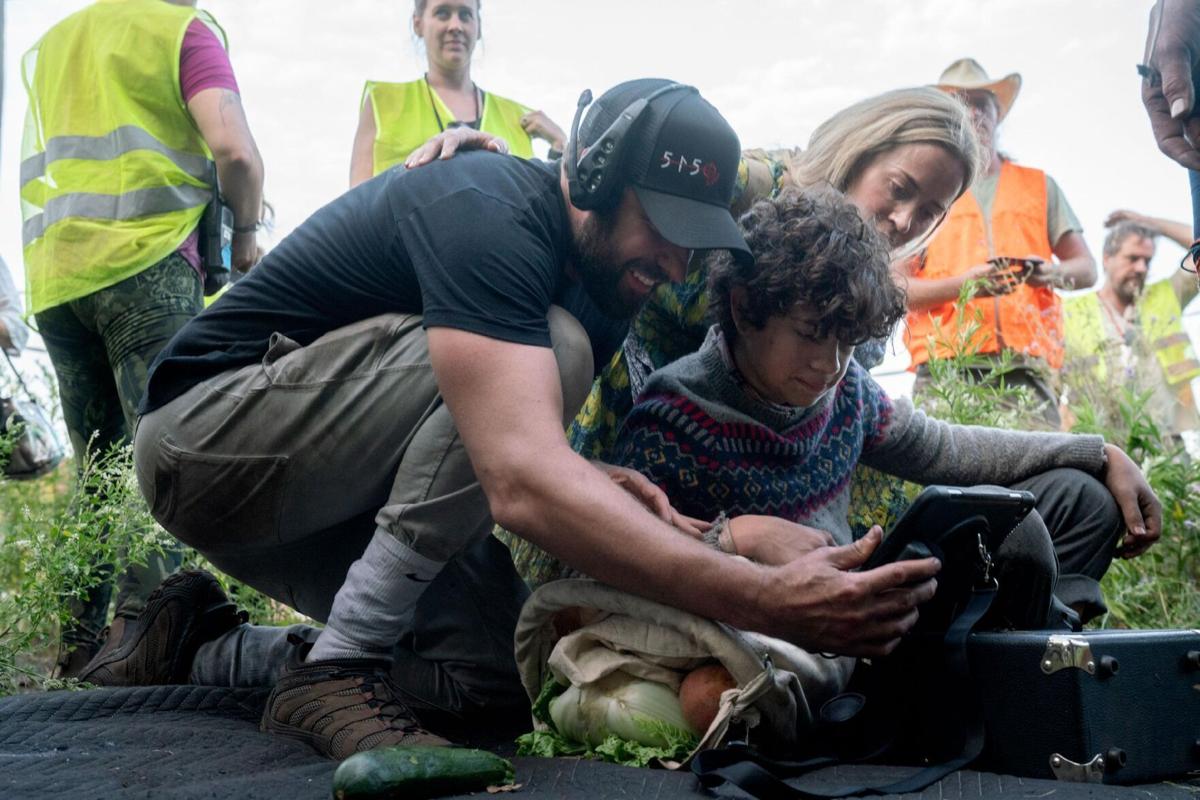
Assuming that Covid-19 vaccinations deliver us to a post-pandemic world, one of the things we have to look forward to in Buffalo Niagara is the growth of film and television production here.
A $72 million project was announced in the fall to build a new film studio on a 27-acre parcel across from the Tesla plant on South Park Avenue in South Buffalo.
In July, Great Point Capital Management revealed plans to build a $50 million-plus film and television complex on Niagara Street, on Buffalo’s West Side.
And just two miles from the South Park Avenue site lies Buffalo FilmWorks, in the Seneca-Babcock neighborhood, on whose soundstages “A Quiet Place Part II” filmed in 2019.
Is it our charm, dazzling architecture and winning NFL team that attracts the film and TV industries to our fair city? None of those hurt, but more than anything it is the state tax incentives that help us catch the eye of Hollywood location scouts.
People are also reading…
Opponents of New York State’s tax credit program for film and TV companies say the state pays too much for the economic benefits it gets in return. However, the benefits to Buffalo Niagara are hard to argue with.
Mark Sommer reported in The News that “A Quiet Place Part II,” a feature film starring John Krasinski and Emily Blunt, generated an estimated $60 million worth of economic benefits to the area. Overall, film productions spent $76 million in Western New York in 2019, according to the Buffalo Niagara Film Commission.
People involved in the Krasinski film rented about 16,000 hotel room nights, according to Film Commissioner Tim Clark.
The movies filmed here also create local jobs. “Even with just a few days here of (filming) ‘Nightmare Alley’ with Guillermo del Toro, they hired close to 200 local actors,” Clark said of the film, partly shot here in early 2020.
The state tax credit gives an extra incentive to upstate locations. Films shot outside of the New York City metropolitan area get an extra 10% bonus for certain labor costs.
That extra credit, plus Buffalo’s ample supply of qualified crew members, helps put us on the filmmaking map.
“A few years ago we didn’t have the massive labor force that we have now, the International Alliance of Theatrical Stage Employees union, for instance, wasn’t really prevalent here,” Clark said. “Now we have IATSE talent that’s so deep, and it’s people with a Western New York work ethic – they come early and stay late.”
Great Point Capital Management, a media investment fund, is building the West Side complex, on property it bought from Rich Products. Robert Halmi, the founder of the Hallmark Channel, is part of the Great Point team.
Buffalo Studios, located at RiverBend near the Tesla plant, is headed by CEO Matt Fleckenstein, a Grand Island native.
Buffalo FilmWorks, owned by Jennifer O’Neill, Kevin Callahan and George Pittas, is a sprawling complex with four soundstages. Stage 4, at 80,000 square feet, is one of the longest soundstages in the world.
The state tax credit program sets aside $420 million per year, the largest tax credit for any single industry. Critics, such as State Senate Minority Leader Rob Ortt, R-Tonawanda, object to the credit, saying that state taxpayers do not need to be subsidizing Hollywood. They’re missing the point.
Like the Buffalo Billion initiatives, the film tax credit uses state funds to support an industry that creates jobs and other economic impact in Western New York. We would have no objection if lawmakers were to make the tax credits more focused on productions outside of New York City (sorry, “Saturday Night Live”), but the program as now constructed produces tangible benefits here.
In addition to feature films such as “Marshall” and the “Quiet Place” series shooting here, the growth of studios and soundstages is creating critical mass that gives Buffalo a toehold in the entertainment industry.
There’s every reason to expect the film and TV industries to come roaring back after the disruptions caused by Covid-19. We can’t wait to see what’s next for our city’s filmmaking facilities.
• • •
What’s your opinion? Send it to us at lettertoeditor@buffnews.com. Letters should be a maximum of 300 words and must convey an opinion. The column does not print poetry, announcements of community events or thank-you letters. A writer or household may appear only once every 30 days. All letters are subject to fact-checking and editing.


