

The Public Accountability Initiative, a progressive watchdog group, last week released a report critiquing a tax exemption used by Buffalo-area developers 11 times in the past year.
The exemption, known as 485-a, was created in 2002 by the State Legislature to encourage adaptive reuse of vacant or underutilized commercial or industrial buildings. The program, which does not apply to New York City, has been used in Buffalo more than anywhere else in the state.
It has done its job in making possible many of the reuse projects that developers have used to bring cranes and bulldozers to places in the city that had been moribund for years. It also contains some loopholes that developers can use to get tax breaks where they were never intended.
How can the loopholes be fixed? The Legislature has a plan for that.
The Assembly passed a bill during the 2019 session to amend 485-a. The Senate was expected to pass its own version, but a senator who sponsored it, Sen. Neil Breslin, D-Albany, pulled the bill from consideration as the legislative session was ending, saying the language needed work.
People are also reading…
After whatever tweaking is needed, getting the bill back on the agenda when a new legislative session begins in January should be a high priority. Developers would continue to receive the law’s generous tax break when it is merited, but it would not apply to the more marginal cases that bordered on absurdity.
By the Public Accountability Initiative’s calculations, 96 properties in Buffalo have received the incentive, 11 of them within the last year. Owners of the 11 properties paid less than $90,000 in taxes on their properties, PAI says. They would have paid more than $450,000 if the properties were assessed at full value of $15.6 million.
Projecting from now through the end of 2030, PAI adds, the tax breaks in Buffalo will total $66.9 million. The group sees that as an unfair subsidy to prosperous developers, paid for by the rest of Buffalo’s commercial and residential taxpayers. Their numbers, however, don’t account for the property values that would remain flat if many of these projects were never undertaken. If a crumbling industrial warehouse in South Buffalo, for example, was left vacant or abandoned, its value to the city tax rolls would not be particularly high.
If the owner receives a tax break for turning the warehouse into a mixed-used building with apartments and an art gallery or coffee shop, the owner may get a full eight-year tax exemption on the difference in property value before and after the construction project, with a gradual phase-out until the 12th year. It’s not hard to see that as a net positive for a particular street, neighborhood or the city as a whole. Such projects are part of what attracts millennials and other residents to urban living, bringing energy that a city needs to thrive.
Rep. Brian Higgins, D-Buffalo, was one of the original sponsors of the 485-a program, which was designed to provide an incentive for mixed-use projects that incorporate both residential and commercial tenants.
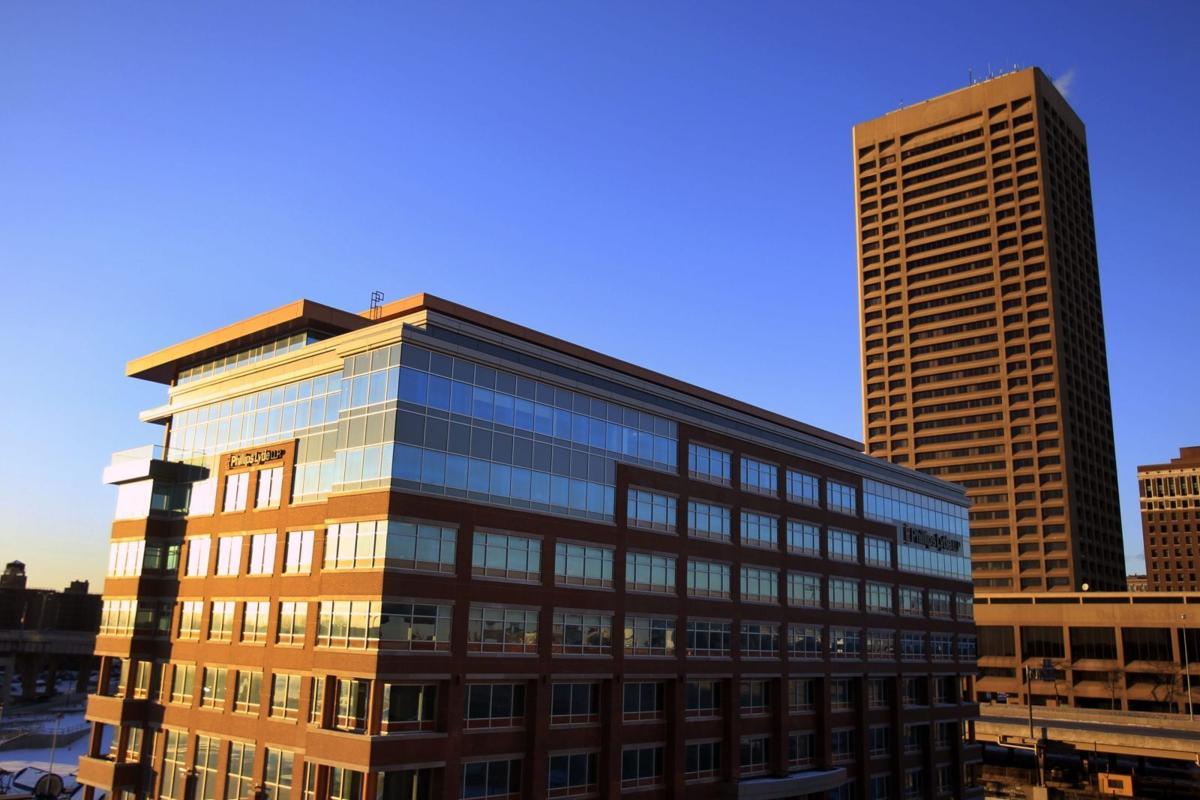
The program’s guidelines, when followed to the letter, make for some questionable tax exemptions. The best-known example in Buffalo is when Benderson Development put one 900-square-foot apartment alongside the Courtyard by Marriott hotel and the Phillips Lytle law offices at One Canalside. The single apartment let the project receive a $5.9 million tax reduction.
Under the 485-a reform bill, commercial space would have to occupy at least 15 percent of the square footage, and residential space account for at least 50 percent of the building.
The bill also has a stiff clawback provision. Any property owner whose 485-a exemption is revoked during its 12-year term would have to pay back all the taxes eliminated until then.
Developers say they only want whatever tax breaks the law allows. In addition, one could be at a disadvantage if competitors used exemptions that they passed up. It’s the “don’t hate the player, hate the game” argument.
That’s why the game needs to change. The ball is back in the State Senate’s court.

