

Transportation is a hot topic in the upcoming November elections. Tucson voters are going to be able to vote what direction the city takes for transportation.
Question to candidates: What are your top priorities for transportation in Tucson? Are there any specific projects you think the city should focus on?
Mayor
Arthur Kerschen
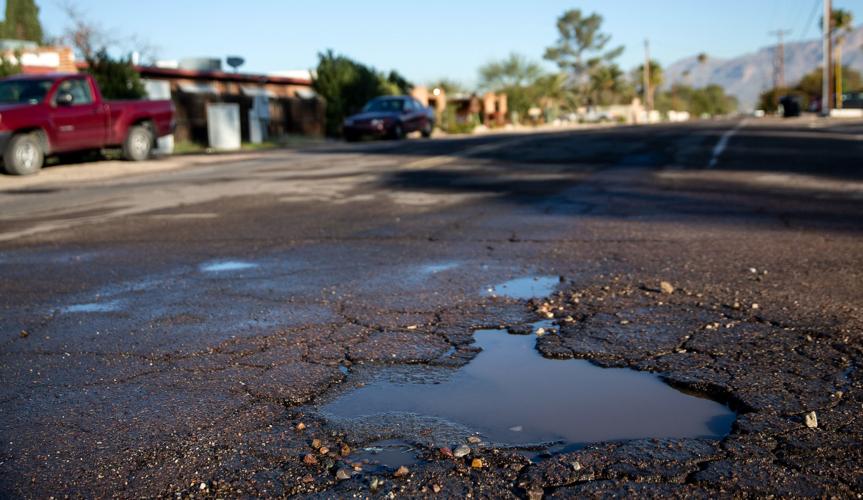
I support the privatization of the city’s public transportation system. I would make pothole repair a high priority.
Regina Romero
The transportation policies and programs I have led on in my first term as Mayor have been guided by the voices of Tucsonans and are driven by these core principles:
- One of the most important investments that government can make is in public infrastructure. Investing in public infrastructure leads to private investment.
- We must center people in our policies. That is why I have encouraged us to shift to thinking about mobility – what makes getting around in our community safe, accessible, comfortable, efficient, and enjoyable for all Tucsonans?
- We must act boldly on climate change. The transportation sector is the largest contributor to climate change in the US. We must take local action to decarbonize our transportation sector, as well as make sure our transportation system is climate resilient.
People are also reading…
One of the things I heard most often on the campaign trail in 2019 was: we need to fix our roads. Most of Tucson’s roads were built decades ago and should have had maintenance treatments every 5-10 years — but most hadn’t. In 2021, I requested that we invest money from our city budget to help us catch up with some of this deferred maintenance. Under my leadership, we dedicated an unprecedented $14 million annual investment from our city budget for neighborhood street repair, which more than doubled the amount we were previously investing.
This was a great start, but I knew it still wasn’t enough. One of our major funding sources for road repair, the half-cent sales tax known as Proposition 101, was set to expire at the end of June 2022. We needed to make sure we had dedicated funding for our roads, which is why I introduced Proposition 411, the new 10-year half-cent sales tax which replaced Proposition 101 when it expired. Proposition 411 kept city sales taxes at the same level while focusing even more funding on local roads. It passed in May 2022 with 73% of the vote. With Proposition 411 money, the City of Tucson will improve all neighborhood streets over the next 10 years, as well as make road safety investments throughout the city. After Proposition 411 passed, two independent oversight groups, one for the pavement projects and one for the safety projects, were established. Since then, they’ve identified Year 1 projects in all six Wards of the city. These construction projects will be underway over the next few months.
As the Ward 1 City Council Member in 2018, I asked city staff to develop a Complete Streets Policy to improve the safety of people walking and bicycling in Tucson. This was supported unanimously by Mayor and Council, and a year later, we adopted the policy. Shortly after I became Mayor, we launched Move Tucson — building upon this policy to create a comprehensive citywide vision and plan for Tucson’s mobility future. Move Tucson is grounded in data analysis and community input, and projects have been prioritized using an equity-oriented framework. As we implement Move Tucson, we are creating more options for people to get around our city, with an emphasis on safety for pedestrians and bicyclists, and we are investing in our existing infrastructure while also addressing gaps in our travel network.
I have successfully brought in millions in Federal infrastructure funding including Federal grant funds to support replacement of the 22nd Street Bridge, to purchase EV buses, and to plan for the Nebraska Street bicycle and pedestrian bridge over I-19, just to name a few. We’ve also received Member-Directed Funds from Congresswoman Kirkpatrick for repaving streets in the Western Hills II neighborhood.
Regional collaboration is important to me, and I’m excited to partner with Pima County on creating a Vision Zero Action Plan, a project funded by a Federal Safe Streets for All grant. This plan will identify strategies that will move us toward eliminating traffic fatalities and severe injuries. I am also hopeful we can reach an agreement on an RTA Next Plan that will fairly represent the priorities Tucsonans have identified through the Move Tucson planning process.
Two projects that I would love to see move forward – but that will require solid partnerships and significant funding – are related to investment in high capacity transit. I am hopeful that we can secure federal and regional dollars for our high-capacity transit corridor connecting Tucson Mall, Downtown, South 6th Avenue, and the Airport with bus rapid transit and an extension of our streetcar. The other is bringing daily passenger service between Tucson and Phoenix on Amtrak. Moving forward with Amtrak will require partnership with the state, with our regional transportation organizations, county governments, and all the municipal and tribal jurisdictions along the way. I am excited for Governor Hobbs’ leadership and for ADOT’s partnership on this, which gives us a much greater chance of success for competitive funding from the Federal Rail Administration.
Our transportation and land use strategies must go hand in hand, and another major priority of mine in my second term will be for us to reimagine our corridors in a way that centers people. We are creating redevelopment incentives through zoning changes as well as updating our Major Streets and Routes Plan to help make our community more walkable, bikeable, and transit-friendly. I know that we are still a city that was designed for cars, so even as we work to create more viable transportation options other than using personal automobiles, we have also creating requirements for providing electric vehicle infrastructure in new development, so we can support transition from gas-powered cars to EVs to help us move towards decarbonization.
Looking forward to a second term, we have a lot of continued implementation work to do on the projects and programs I’ve already mentioned – we have set the stage for what we want to achieve with recommendations from Move Tucson, Tucson Resilient Together — our Climate Action and Adaptation Plan, and with more policy guidance forthcoming from our Major Streets and Routes Plan update, our Vision Zero Action Plan, and our Plan Tucson general plan update.
Janet “JL” Wittenbraker
I am unclear on what you mean by transportation. If you are referring to the function of the City of Tucson Transportation Department, I need a better understanding of the City’s budget, grants, and cost of road/street repairs versus road/street reconstruction. Generally stated, the City of Tucson should focus on rebuilding our roads and ensuring sidewalks meet current ADA requirements. Transportation projects should be done at night as to not impede traffic flow and business access.
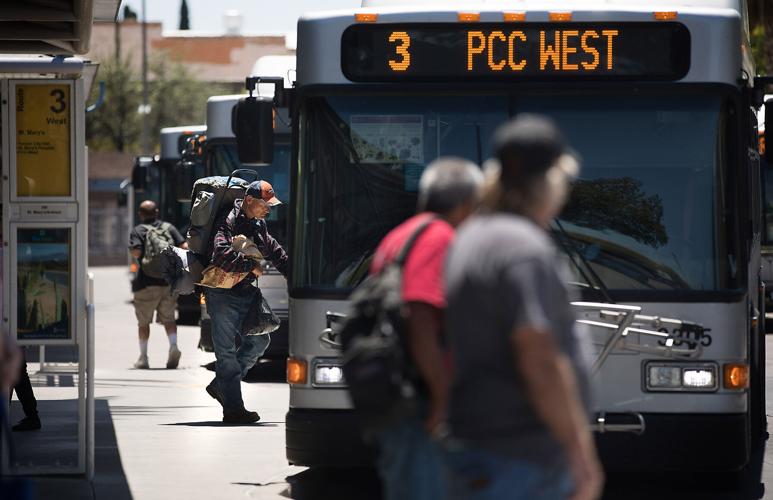
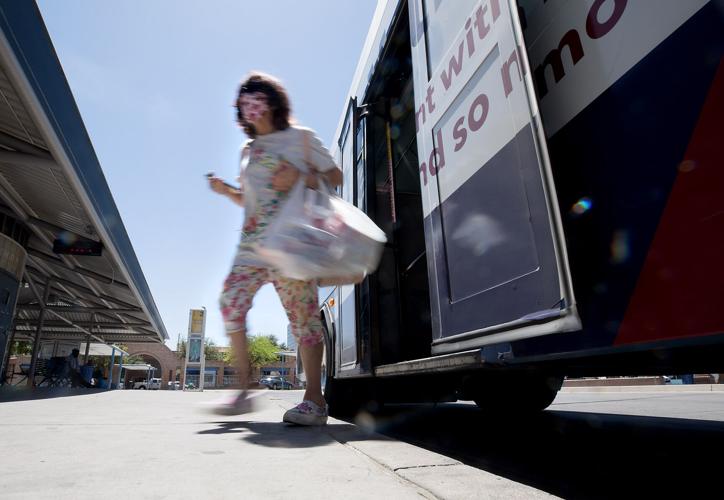
If you are referring to SunTrans, I disagree with the current mayor and Council’s decision to extend free public transportation through June 2023. I disagree with the narrative that public transportation should be available at no cost to users. The City of Tucson should not be allocating taxpayer dollars to subsidize public transportation.
However, to fully answer the question of City involvement/investment in public transportation, I would first need to understand the city’s return on investment and benefits of City transportation to its constituents.
Ed Ackerley
FILL ONE MILLION POTHOLES. After crime, the No. 1 complaint from constituents is the condition of the roads. Filling potholes, cleaning medians, and using bond funds to repave and repair streets is the biggest concern. Secondarily, the “free bus fare” measure taken by the council during COVID-19 restrictions needs to be evaluated. Perhaps free bus fare is not achieving the goal of providing adequate transportation for commuters, students, and families.
Ward 1
Victoria Lem
Victoria Lem did not respond to our questionnaire.
Miguel Ortega
We must continue to work towards safer, more affordable and greener transportation infrastructure. As we continue to work on major transportation projects, we must keep in mind that families need adequate transition time to adjust to any changes in modes of transportation: a good idea is only as good as its implementation and level of respect for residents and small businesses. I will advocate for expediting the implementation of Proposition 411 (Prop 411), the half-cent sales tax passed by the voters “solely for improvements to neighborhood street conditions and statewide street safety.” Residents have waited far too long for their streets to be repaired and they deserve a faster process to begin work on projects. I also believe that the City should do all it can to continue to keep bus fares free, just like many forward-thinking cities have across the nation. We have an American tradition of keeping important resources accessible and free for our residents, such as libraries, parks, public safety assistance — transportation is just as important and just as vital for residents getting to school and work. However, there should have been a more inclusive discussion with the employees that work hard every day to transport our citizens throughout the City. If elected, I will reengage that conversation and work with union representatives to address these safety concerns.
Lane Santa Cruz
My top priorities for transportation are to expand mobility options and accessibility. This should center on people moving on foot, mobility devices, bikes, public transit and not focus exclusively on vehicles. My effort to make transit fare-free is a first step in making public transportation truly accessible. Our next effort is to reimagine our transit route system and frequency to make it more reliable and a viable option to replace car trips.
Neighbors and businesses are often concerned about speeding on neighborhood streets and drag racing on arterials. Speed mitigation mechanisms and safety infrastructure on our roads are needed to make it safer for people of all ages to move around. The passage of Prop 411 will finally bring a funding mechanism for much-needed repaving, preservation, and safety infrastructure for all Tucson neighborhoods. The west side and south side have added challenges and connectivity needs as a result of the I-10/I-19 and railroad tracks.
Ward 2
Paul Cunningham
We’ve got to focus on transit and start looking at transit in new ways. In a lot of ways, we operate transit in the same way as we did 50 years ago. One of the things I have been looking closely at is SunVan, our paratransit option for folks in the community who can’t ride our fixed route service. SunVan service times have been slipping for some time but the coronavirus pandemic and the associated driver shortage have made the service even more frustrating for many folks trying to get to work, make appointments or just meeting up with friends. My office has met with representatives from other cities (including Valley Metro in Phoenix) who have solved staffing issues, realized savings for the system while reducing wait times and late pickups and dropoffs by using third-party paratransit services for certain trips. I have proposed a study session to discuss this and other innovative transit strategies that could realize service improvements and/or savings to the system.
Another thing we need to focus on is my “almost free” transit approach. I believe that monthly transit passes should be available for less than $10 per month for the user. By pursuing investment from the University of Arizona, Pima Community College and other major transit users in our community, we can fill the $12 million funding gap that fare-free transit has created in the City’s budget while permanently expanding access to transit in Tucson.
In terms of road projects, we need to continue to advocate the completion of the northern portion of the Houghton road expansion (an RTA project) and focus on road paving and safety projects. I am proud of the investments in our roads that the City of Tucson has made during my service on the City Council, including the 14 neighborhoods that have been paved and every arterial in Ward 2.
Lisa Nutt
The fact is, Tucson needs to be building a city for the next 30 years, starting right now. From establishing a more robust clean energy public transportation structure to building out capacity for our growing electric vehicle industry, Tucson must look to the future of transportation to stay ahead of the curve. However, in the near term, we must invest our infrastructure resources into road improvements, including analyzing different technologies that yield better duration and/or contribute to our environmental sustainability goals and improve public transportation access which is essential to economic growth in Tucson.
Ernie Shack
Ernie Shack echoed Wittenbraker’s responses
Pendleton Spicer
One of my top priorities for transportation in Tucson is to move away from the faulty concept of forcing people to purchase electric cars. Electric cars create more problems than they solve. It should not be up to the government to tell people what kind of cars they must own. It is important to have public transit for those who cannot afford to or choose not to own a vehicle. However, I believe that those who wish to own a vehicle should be able to and they need to have roads that are in good condition and which do not damage their vehicles. Another priority for me is, therefore, to repair and maintain our roadways, especially potholes. I am strongly opposed to the concept of a 15-minute city model. How far a person travels from their home for whatever reason should not be up to government but rather the individual. Therefore another priority for me is to reduce government interference in an individual's choice of how they wish to travel and how far they want to go.
Ward 4
Ross Kaplowitch
My top priority for transportation is to improve Tucson’s streets. We need to fix the potholes, increase traffic patrols, and make sure public transportation is safe, clean and available for everyone to use if they so choose.
Nikki Lee
As a representative of Ward 4, my top priorities for transportation include successful completion of planned road projects (RTA, Prop 101, and Prop 411) and the following critical projects that must be prioritized to support growth in this corridor:
- Widen Mary Ann Cleveland Way to a 4-lane divided roadway
- Widen Colossal Cave Road to a 4-lane divided roadway
- Widen Harrison Road to a 4-lane roadway from Irvington to Golf Links
- Widen Irvington to a 4-lane divided roadway from Houghton to Kolb
From a citywide lens, prioritizing efficiency and implementing smart technology in roads and street lights will enable faster, safer traffic flow and enhance overall transportation safety. By adopting such innovations, we can reduce dependency on cars, especially in areas with well-established bus routes. This approach fosters sustainable urban mobility, benefiting the environment and improving the quality of life for Tucson residents.