

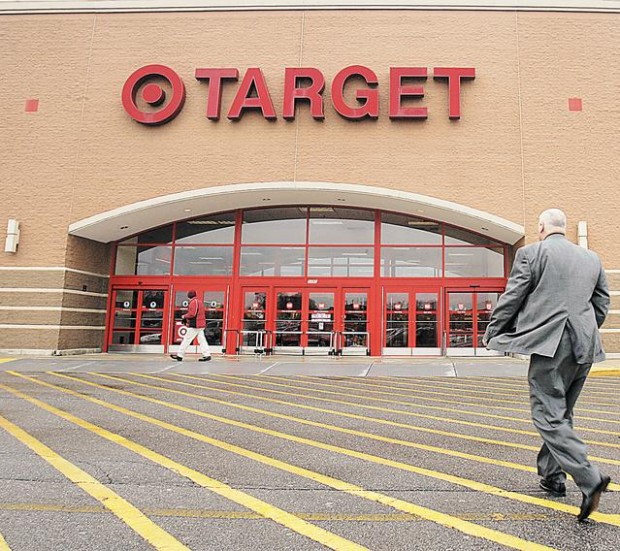
If copying is the sincerest form of flattery, Target Corp. should feel great about itself these days.
Rival retailers ranging from Payless ShoeSource Inc. and J.C. Penney Co. to Wal-Mart Stores Inc. are borrowing a page from the Minneapolis company's playbook, upgrading design at a breakneck pace.
So far, Target has been able to stay innovative. It keeps adding hot products, such as Smith & Hawken accessories, and is bringing in apparel by new designers from around the world. Still, the retailer struggled last year with sales of pricey home furnishings, and it just lowered its estimate for April comparable-store sales. Target, which recently posted $59 billion in revenue, is about the size Wal-Mart was a decade ago, though sales at existing stores are rising at twice Wal-Mart's rate.
Founded by Dayton Co. in 1962 — the same year as Wal-Mart and Kmart — Target began to distinguish itself with cheap-chic identity about 20 years ago, when Bob Ulrich became chief executive officer. He credits Target's team approach, and specifically President Gregg Steinhafel, who leads the merchandise teams, and Michael Francis, the chief marketing officer, whose ads set the company apart. Here are excerpts from an interview with the three of them:
People are also reading…
Q How did the idea of an upscale discount retailer come about?
Bob Ulrich, chairman and CEO: There were a heck of a lot of people around 20 years ago that were covering the same space. The monster at the time was Kmart, but Wal-Mart was also already emerging as an enormous power. Both had merchandise we didn't think was particularly inspiring. And we didn't think it would benefit our guests (Target's word for customers) to offer them the same. With our department store heritage, we had a bit more of an affluent guest and a more female-oriented guest. So we looked at how we could leverage all that.
As we pushed the parameters of the design and quality and trendiness of our merchandise, it eventually became more acceptable for more upscale people, not just in terms of income but taste level, to shop at Target. We created the whole trend of designers making products for discounters, starting with architect Michael Graves in 1999, who took his $135 teapot and re-created it for us for $35.
These things keep evolving. You can't just be unique in one category. You can't be really mundane in small electrics if you're trying to be innovative in textiles. You can't be really forward in linens and beat down in shoes, so you have to start to get more consistency across the board.
Q Are you worried about everyone copying what formerly made you unique?
Ulrich: Not really. For another competitor to say they're going to compete with us at our level of prices and design, it's hard if they don't have our guests, who are on average about 20 percent more affluent, more highly educated, come from more sophisticated areas. Those guests aren't in their building looking for that kind of merchandise.
We've been at this for 15 or 20 years. I'm not saying it can't happen over time. Saying that the Yugo is going to turn into BMW in the next 18 months is pretty silly.
Q How do you keep coming up with cutting-edge merchandise and marketing ideas, such as color-coded prescription bottles so family members don't mix up their medicines?
Michael Francis, executive vice president, marketing: One way is through something we call The Big Idea contest. I challenge my team to solve a problem or see things a new way. We've done everything from what's the next consumable product that we would like to repackage to what product in your pantry frustrates you the most. The winner gets a cash prize, recognition and sometimes we create the product or campaign.
I have people who are brilliant all over the country, and they feed in ideas on a regular basis. I probably have about a dozen of them — trend people, movie people, advertising people. We pay them. And we get monthly missives — e-mails or letters. I just got a whole package on sustainability ideas. They've become invaluable for me, because it's people who we trust, who we know have the right taste level, who understand our brand.
Gregg Steinhafel, president: We reward innovation, we recognize it, we talk about it a lot. We look for innovation globally in every corner of the world in everything we do, whether it's architecture or marketing or merchandising or new technology systems.
We share ideas so that a good idea in one part of the company can translate to another. We have the line Simply Shabby Chic, for instance, and we're able to say well, you know, that has application in pets. Now who'd have thought that you could take print and pattern and what we do in dinnerware and put it on doggy bowls? We're structured in a way that fosters innovation.
Q How do you balance taking creative chances with minimizing risk?
Steinhafel: It's important that we push the envelope and that we fail. Like domestics where we got a little out in front of ourselves with too high a thread count in sheets and too many top-of-bed products at high prices. We recognize that when we do fail, we make the course corrections and we don't penalize the teams that have made these calculated risks.
Q Give me an example of an idea that didn't work.
Francis: Hermit crabs were a big trend in Japan and we thought, "What if we took a thousand hermit crabs and painted bull's-eyes on white shells as a way for Target to brand the Spirit Awards," (a beach-side film event in Los Angeles, the week before the Academy Awards).
It worked, sort of. People said, "Look at the cute little hermit crab." Then it would bite their little finger and we'd wind up having our well-branded hermit crab hanging off someone's finger in a photograph.
But the beauty of it is for the next 18 months, we'd get calls from Mexico, San Diego, from families who were on break who'd find hermit crabs. So, we decided it was a great opportunity to send out Target gift cards and turn it into something we'd never planned on — a find-the-hermit-crab sweepstakes.
Q Why do you do so much buzz marketing — from putting on vertical fashion shows in New York to sponsoring the world's first digital-art gallery in Dallas?
Francis: I don't want to be on a billboard along some freeway in some dense metropolitan area. I want to be where there is a smart, sophisticated audience, who's experiencing that venue for reasons other than brand awareness.
Q Does the buzz translate into sales?
Francis: Absolutely. We measure it. It's a powerful, powerful component of what we do. Buzz has had an astonishingly important ability to amplify our entire marketing message.
Q What do you see as your next engine of growth?
Ulrich: We are still growing in the U.S., and some people think we're a little silly for that, but we are going to have 2,000 stores by 2011 and eventually somewhere between 2,500 and 3,000. As for emerging markets, what difference does it make if we're there now or five or 10 years from now? One could argue that as India and China get more affluent, they are much more ready for a Target-type strategy.
"We look for innovation globally in every corner of the world in everything we do, whether it's architecture or marketing or merchandising or new technology systems."
Gregg Steinhafel, president