


Full moon
Tonight, my datura bush blooms with thirty-three trumpets.
The moon glides past a tree spreading its silver glow on open flowers. Suddenly sacred trumpets fluoresce and seem brighter than the moon itself…
- Author Unknown
The monsoon rains and summer heat bring forth the large green plants with white and lavender-tinted, trumpet-shaped blossoms of the Sacred Datura. Sacred Datura was a favorite subject of the famed artist Georgia O’Keefe. A quick search on the internet came up with many examples of her work featuring “Jimson Weed,” another name for Datura. It may have been the plant she had in mind when she said, “When you take a flower in your hand and really look at it, it’s your world for the moment.”
This prominent plant provides a feast for moths, butterflies, long-tongued bees, hummingbirds and other small insects.
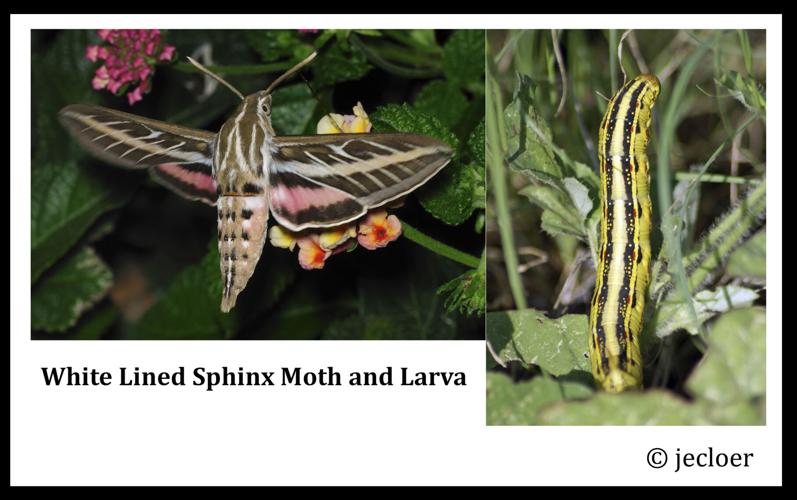
While the Datura provides nectar to several insects in the desert food chain, it has formed a special partnership called “mutualism” with the Hawk Moth. The Sacred Datura furnishes the moth with nectar as a food source and shelter for its eggs. Every year, I get questions from residents asking about large groups of caterpillars in SaddleBrooke. These are the larva of the Sphinx Moth and they will eventually bury in the litter and next season will appear feeding like a hummingbird on your flowers.
What does the plant get in return for this arrangement of mutualism? Pollination, of course. The Datura’s male pollen is transferred by the moth to female flower parts, enabling fertilization to take place. The Sacred Datura can then produce fruit and seeds. The Hawk Moth lays its eggs on the Datura and the larva feed on the leaves which contain toxins. The larva is immune to the poisons, but they are now invested with the poisons that discourage would-be predators.
Poisons!!!
Datura speaks to another, more sinister side of the plant, to a dark and dangerous world of poison, sickness and even death giving rise to alternate names such as Devil’s Trumpet, Deadly Nightshade, Mad Apple and Locoweed. Settlers often called it "Indian Whiskey" because of its ritual intoxicating use by many tribes; the name "Sacred Datura" has the same origin. Datura is a member of the potato family, also called the Deadly Nightshade Family. Included in this are potato, eggplant, tomato, pepper and many garden ornamentals such as petunia.
Warning: All parts of all Datura plants are poisonous and can be fatal if ingested.
Invitation to Disaster
The Sacred Datura, through its night-blooming flowers, evokes a feeling of mystery, and it has long been used as a portal to the spirit world, visions, hallucinations and witchcraft... With all its tissues containing chemical compounds known as “alkaloids,” the plant is extremely poisonous.
Despite the grave risks, Sacred Datura has been used since ancient times by spiritualists, holy men, medicine men, witches and even modern recreational drug users in a search for hallucinations.
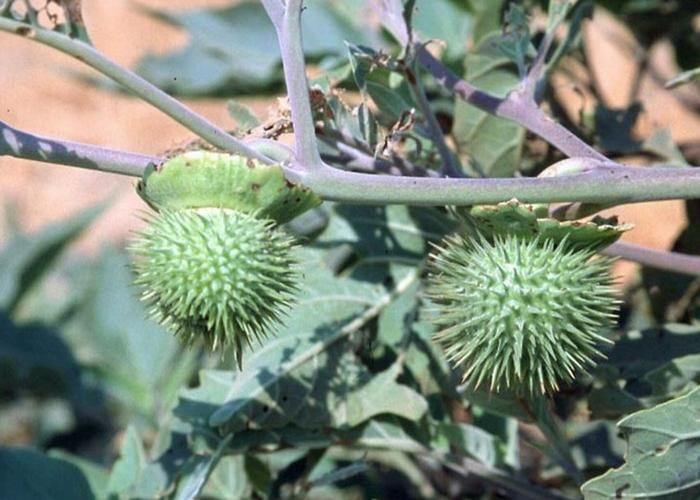
Datura Seed Pods
All parts of Datura plants contain dangerous levels of alkaloids and may be fatal if ingested by humans, livestock, or pets. In some states, it is prohibited to buy, sell or cultivate Datura plants. *
* Connecticut, Kansas, Louisiana, Nevada, New Jersey, Oklahoma, and Tennessee all have laws pertaining to the buying selling or cultivation of Datura plants.
Medicinal
Among the Zuni people, the powdered root is given as an anesthetic and a narcotic for surgery. They also apply a poultice of root and flower meal applied to wounds to promote healing.
Religious
Datura is sacred to some Native Americans and has been used in ceremonies and rites of passage. Among the Chumash, when a boy was eight years old, his mother gave him a preparation of these plants to drink. This was supposed to be a spiritual challenge to the boy to help him develop the spiritual wellbeing required to become a man. Not all of the boys survived.
Recreational
Datura has also been used to induce hallucination for recreational purposes. Ingestion of plant material can induce auditory and visual hallucinations.
Warning
The next times you see this plant by the roadside enjoy the plant for its beauty and history and admire its relationship with nature but please do not test its poisons...
If you have any questions for me or to report nature activity going on, email me at jcloer4243@gmail.com.
 Japanese company invests in mine near Mount Lemmon


