Arizona, Nevada and California would still have to take massive cuts in their Colorado River water supplies under a new, preliminary plan devised by the U.S. Bureau of Reclamation, Arizona water officials said Wednesday.
Reclamation would require the three Lower Basin states to give up a total of up to 3 million acre-feet annually, if that's needed to keep Lakes Mead and Powell from falling to dangerously low levels. As that preliminary plan now stands, the Upper Basin states of Colorado, New Mexico, Utah and Wyoming wouldn't take any mandatory water supply reductions.
But unlike what Reclamation has discussed before, this plan would cover 10 years, not 20. And it would have to be renewed every two years, meaning the level of cuts each state must take could change each time it's renewed.
The new preliminary plan comes after the bureau's efforts to craft a 20-year plan were stymied by the failure of the seven river basin states to reach consensus.
People are also reading…
Early this year, Reclamation released a draft environmental impact statement that also called on the three Lower Basin states to take up to 3 million acre-feet a year in river water supply cuts. It also proposed no mandatory cuts for the Upper Basin states.
That proposal was greeted harshly by the Lower Basin states as a one-sided approach that relied on them to shoulder all the burden of bringing the shrinking Colorado River into balance between demand and supply.
At that time, however, the environmental statement was prepared in anticipation of preparing a new plan to operate the river and its reservoirs for 20 years, not 10.

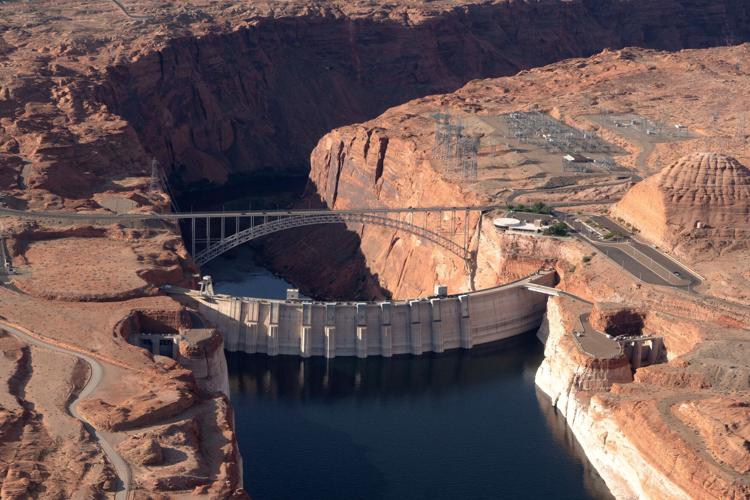
An aerial view shows Glen Canyon Dam on Lake Powell near Page, Arizona.
The bare outlines of the new plan were presented Wednesday by Arizona Department of Water Resources Director Tom Buschatzke at a meeting of a committee, the Arizona Reconsultation Committee, that meets periodically to discuss major Colorado River water issues. He based his presentation on "discussions the federal government has had with the states," Buschatzke said.
In the plan's first two years, "from our perspective," the conservation measures felt by Arizona, California and Nevada would be those contained in a detailed proposal those states sent to the feds on May 1, Buschatzke said.
That proposal calls for the three states to save 3.2 million acre-feet of water between now and the end of 2028, including at least 700,000 acre-feet in previously undiscussed conservation actions.
"Then there would be 8 years of 2-year cycles to do the next steps to protect the system;" said Buschatzke, referring to the Colorado River and its reservoirs, whose supplies have steadily declined since the turn of the 21st century.
However, asked on Wednesday to confirm Buschatzke's account of the federal plan, a bureau spokesman issued a statement that lacked details, other than to imply the agency wanted a plan that would allow it to quickly react to the river's rapidly changing conditions in recent years.
"Reclamation has identified preliminary elements of a preferred alternative" as part of its ongoing environmental review process to produce new river operating guidelines to start after the current ones expire on Sept. 30, the statement said.

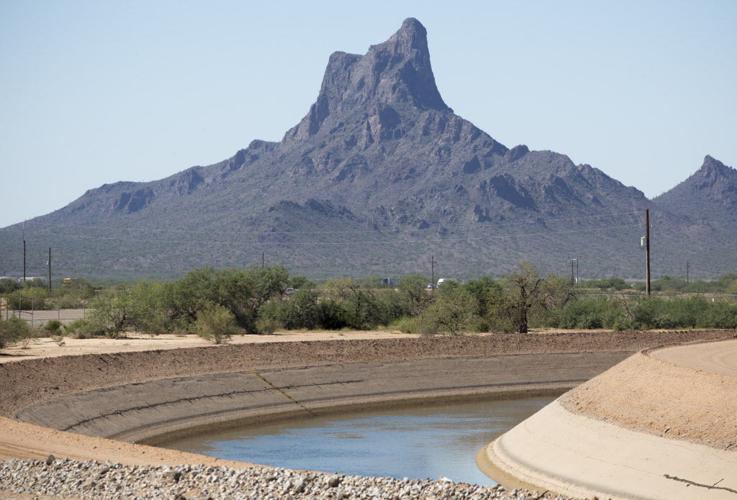
The Central Arizona Project canal meanders past Picacho Peak, carrying Colorado River water to Tucson.
The bureau "has initiated consultations with states, tribes, stakeholders and Mexico," the statement said. "Given the risk and uncertainty facing the (river) basin, these elements are designed to provide stability while allowing flexibility to incorporate consensus-based recommendations as they develop.
"We appreciate the input provided by the basin states and are reviewing their proposals as we finalize the preferred alternative. We look forward to continued engagement and discussions with all of our partners," the bureau said.
The bureau's new alternative also would make it clear that it intended to make "maximum use" of the river's upstream reservoirs by releasing water from them to prop up Lake Powell when necessary, to the limits allowed legally, Buschatzke said.
The bureau's plan also calls for a wide range of potential releases of water each year from Lake Powell to Lake Mead, of from 5 million to 12 million acre-feet annually, he said. In the past, before the river flows really started declining in about 2020, the releases typically ranged from 8.23 million to 9 million acre-feet a year, but this year they've been cut to 6 million.
"I think we all know that unless Mother Nature starts doing her job, it will be closer to the 5 million than to the top end," Buschatzke said.
The bureau has for several years been working on a proposal to replace the operating guidelines that have been used to manage the river since 2007.
But now, the bureau is saying agreement to create such guidelines is not possible in the time before it must release and approve a final proposal, Buschazke said in his talk to the committee.
University of Arizona water researcher Sharon Megdal said she is "perplexed" by the proposal and is unclear how its system of two-year renewals would work.
"I don’t know why they would even want to set themselves up up for that. That puzzles me. You’re in constant negotiations all the timem" said Megdal, director of UA's Water Resources Research Center.
But if the federal agency is going to adopt the Lower Basin states' conservation plan for the first two years, and doesn't impose any water-use curbs on the Upper Basin states, then "who is going to go to court?" Megdal asked. "Maybe that’s a way of staying out of court."
Author and water researcher Eric Kuhn, however, said he thinks this proposal "is just the bureau's best efforts to try to deal with a very difficult situation. They are really focused on dealing with uncertainty, and managing the uncertainty" of the wildly varying river flows in recent years. Kuhn is the former general manager of a regional water district in northwest Colorado.
Stephen Roe Lewis, governor of the Gila River Indian Community, told Wednesday's gathering, "The community is still absorbing that limited information we've received so far" about Reclamation's proposed 10-year plan for the river, and "we will expect a robust consultation with our federal trustees so we will fully understand what is being proposed."
"We do appreciate that the plan could incorporate the Lower Basin proposal, but the community is also concerned about the inherent risks in this approach," Lewis said. "It’s critical that the future risks of Colorado River are not inequitably addressed by Arizona. All water users must play a role, and not set up a system that rewards stubbornness and gamesmanship."
UA's Megdal said the bureau should open up to the general public as well as to states and tribes about its preliminary alternative and how it would work.
"There's a need for more transparency in the process. Why is the federal government only telling a very small group of people its intentions, if in fact it has done so, when it has already been concluded by all that there will not be a seven-state negotiated proposal?" she asked. "Why can't information sharing be more open and inclusive? Conducting so much behind closed doors leaves so much speculation."
Contact Tony Davis at 520-349-0350 or tdavis@tucson.com. Follow Davis on Twitter@tonydavis987.

Tony Davis
Reporter


 Tucson, Phoenix create water-sharing plan as Colorado River shrinks