

VANCOUVER, British Columbia — The possibility of joining the NCAA for the first time has Canadian colleges looking south of the border with mixed emotions.
Schools such as the University of British Columbia and Simon Fraser University see the full scholarships that would come with NCAA membership as a boon to Canadian residents who currently come to the U.S. to pursue their athletic dreams.
Other schools and officials in Canadian Interuniversity Sport, the country's governing body for athletics, see a ploy for publicity that will end up with the schools being unable to compete financially and returning to their roots.
The process of finding out who's right will likely begin in January, when Division II is expected to approve a 10-year pilot program that would allow a limited number of international schools — most expected to be Canadian — to become NCAA members.
People are also reading…
Six Canadian schools have discussed NCAA membership and four have shown interest. Only UBC, SFU and the University of Alberta in Edmonton have gone public about their interest, with UBC and SFU primed to become NCAA members as early as 2009.
The move to allow schools outside the U.S. the right to apply for NCAA membership for the first time came about from a chance meeting a few years ago between UBC athletic director Bob Philip and NCAA vice president Bernard Franklin at a conference for athletic administrators.
Noticing Franklin worked for the NCAA, Philip asked if he could sit in on panel discussion. Afterward, he pulled Franklin aside and popped the question: "Could there ever be a circumstance where UBC could compete athletically in the NCAA?"
Turns out the answer is yes.
"We still have some unanswered questions," Franklin said. "But the value of having international members of the NCAA outweighs them."
The NCAA believes it will benefit from the cultural experience of athletes traveling internationally, and adding schools to help buoy a fluctuating membership base in Division II.
"There aren't a lot of schools left in the United States to add that are big schools," Philip said. "You don't have a school out there that has 45,000 students that's not playing but wants to join.
"But you do in Canada."
Until now, NCAA bylaws have limited membership to U.S. schools and those schools in a territory controlled by the U.S. The NCAA has long cast an eye northward, but never pursued a potential expansion.
"When the whole question arose at the association level about international members, the whole structure said 'Wow what a great thing,' " said Chuck Ambrose, president of Pfeiffer University and chair of the NCAA Division II President's Council. "This is a chance to take the NCAA international and perhaps help address some needs those Canadian institutions have."
The pilot program will most likely be at the Division II level, with a few sports — like hockey or men's volleyball — competing in Division I. Division II has searched for new members, especially in the West, to balance a large number of schools making the jump to Division I in recent years.
Hurdles remain, however, ranging from politics to border security to exchange rates.
There's also the fallout from the CIS, which sees the actions of UBC and Simon Fraser as a ploy to gain attention.
Philip isn't against being a member of the CIS or mind having other Canadian schools perceive his efforts as undermining the organization. He just wishes there was a system in Canada for those schools that want to put more emphasis on athletics.
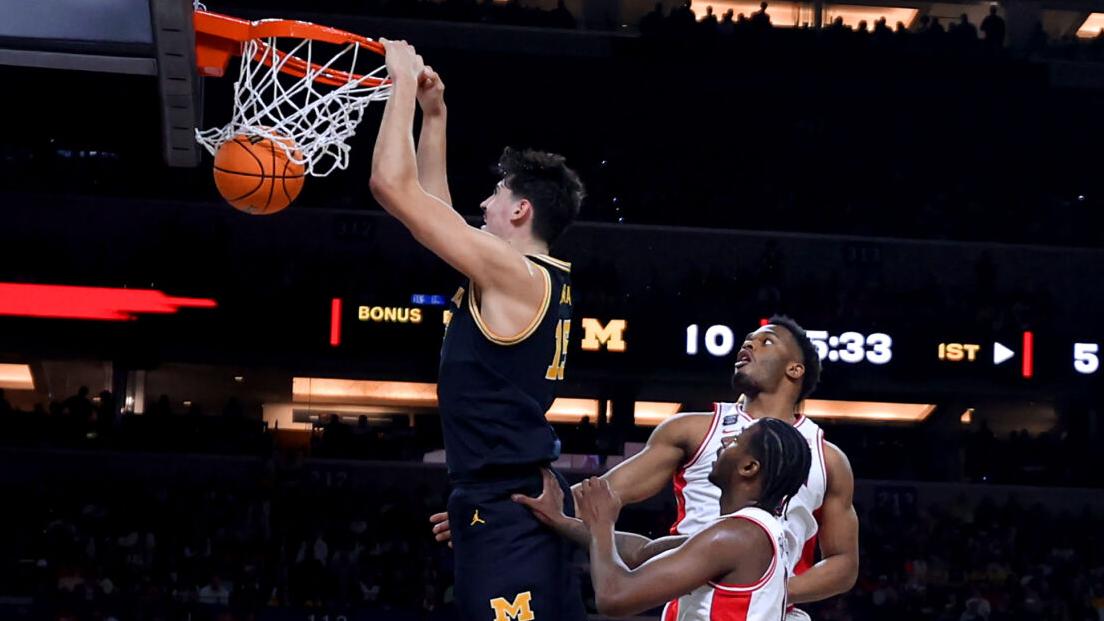
 5 takeaways from Arizona’s season-ending loss to Michigan at the Final Four | Michael Lev


