

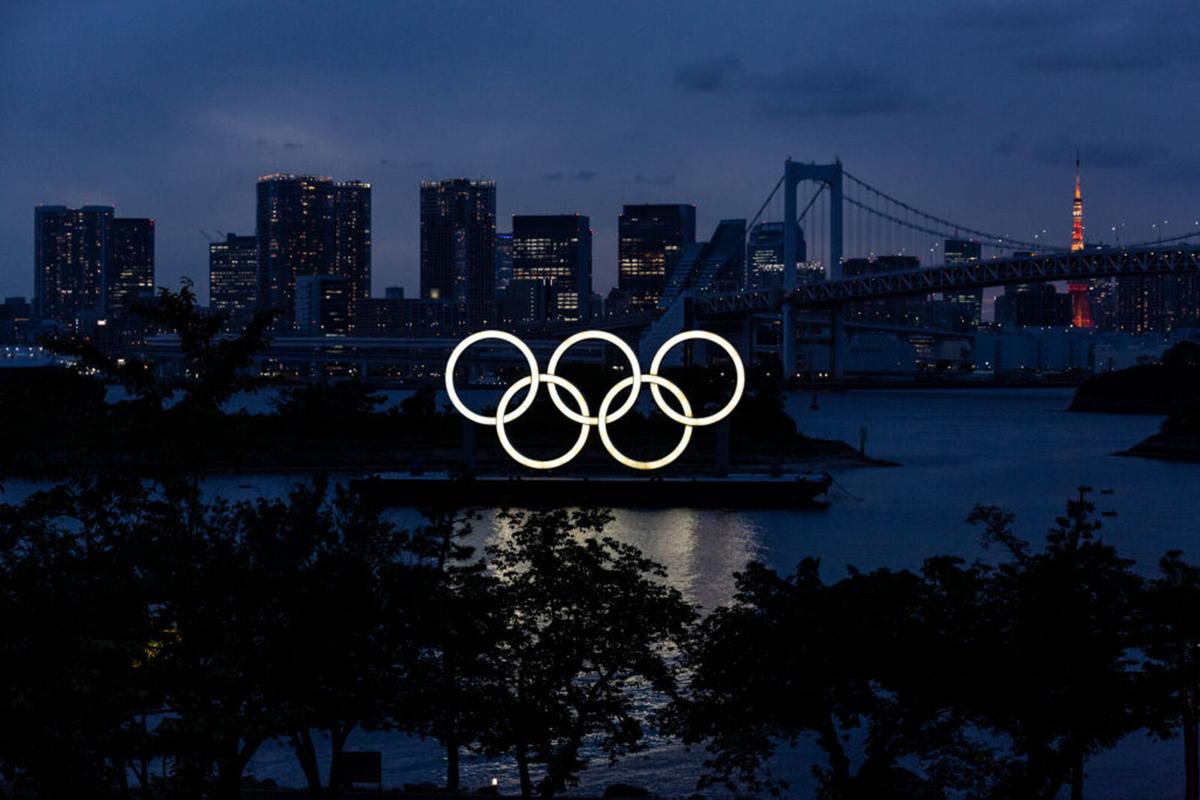
CHICAGO — Even if this year’s Summer Games in Tokyo are staged with minimal distraction — and that’s a big if — everything about choosing Olympics host sites could use an overhaul.
Tokyo is in an unenviable situation, having the Games postponed last year because of the COVID-19 pandemic. The financial commitment the Olympics require already is monumental, and pushing the festivities back a year — though absolutely the right decision — has nudged those costs still higher.
According to The Associated Press, Japan officially has spent $15.4 billion preparing for the Olympics, with $2.8 billion attributable to the delay. Government audits say the overall costs might be twice that, however. The fact the public is footing most of the bill, as is common with the Games, makes it a tougher pill to swallow.
It’s not as if Tokyo’s costs are abnormal either. The 2018 Winter Games in Pyeongchang, South Korea, cost $13 billion. The 2016 Summer Games in Rio de Janeiro cost $20 billion. Even costlier were the 2014 Winter Olympics in Sochi, Russia, with a staggering price tag north of $50 billion.
People are also reading…
According to the Council on Foreign Relations, it took Montreal nearly three decades to pay off the debt it incurred by hosting the 1976 Summer Games. That type of potential headache no doubt has given cities pause as to whether to mount a bid.
There has to be a better way. Although few, if anyone, could have predicted the effects of the pandemic, other expenses can be mitigated. For one, the Games can be celebrated without requiring only one metropolitan area to build facilities from scratch, only for many to go unused once the Olympics and Paralympics leave town. No one likes to see venues deteriorate into eyesores.
To that end, at least two options are worth exploring to make the Games more manageable.
The first is to take a page out of the FIFA World Cup’s book: Instead of limiting the host site to one city, why not use multiple cities?
This approach could be advantageous for American bids. In the interest of making the Games commuter-friendly, the cities ideally would be a reasonable distance apart (say 150 to 200 miles) and connected via highway and rail. A Bay Area Olympics? That could work. Los Angeles and San Diego joining forces? I don’t see why not. New York and Philadelphia co-hosting? Dare to dream.
Consider Chicago’s failed bid for the 2016 Games. Even in rejection the project was expensive. According to Chicago Tribune reporting, the bid left the city on the hook for $140 million in principal and interest on the purchase of property for an athletes village as well as costly 10-year union contracts.
But what if Chicago could have made a joint bid with Milwaukee? For starters, both cities have photogenic lakefronts and are separated by just 90 miles. And in the spirit of spreading the attendance wealth, one city could have hosted the opening and closing ceremonies and track and field, while the other could have been home to swimming and gymnastics.
Detractors might say widening the Games’ footprint diminishes athletes’ and fans’ ability to hop from venue to venue, and that’s true. It’s also a concern that can be assuaged by extending the Olympics schedule by a few days.
But distant events never stop fans from packing World Cup stadiums. Beyond that, the surfing competition for the 2024 Games in Paris will be held in Fiji, 9,700 miles from the host city. So there’s precedent for spacing out events.
Another possibility is to choose permanent sites for the Summer and Winter Games, cities that also would be home to the Paralympic Games.
Among the upsides: The unusual facilities required for the Olympics would be slated for regular use. For example, there’s almost no getting around having to build a whitewater course for the kayak slalom — only in 1996 was a natural river used for the event. However, if that course were slated to host the sport’s marquee event every four years, the cost would be easier to justify — especially if other competitions were held there in the interim.
Choosing permanent host cities would be challenging, but there are some starting points. For the Summer Games, solid arguments could be made to root them in Athens (birthplace of the Olympics) or Paris (first host of the modern Games).
For the Winter edition, Lillehammer would be on the short list given how many veteran journalists gushed about the Olympics in Norway 27 years ago.
“The 1994 Games likely were the greatest Winter Olympics ever,” then-ESPN reporter Jim Caple wrote in 2014. “And 20 years later, those Games still retain that feeling of an animated fairy tale.”
Sure, there are downsides to the permanent-host model. Adjusting to faraway time zones could hurt viewership — and enjoyment — of the Games if they were anchored halfway around the world from the United States and prime-time viewing featured only delayed coverage.
This should not be enough to derail this option, however. Hosting an Olympics is not any city’s birthright. Many NFL cities never get to host a Super Bowl (cough, Chicago, cough). They get over it, and the same would be true for the Games. As for fans who want to see events unfold live, technology allows them to stream to their hearts’ content — regardless of what time it is.
I don’t mean to reduce the Olympics to dollars and cents; I love many things about them. Two years between the Summer and Winter Games seems like forever, and I am among those glued to countless hours of coverage, sometimes at the expense of sleep.
It’s also understandable that to some cities and countries, the cost of hosting the Olympics is like busting the budget on a wedding or a once-in-a-lifetime vacation: The grandeur and prestige override any potential buyer’s remorse. The soft political power can’t be underestimated, either — just ask Japan as it scrambles to host the first post-pandemic Games ahead of rival China, which has the 2022 Winter Olympics in Beijing.
But even an institution as seemingly immovable as the Games can and should be flexible. The International Olympic Committee has demonstrated adaptability by adding and subtracting events. Making large-scale changes would require adjustment periods, but as long as athletes and fans still can connect with the Olympics, they would prove worthwhile.
The best parts of the Olympics — athletes’ dreams being realized, refugees being given the chance to compete, sports history being written — would remain even if the blueprint changes.
Neither option laid out here is perfect, but each is better than the current system.
Photos: Nearly 100 years of lighting the Olympic flame
Intro

About the photo: Flames burn in the Olympic cauldron after being lit during the opening ceremony of the 2016 Summer Olympics in Rio de Janeiro, Brazil, Saturday, Aug. 6, 2016.
The Associated Press has covered every modern Olympics, and that includes photographs of the Olympic flame both along the torch relay route and in the cauldron.
The Olympic flame was introduced at the 1928 Amsterdam Olympics. The torch relay began eight years later ahead of the 1936 Berlin Games.
The flame begins its life at a lighting ceremony in Ancient Olympia, where the original Olympics were held for centuries.
Over the years, the flame has played a bigger and bigger role at the opening ceremony, with the identity of the final torch bearer — often former Olympic greats from the host country — being the topic of feverish discussion.
Muhammad Ali, a gold medalist at the 1960 Rome Olympics, lit the torch at the 1996 Atlanta Games. Four years later, Cathy Freeman lit the flame in Sydney and became the only person to light a cauldron and win a gold medal in the same games.
One of the most memorable lightings came at the 1992 Barcelona Olympics when Paralympic archer Antonio Rebollo shot a fiery arrow over the top of the cauldron, igniting the gases from within.
The torch relay for the postponed Tokyo Games began Thursday, but don’t expect to know the name of the person who light the cauldron on July 23 at the opening ceremony until moments before it happens.
And when it does, the AP will be there to document it.
1932: Los Angeles

Doves are released during the opening ceremony for the Tenth Olympiad in Los Angeles on July 30, 1932. The athletes of various countries stand on the field.
1936: Berlin

The Olympic torch in Lustgarten, Berlin, is lit Aug. 1, 1936, where will be guarded by members of the Hitler Youth until it is brought to the Olympic stadium for the opening of the games in the afternoon. The torch relay was not always a fixture of the modern Olympics, which began in 1896. The relay tradition began with Adolph Hitler's 1936 Olympics in Berlin.
1948: London

British athlete John Mark runs with the Olympic flame, left, and on right, lights the cauldron during the opening ceremony of the XIV Olympiad, in Wembley Stadium, London on July 29, 1948.
1952: Helsinki

Runner Paavo Nurmi, of Finland, lights the Olympic flame from the Olympic torch, during July 19, 1952, opening ceremony in Helsinki, Finland.
1956: Melbourne

Australian athlete Ron Clark, bottom left, plunges the Olympic torch into the bronze bowl, to light the Olympic flame, which will burn throughout the XVI Olympic Games, in Melbourne, Australia, Nov. 22, 1956.
1960: Rome

Italian student Giancarlo Peris holds the torch after lighting the Olympic flame in the tall tripod brazier on the perimeter of the Olympic Stadium in Rome, Aug. 25, 1960, at the formal opening of the XVII modern Olympiad.
1964: Tokyo

Japanese runner Yoshinori Sakai runs with the Olympic torch to light the cauldron, right, during the opening ceremonies of the Summer Olympics in Tokyo, Oct. 10, 1964.
1968: Mexico City

The Olympic Torch burns during the opening day ceremony in Mexico City, Oct. 12, 1968.
1972: Munich

Runner Guenther Zahn stands near the Olympic flame he lit above the Olympic Stadium on Aug. 26, 1972, during the opening ceremony of the Summer Olympic Games in Munich, Germany.
1976: Montreal

Gymnastics athlete Sandra Henderson, left, and track and field athlete Stéphane Préfontaine Lighting of the Olympic Flame during the 1976 Montreal Olympics, July 17, 1976.
1980: Moscow

Soviet athlete Sergei Belov runs with the Olympic flame past the Olympic team from Afghanistan during opening ceremonies of the 1980 Summer Olympic Games in Moscow on Saturday, July 20, 1980. A number of teams boycotted the ceremony to protest Soviet intervention into Afghanistan.
1984: Los Angeles

Rafer Johnson, 1960 gold medalist for the decathlon, lights the Olympic torch during the Opening Ceremonies of the 23rd Olympiad in Los Angeles in 1984.
1988: Seoul

Pigeons fly around as the Olympic torch is lit during opening ceremonies in Seoul Sept. 17, 1988.
1992: Barcelona

An arrow carrying the Olympic flame leaves the bow of Antonio Rebollo to light the Olympic Torch and open the XXV Olympic in Barcelona on Saturday night, July 25, 1992.
1996: Atlanta

Boxing legend Muhammed Ali lights the Olympic flame, as American swimmer Janet Evans looks on during the 1996 Summer Olympic Games opening ceremony in Atlanta, July 19, 1996.
2000: Sydney

Australian runner Cathy Freeman stands under the Olympic torch after lighting the flame at the opening ceremonies for the 2000 Summer Olympics in Sydney, Australia, Sept. 15, 2000.
2004: Athens

The Olympic cauldron rises in this multiple exposure photo, left, after Nikolas Kaklamanakis, right, lit it during the Opening Ceremony of the 2004 Olympic Games in Athens, Friday, Aug. 13, 2004. The photo at left is a single frame time exposure interrupted at six intervals while the Olympic cauldron rises after being lit.
2008: Beijing

Li Ning lights the Olympic Torch during the opening ceremony for the Beijing 2008 Olympics in Beijing, Friday, Aug. 8, 2008.
2012: London

The Olympic cauldron is lit during the Opening Ceremony at the 2012 Summer Olympics, Saturday, July 28, 2012, in London.
2016: Rio de Janeiro

Jorge Alberto Oliveira Gomes lights the Olympic cauldron during the opening ceremony of the 2016 Summer Olympics in Rio de Janeiro, Brazil, Saturday, Aug. 6, 2016.
2021: Tokyo

The torch is prepared to be lit during the Tokyo 2020 Olympic Torch Relay Grand Start in Naraha, Fukushima prefecture, northeastern Japan, Thursday, March 25, 2021. The torch relay for the postponed Tokyo Olympics began its 121-day journey across Japan on Thursday and is headed toward the opening ceremony in Tokyo on July 23.


