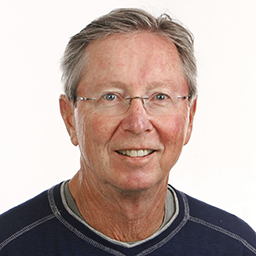
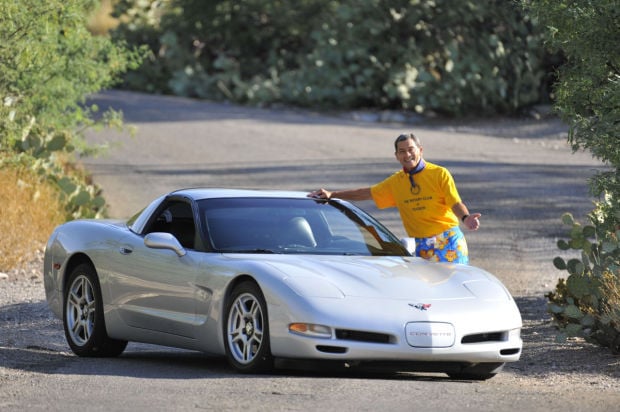
For 37 years, the man with the most compelling story at Arizona Stadium hasn’t been a quarterback, a cornerback or a million-dollar coach.
Dr. Jon Wang is maybe 5 feet 8 inches and 145 pounds, but he has been a giant on campus since he arrived in the fall of 1977, when the UA still played UTEP and Wyoming in the old Western Athletic Conference.
Wang operated on Steve Kerr‘s famously wrecked knee in 1987 and wisely chose not to operate on Sean Elliott’s damaged ACL in 1986.
That’s a career for many surgeons right there.
When Nick Foles broke his hand in 2010, and Derrick Williams his in 2011, neither missed a game.
“We treated both successfully without surgery,” says Wang. Foles broke the UA career passing yardage record. Williams led the Arizona basketball team to the Elite Eight.
People are also reading…
Nowhere in the UA record books is Wang listed, but those who have worked with him know his value goes beyond records.
“I look at him as a statesman. He’s a consummate professional,” says Randy Cohen, the UA’s associate director of athletics for CATS medical services. “His knowledge base is incredible. He knows what he knows and he knows what he doesn’t know. That’s the best thing.”
Wang has been an orthopedic surgeon for the Arizona athletic department for 37 years, an independent contractor while operating a private orthopedic practice, dealing with injuries big and small. In that time he has become an institution at the institution.
He will be on the sidelines Friday night, season No. 38, when Arizona opens against UNLV. His title now is “Team Surgeon Emeritus,” which makes him chuckle.
“I think it means forgotten but still here,” he says.
Forgotten? Hardly.
In 1986, when Chuck Cecil intercepted a pass and returned it 106 yards to beat Arizona State in the most famous game in Arizona Stadium history, he did so with a torn lateral meniscus.
“I had told Chuck he needed to get that knee fixed,” Wang remembers. “But he said, ‘I don’t have time.’ He waited until after the season to have surgery. A few months later, in spring practice, he came to me, limping, saying he had done the same thing to his other knee. We did another surgery.”
A few months later, Cecil became a consensus All-American and established the Pac-10 Conference record for interceptions.
When it is suggested that someone should write a book about the life and times of Dr. Jon Wang, Cohen says that it’s too late. Someone already wrote a book about him that includes once-classified information about U.S. Capt. Jon Wang, a special forces operative who spent two years on the harrowing Ho Chi Minh trail in Vietnam.
In 2001, when the Army released information that had been top-secret for 30 years, Wang received a Presidential Unit citation.
“It was a great adventure,” he says. “I became a special ops doc.”
The son of a general practitioner — “my father delivered babies, set broken bones, removed appendix, treated sore throats” — Wang was born in China, grew up in India and British Guiana, became a state championship swimmer in Grants, New Mexico, earned a medical degree at Princeton and became a Green Beret about the time being a Green Beret was somewhere between Batman and Superman.
At 60, he successfully completed the New York City Marathon, and early Sunday morning ran 18 miles as he trains for the historic Athens Marathon, which begins in Marathon, Greece, and concludes at the finish line of the 1896 and 2004 Athens Olympics.
Dr. Wang is 73. The special ops doc is still hitting it deep.
“I get so much enjoyment from being around the athletes,” he says. “Every August there’s a new burst of energy, a re-birth. My interest is high; I’m still learning.”
Wang was in the first graduating class of the University of New Mexico Medical School and spent seven years learning medicine and surgery in New York City. But he wasn’t a Big City guy, winding up in Tucson, joining forces first with ex-UA team surgeon Dr. Dick Toll and later with Dr. Kim Hewson.
Now Wang, a consultant, watches as those he mentored, including former UA quarterback Dr. Billy Prickett, perform major surgeries on athletes in 19 UA sports.
“What is so great about Dr. Wang is that his ego never got in the way,” says Cohen. “It was never about him. If an athlete wanted a second opinion, he would help them get it. If they want to see Dr. (Jon) Nisbet, or Dr. Prickett, great. He’s upbeat. He’s funny. He knows when to be ‘on.’ ”
Twenty-five years ago, late in the fall of 1989, UA junior Jeff Hammerschmidt, then a first-team All-Pac-10 safety, tore up his knee in a game against Pacific. Dr. Wang performed corrective surgery the next morning at St. Mary’s Hospital.
Nine months later, Hammerschmidt was back on the field, full go, starting at safety for Arizona.
“It’s funny,” Wang says with a smile, “when Jeff sees me now he starts limping. Acts like he’s in pain. And then he’ll start laughing.”
The last thing Wang wants is attention. “I hope you’re not going to write a story about me,” he says.
But it is not only time, it is overdue.
The special ops doc has written his own poetry long enough.