The NCAA Division I Council last week suggested that college football teams don’t have enough coaches. It proposed that each team add a 10th full-time assistant coach.
The average assistant coach’s salary in the Pac-12 is close to $300,000.
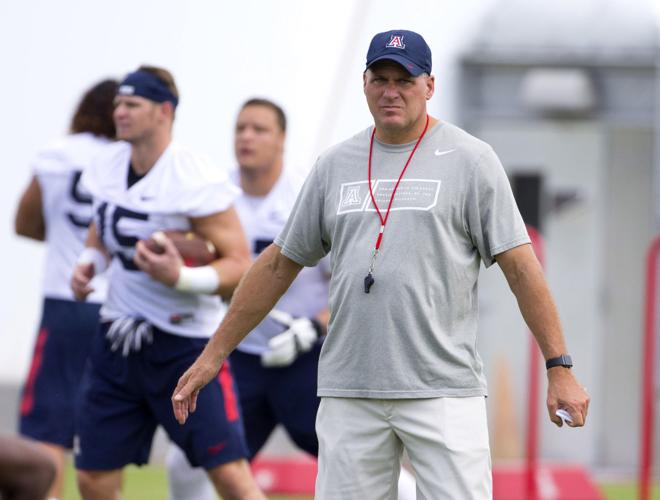
Arizona’s Rich Rodriguez agreed. Why wouldn’t he? “With (all) the revenue, I don’t know why they didn’t address it earlier,” he said.
College football has become a sport of such excess that beyond USC’s nine full-time assistant coaches, it has 18 “others” on Clay Helton’s staff. Such as:
- Executive director to the head coach/chief of staff.
- Executive assistant to the head coach.
Helton has so much help that the school employs former UA defensive line coach Mike Tuiasosopo as a full-time defensive analyst. And he isn’t even listed in the staff directory.
People are also reading…
Mighty Alabama has more. The Tide has nine full-time “analysts,” including Steve Sarkisian. Alabama’s football staff directory also includes a full-time “flight operations” staff of four.
It includes two pilots, a flight manager and an airplane maintenance technician.
And this is a game played by amateur athletes?
Todd Graham’s staff at ASU includes a senior offensive analyst, a senior defensive analyst, a senior special teams analyst, a junior offensive analyst and a junior defensive analyst.
Given that type of commitment and expense, roughly $400,000 annually, the Sun Devils should never be surprised by anything the opposition runs.
Couldn’t the money be better spent elsewhere?
When Jim LaRue coached Arizona to an 8-1-1 season in 1961, launching the modern era of football at the school, he had three football-only assistant coaches: Ed Cavanaugh and Ron Marciniak on offense and Jake Rowden helping LaRue with the defense.
UA golf coach Roy Tatum and the school’s track coach, Carl Cooper, worked full-time as football assistants from August through November.
But that was 55 years ago. Things change. Revenue increased. Priorities were skewed.
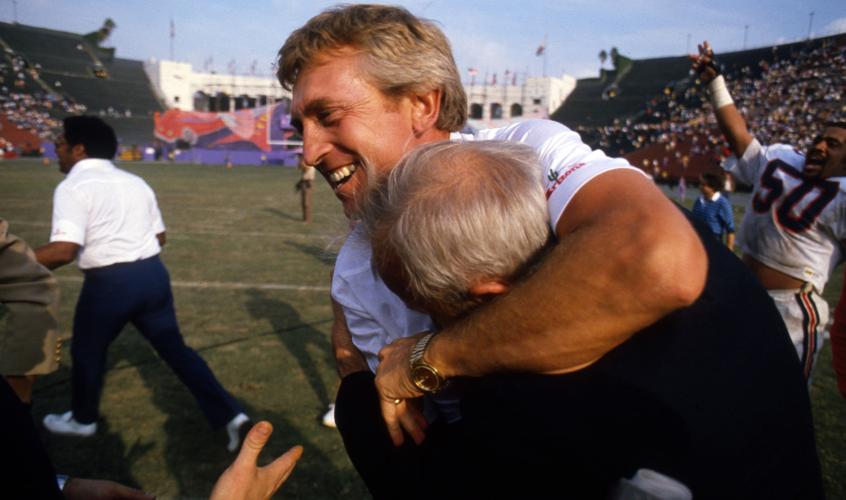
By the time Larry Smith coached Arizona to its first back-to-back bowl seasons, 1985-86, the NCAA allowed eight full-time assistant coaches. But Smith had difficulty retaining top assistants because the industry was defined by job-hopping coaches pursuing better paychecks.
Smith unsuccessfully crusaded for the NCAA to create a general pension from which it would pay assistant football coaches and limit job-hopping.
The NCAA was in a period of “cost containment.” Today? Keeping costs reasonable seems like an ancient philosophy.
In a four-year period, Smith lost elite-level assistants Keith Rowen, Steve Axman, Mike Barry, Clarence Shelmon and Willie Peete to pro football teams. Ohio State hired Bob Palcic and Florida State hired Chuck Amato. Moe Ankney became the head coach at Bowling Green.
All accepted higher-paying contracts.
Smith soon followed, leaving for USC in a blur of tears because the state of Arizona did not permit the UA to offer multiyear contracts to any coach in any sport. RichRod now has a five-year contract worth more than $15 million.
Arizona has two assistant football coaches, Calvin Magee and Marcel Yates, who are paid $500,000 per year. That’s the middle tier of the market rate for Pac-12 coordinators. Understandably, job-hopping has slowed considerably.
Now a college football assistant coach can put up a white picket fence around his family’s $500,000 home and dig in. In five years, RichRod has essentially lost one assistant pursing greener pastures. That was Tony Gibson, who went home to West Virginia, now being paid $750,000 as a defensive coordinator.
If the NCAA Division I Council is successful in adding a 10th full-time assistant coach to each FBS staff, it will mean 128 new jobs. In the Pac-12, the lowest-paid assistant through the league averages close to $150,000 per year, maybe higher.
Colossal debt service abounds at most FBS schools, but someone will always write another big check.
Who pays for it? The media rights packages each conference has signed with ESPN and Fox Sports and, to a lesser extent, those UA fans who pay a tax, a premium, for their seats at the stadium.
The NCAA permits RichRod to have 14 coaches at practice each day. Nine of those are full-time assistants and four are graduate assistants. That’s not much different than it was 30 years ago.
The difference is that Arizona’s football department now includes two full-time video coordinators, five strength and conditioning coaches, a football analyst, a director of player personnel, a director of football operations, an assistant athletics director strictly for football, a director of junior college relations, a director of high school relations, a general manager/director of player personnel, and a director of recruiting.
That’s 16 full-time football employees beyond the 14 on-field coaches, and it doesn’t include administrative assistants, the training/medical staff, academic counselors, a graphic designer, the equipment specialists, and the media relations staff.
So, sure, add another coach. Who’s counting? The checks will clear.
The Oregon Ducks, who established a higher pace for football spending in the Pac-12, created a position for an assistant athletic director for football operations. His job description includes the following:
“Creating a database used to coordinate team travel; coordinating camps and clinics, and maintaining several websites.”
The Ducks lost 71-20 last week anyway, but they sure have some eye-catching websites.