

By Robert London
The world dreams of escaping to Rio de Janeiro, but what about Rio natives themselves? Ask the boys and girls of Ipanema (or many other Brazilians), and you'll find that Ilha Santa Catarina, an island just off Brazil's southern coast, tops most lists.
Brazilians speak of Ilha Santa Catarina with wistfulness, as if the few hundred yards that separate it from the mainland are a world away from their busy lives. Yet they need sacrifice little for their journey, because in just over 400 square kilometers, the island packs in nearly all that is good about Brazil — with a few bonuses thrown in.
Famously picky about their beaches, Brazilians reserve high praise for many of Santa Catarina's 42 strands, which range from cliff-hugging prayer rugs to miles-long arcs of sand. A spine of mountains, luxuriant with the flora and fauna of the Mata Atlântica (Atlantic rain forest), runs the length of the island. Near the island's center, the peaks drop precipitously to the stunning, saltwater Lagoa da Conceição — a Swiss lake transported to warmer climes.
People are also reading…
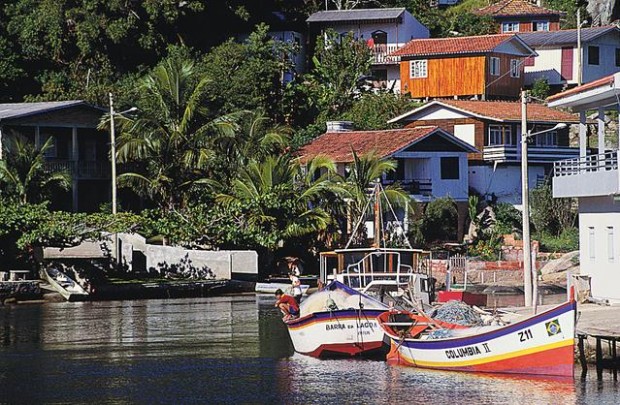
Just to the north of the lagoon begins a miles-long forest of rare, protected pines, while to the east sand dunes — some of them hundreds of feet high — create an almost lunar landscape. And on the western shores, whitewashed fishing villages seem to have been imported wholesale from the Azores Islands.
Thanks to shallow bays, the northern half of the island is eminently family-friendly, with numerous hotels and teeming summer crowds.
But the wilder southern half of the island is another story. Outside the summer holidays, fishermen outnumber travelers, and there are still beaches that, at the price of a vigorous hike, you can have entirely to yourself. With narrower roads, higher peaks and more challenging surf, the south has largely been overlooked by developers — at least for now.
So what is there to see? The long, curving Praia da Armação is a surfer's delight, though currents can be relentless. On the green jut of land at the southern end of the beach, you can catch a boat to Ilha do Campeche, an ecological reserve with a paradisiacal beach, good snorkeling and Stone Age etchings. Farther south, the village of Pantano do Sul, still largely inhabited by fishermen of Azorean descent, looks out on a half-moon beach ringed by mountains.
Most extraordinary, though, are hikes to the stunning beaches that can only be reached by foot, including Lagoinha do Leste, Saquinho and, at the very tip of the island, Naufragados. Even after the new road is built, these beaches will, fortunately, remain only for the determined.
Where to stay: Pousada Sìtio dos Tucanos (www.pousada sitiodostucanos.com; doubles $60) in the south offers rustic but rather elegant rooms, most with balconies opening onto a gurgling mountain stream, plus gardens with sweeping views down to Pantano do Sul.
In Campeche, Pousada Vila Tamarindo (www.tamarindo. com.br; doubles $42 to $50) offers airy rooms and views across the dunes to the open ocean.
Getting there and around: Florianopolis has an airport with good domestic and some international service. There is reliable bus service around the island, but consider renting a car, as roads are good and sights dispersed.
Travels with Lonely Planet


