

PITTSBURGH — The smells of basil, Chinese food, fish and baked goods linger in the humid air along Penn Avenue, mixing with the sweat and grime of packed sidewalks and outdoor vendors.
Children cling to their parents' hands, and young couples stroll leisurely, while elderly people zip in and out of stores they have known for generations.
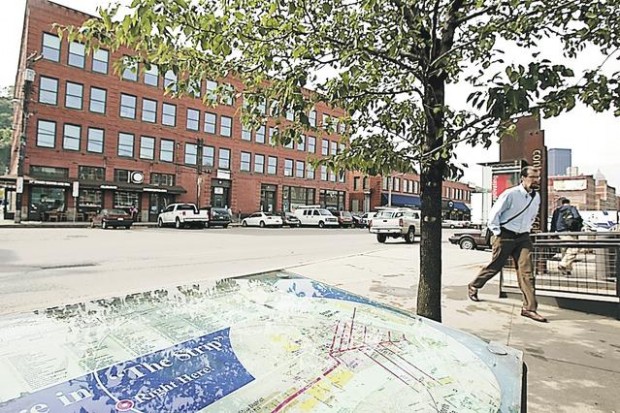
It's Saturday in Pittsburgh's historic Strip District, an area rife with mom-and-pop businesses, gourmet food stores and offbeat gift shops.
The outdoor seating, international foods, homemade clothing and artifacts and even high-end, imported spices and cheeses lend this neighborhood an almost European feel.
"It's just a wonderful, gritty environment . . . there's a sense of discovery," said Becky Rodgers, executive director of Neighbors in the Strip, a nonprofit group that promotes the area. "It's Pittsburgh's favorite neighborhood."
People are also reading…
Pittsburgh is a city of nearly 90 neighborhoods, each with its own story. But the Strip District is one of the oldest, sporting a history that combines the industrial past with the hip image Pittsburgh is trying to portray today.
In the 1700s, when the Strip was born, it was considered the outskirts of the city (today it is almost downtown).
Major industries, including Westinghouse, Alcoa and Andrew Carnegie's steel operations, all got their start in the Strip.
By the early 1900s, the Strip had reached its peak population, with about 18,000 people living in the neighborhood. It was so dense, Carnegie was forced to move his steel operation to Homestead, where room for steel-making equipment was available.
"They had the large population, the industrial living, you had three and four families living in a dwelling," said Rodgers from her Strip District office, located in an old ice house that has been transformed into the Sen. John Heinz History Center.
During the Depression, the Strip District became one of many so-called shantytowns, climbing out of the economic morass by turning to produce and wholesale.
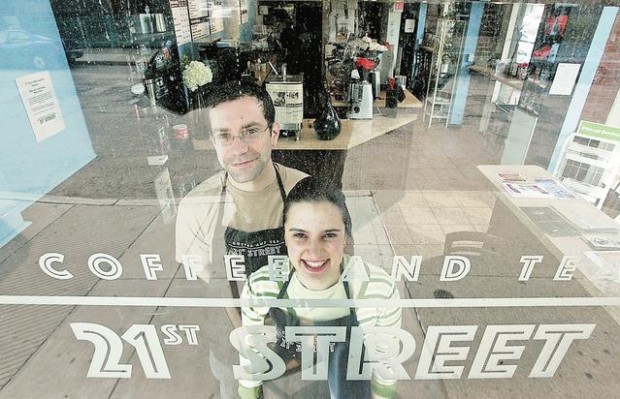
Today, companies that sell wholesale produce and foods stand alongside 21st Street Coffee and Tea, a cafe that trains its baristas for six months before allowing them to stir a drink, and Pittsburgh Popcorn Co., which sells gourmet popcorn with flavors that include chunky chocolate caramel and creamy peanut butter kettle.
Neighbors in the Strip and the city's tourism board, VisitPittsburgh, have been working to encourage visitors to stop in the neighborhood.
Pittsburgh was named the country's most livable city in 2007 by Rand McNally's "Places Rated Almanac," and some believe it's the character of neighborhoods like the Strip that is helping transform the city's image from a smoky steel town with an aging population to an urban center suited to younger people.
"The Strip District was an ideal place for us to start," said Luke Shaffer, the owner of 21st Street Coffee and Tea. "There really aren't many chain stores around here; it's like local mom-and-pop businesses, and the Strip's kind of become like a gourmet foodie destination.
"People come down to get fresh ingredients and unique stuff and just to walk around," he added, the bells from a nearby church almost drowning out the sounds emanating from his $10,000 coffee machine.
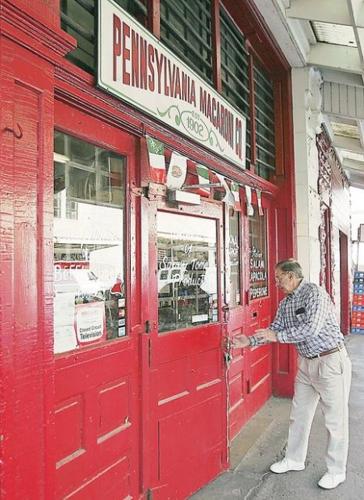
Around the corner and down the block is Pennsylvania Macaroni Co., an establishment that opened in 1902 and still is co-owned by four brothers and one sister from the original Sunseri family.
The store, known to locals as PennMac, still relies on wholesale for most of its business, servicing between 600 to 1,000 restaurants and grocery stores in the Pittsburgh area, said David Sunseri, one of the owners.
But a booming retail business that offers up hundreds of cheese varieties, specialty Italian meats, high-quality olive oils and other Italian and international goodies is a favorite with Pittsburghers and out-of-town visitors.
"Pittsburgh is a community town, and that's why everybody who lives here loves it," Sunseri said. "Pittsburgh isn't the type of town that you go to that has strip malls."
If you go
• Pittsburgh's Strip District: Restaurants, markets and specialty food stores. Located near downtown, stretching from 11th to 33rd streets and along Penn Avenue, www.neighborsinthestrip.com.
• Pennsylvania Macaroni Co.: Food retailer specializing in cheeses, olive oils, sauces, tapenades and Italian and international delicacies, www.pennmac.com.
• 21st Street Coffee and Tea: 21streetcoffee.com.
• Pittsburgh Popcorn Co.: Gourmet popcorn shop, www.pghpopcorn.com.


