

Water softeners; cleaning air ducts; durable fiberglass
- Updated
Get tips on making fixes around the house.

- By Rosie Romero Special to the Arizona Daily Star
- Updated
Q: I wanted to get a conventional water softener for my house. But when the softener people came out to give an estimate, they told me my house isn’t plumbed for a softening system and it would cost me quite a bit more to have the extra pipes installed. So I thought perhaps I’d try a system that depends on magnetism or electricity to soften the water. How do those work?
A: It’s our opinion that a traditional water softener is the best way to go. Other types of systems probably won’t truly soften your water.
For more do-it-yourself tips, go to rosieonthehouse.com. An Arizona home building and remodeling industry expert for 25 years, Rosie Romero is the host of the syndicated Saturday morning “Rosie on the House” radio program, heard locally from 8-11 a.m. on KNST-AM (790) in Tucson and from 9-11 a.m. on KGVY-AM (1080) and -FM (100.7) in Green Valley. Call 888-767-4348.

- By Rosie Romero Special to the Arizona Daily Star
- Updated
Q: I live in an apartment building where the water comes out of the faucets looking very cloudy, which makes me wonder about its quality. So I buy bottled water from a machine for drinking. But someone told me that water from machines can be very acidic. Is that true?
A: Yes, that water from the reverse osmosis machines can be slightly acidic, but it’s not very different from tap water in acidity. Regarding the water from your faucets, it may not have any serious problems; the cloudiness might be due to air infiltration in the system. If you set a glass of the water on a table, the cloudiness may go away in a few minutes as the air bubbles dissipate. But if you don’t want to drink water directly from the tap, you might think about installing your own reverse osmosis system under your kitchen sink. It’s a possible do-it-yourself project.
For more do-it-yourself tips, go to rosieonthehouse.com. An Arizona home building and remodeling industry expert for 25 years, Rosie Romero is the host of the syndicated Saturday morning Rosie on the House radio program, heard locally from 8-11 a.m. on KNST-AM (790) in Tucson and from 9-11 a.m. on KGVY-AM (1080) and -FM (100.7) in Green Valley. Call 888-767-4348.
- By Rosie Romero Special to the Arizona Daily Star
- Updated
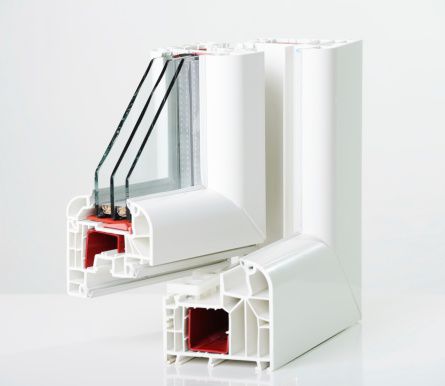
Q: I live in a house built in 1928 and need to replace my windows. I’m wondering whether I should install vinyl clad windows or some other type of windows. Also do I need to talk to a plaster expert about the plaster around the windows because some of the plaster on the walls is crumbling?
A: I’m not a big fan of vinyl clad windows, but there are some companies out there that market good vinyl choices. Windows with fiberglass cladding would be a more durable choice.
But the best selection for preserving the charm of an older home like yours would be aluminum clad wooden windows, which is also the most costly option. This type of window has wood on the inside and weather-proof, maintenance-free aluminum cladding outside.
Whatever you choose, you want dual-pane, insulated windows that will do a good job of keeping your home cooler in summer and warmer in winter.
You usually don’t need to talk to a plasterer in addition to a window company; an expert window installer can handle any problems with the plaster on the walls near your windows.
For more do-it-yourself tips, go to rosieonthehouse.com. An Arizona home building and remodeling industry expert for 25 years, Rosie Romero is the host of the syndicated Saturday morning Rosie on the House radio program, heard locally from 8-11 a.m. on KNST-AM (790) in Tucson and from 9-11 a.m. on KGVY-AM (1080) and -FM (100.7) in Green Valley. Call 888-767-4348.

- By Rosie Romero Special to the Arizona Daily Star
- Updated
Q: We recently remodeled our home, originally built in 1999. In the process we took out and replaced about 1,000 square feet of tile and created a lot of dirt and dust that still seems to be hanging around. Should we hire someone to clean out the air ducts in our HVAC system?
A: Cleaning your air ducts can be a great idea, but you need to have the work done by a licensed air conditioning contractor who can also partly dismantle your air conditioner to clean the coil as well. It’s a somewhat costly job that will cost about $400 to $500 to do it right. After that, you need to replace your air intake filters on a regular basis. But you usually don’t have to clean the ducts again for from five to seven years.
For more do-it-yourself tips, go to rosieonthehouse.com. An Arizona home building and remodeling industry expert for 25 years, Rosie Romero is the host of the syndicated Saturday morning Rosie on the House radio program, heard locally from 8-11 a.m. on KNST-AM (790) in Tucson and from 9-11 a.m. on KGVY-AM (1080) and -FM (100.7) in Green Valley. Call 888-767-4348.
- By Rosie Romero Special to the Arizona Daily Star
- Updated
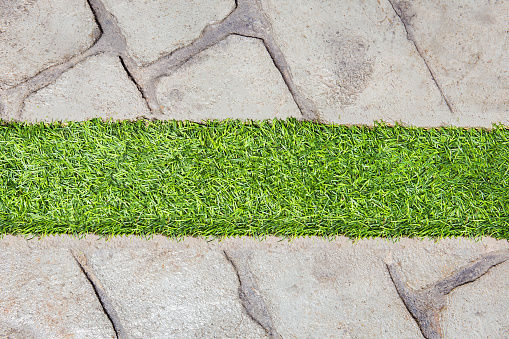
Q: My mother-in-law has really old artificial turf on her 8-foot-by-8-foot square patio, and we’re trying to help her remove it. But it’s really hard trying to scrape off the residue stuck to the concrete. What should we do?
A: It’s going to require a lot of elbow grease to do that without equipment or chemicals. You probably need to rent a power floor grinder or stripper to help you with the job. It’s probably too costly to buy this kind of equipment. In addition, you might use a soy-based mastic remover called Bean-e-doo that seems to have less of an odor than many other chemical products. You simply apply it and then hose everything off.
For more do-it-yourself tips, go to rosieonthehouse.com. Rosie Romero is the host of the syndicated Saturday morning Rosie on the House radio program, heard from 8-11 a.m. on KNST-AM (790) in Tucson and from 9-11 a.m. on KGVY-AM (1080) and -FM (100.7) in Green Valley. Call 888-767-4348.
- By Rosie Romero Special to the Arizona Daily Star
- Updated
Q: How much work can a handyman do and accept money for it? I’ve been doing toilet and sink repairs for my neighbors, and they’ve been offering me money. I’m not a licensed contractor. So is it legal for me to take the money?
A: What you’re probably wondering about is the so-called “handyman exemption.” Arizona law allows an exemption from licensing laws so that unlicensed handymen — or women — can do home repairs or remodeling jobs. But they can do them only as long as the work involved does not need a permit from a city or county and so long as the total value of the labor and materials for the job do not exceed $1,000. You also are not allowed to do electrical or plumbing work. You can read more about this exemption and the rules in the state statues at 32-1121 A14. Most of the time, this type of work will include minor repairs only. So under the right conditions, you can probably be paid for your work.
For more do-it-yourself tips, go to rosieonthehouse.com. Rosie Romero is the host of the syndicated Saturday morning Rosie on the House radio program, heard from 8-11 a.m. on KNST-AM (790) in Tucson and from 9-11 a.m. on KGVY-AM (1080) and -FM (100.7) in Green Valley. Call 888-767-4348.
- By Rosie Romero Special to the Arizona Daily Star
- Updated
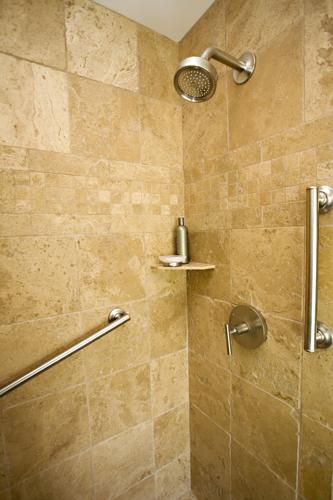
Q: The screws have rusted on the grab bars in our bathroom. The heads of the screws are now gone, and I need to remove the screw shaft to install news screws. Any tips? Also, should I use brass or stainless steel screws with my stainless grab bars? The stainless steel screws rusted after 10 years.
A: Attempting to remove the body of the damaged screw from the existing mounting location will more than likely do more damage to the surrounding wall surface than you may be willing to repair. Instead, you can probably move the mounting plates slightly so that the new screw location will be adjacent to the existing ones. We recommend using stainless steel screws again as they are more durable and stronger than brass screws. To help slow corrosion, use high-quality stainless screws and inject some clear silicone caulking into the predrilled pilot hole before inserting the screw. Then put a small amount of silicone on the screw’s head itself to protect it.
For more do-it-yourself tips, go to rosieonthehouse.com. An Arizona home building and remodeling industry expert for 25 years, Rosie Romero is the host of the syndicated Saturday morning Rosie on the House radio program, heard locally from 8-11 a.m. on KNST-AM (790) in Tucson and from 9-11 a.m. on KGVY-AM (1080) and -FM (100.7) in Green Valley. Call 888-767-4348.
- By Rosie Romero Special to the Arizona Daily Star
- Updated
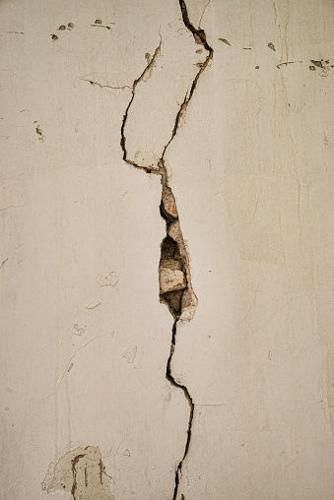
Q: About six years ago, I put in patios and stucco-covered walls in my yard. Now the front wall has a narrow crack that runs between the concrete blocks underneath the stucco from the bottom to the top of the wall. It’s a very thin crack about the thickness of the lead in a mechanical pencil. What’s happening and how can I fix this?
A: If the crack is that thin, there’s probably nothing structural going on with your wall. Just clean out the crack thoroughly, while removing any loose material and dirt. Then you can fill the crack with latex caulk mixed with sand. Feather in the mixture with your finger and then use a damp sponge to smooth out the area. After the area thoroughly dries, you can use regular paint on the wall to cover up the caulking — not elastomeric paint.
For more do-it-yourself tips, go to rosieonthehouse.com. An Arizona home building and remodeling industry expert for 25 years, Rosie Romero is the host of the syndicated Saturday morning Rosie on the House radio program, heard locally from 8-11 a.m. on KNST-AM (790) in Tucson and from 9-11 a.m. on KGVY-AM (1080) and -FM (100.7) in Green Valley. Call 888-767-4348.
- By Rosie Romero Special to the Arizona Daily Star
Q: I wanted to get a conventional water softener for my house. But when the softener people came out to give an estimate, they told me my house isn’t plumbed for a softening system and it would cost me quite a bit more to have the extra pipes installed. So I thought perhaps I’d try a system that depends on magnetism or electricity to soften the water. How do those work?
A: It’s our opinion that a traditional water softener is the best way to go. Other types of systems probably won’t truly soften your water.
For more do-it-yourself tips, go to rosieonthehouse.com. An Arizona home building and remodeling industry expert for 25 years, Rosie Romero is the host of the syndicated Saturday morning “Rosie on the House” radio program, heard locally from 8-11 a.m. on KNST-AM (790) in Tucson and from 9-11 a.m. on KGVY-AM (1080) and -FM (100.7) in Green Valley. Call 888-767-4348.
- By Rosie Romero Special to the Arizona Daily Star
Q: I live in an apartment building where the water comes out of the faucets looking very cloudy, which makes me wonder about its quality. So I buy bottled water from a machine for drinking. But someone told me that water from machines can be very acidic. Is that true?
A: Yes, that water from the reverse osmosis machines can be slightly acidic, but it’s not very different from tap water in acidity. Regarding the water from your faucets, it may not have any serious problems; the cloudiness might be due to air infiltration in the system. If you set a glass of the water on a table, the cloudiness may go away in a few minutes as the air bubbles dissipate. But if you don’t want to drink water directly from the tap, you might think about installing your own reverse osmosis system under your kitchen sink. It’s a possible do-it-yourself project.
For more do-it-yourself tips, go to rosieonthehouse.com. An Arizona home building and remodeling industry expert for 25 years, Rosie Romero is the host of the syndicated Saturday morning Rosie on the House radio program, heard locally from 8-11 a.m. on KNST-AM (790) in Tucson and from 9-11 a.m. on KGVY-AM (1080) and -FM (100.7) in Green Valley. Call 888-767-4348.
- By Rosie Romero Special to the Arizona Daily Star
Q: I live in a house built in 1928 and need to replace my windows. I’m wondering whether I should install vinyl clad windows or some other type of windows. Also do I need to talk to a plaster expert about the plaster around the windows because some of the plaster on the walls is crumbling?
A: I’m not a big fan of vinyl clad windows, but there are some companies out there that market good vinyl choices. Windows with fiberglass cladding would be a more durable choice.
But the best selection for preserving the charm of an older home like yours would be aluminum clad wooden windows, which is also the most costly option. This type of window has wood on the inside and weather-proof, maintenance-free aluminum cladding outside.
Whatever you choose, you want dual-pane, insulated windows that will do a good job of keeping your home cooler in summer and warmer in winter.
You usually don’t need to talk to a plasterer in addition to a window company; an expert window installer can handle any problems with the plaster on the walls near your windows.
For more do-it-yourself tips, go to rosieonthehouse.com. An Arizona home building and remodeling industry expert for 25 years, Rosie Romero is the host of the syndicated Saturday morning Rosie on the House radio program, heard locally from 8-11 a.m. on KNST-AM (790) in Tucson and from 9-11 a.m. on KGVY-AM (1080) and -FM (100.7) in Green Valley. Call 888-767-4348.
- By Rosie Romero Special to the Arizona Daily Star
Q: We recently remodeled our home, originally built in 1999. In the process we took out and replaced about 1,000 square feet of tile and created a lot of dirt and dust that still seems to be hanging around. Should we hire someone to clean out the air ducts in our HVAC system?
A: Cleaning your air ducts can be a great idea, but you need to have the work done by a licensed air conditioning contractor who can also partly dismantle your air conditioner to clean the coil as well. It’s a somewhat costly job that will cost about $400 to $500 to do it right. After that, you need to replace your air intake filters on a regular basis. But you usually don’t have to clean the ducts again for from five to seven years.
For more do-it-yourself tips, go to rosieonthehouse.com. An Arizona home building and remodeling industry expert for 25 years, Rosie Romero is the host of the syndicated Saturday morning Rosie on the House radio program, heard locally from 8-11 a.m. on KNST-AM (790) in Tucson and from 9-11 a.m. on KGVY-AM (1080) and -FM (100.7) in Green Valley. Call 888-767-4348.
- By Rosie Romero Special to the Arizona Daily Star
Q: My mother-in-law has really old artificial turf on her 8-foot-by-8-foot square patio, and we’re trying to help her remove it. But it’s really hard trying to scrape off the residue stuck to the concrete. What should we do?
A: It’s going to require a lot of elbow grease to do that without equipment or chemicals. You probably need to rent a power floor grinder or stripper to help you with the job. It’s probably too costly to buy this kind of equipment. In addition, you might use a soy-based mastic remover called Bean-e-doo that seems to have less of an odor than many other chemical products. You simply apply it and then hose everything off.
For more do-it-yourself tips, go to rosieonthehouse.com. Rosie Romero is the host of the syndicated Saturday morning Rosie on the House radio program, heard from 8-11 a.m. on KNST-AM (790) in Tucson and from 9-11 a.m. on KGVY-AM (1080) and -FM (100.7) in Green Valley. Call 888-767-4348.
- By Rosie Romero Special to the Arizona Daily Star
Q: How much work can a handyman do and accept money for it? I’ve been doing toilet and sink repairs for my neighbors, and they’ve been offering me money. I’m not a licensed contractor. So is it legal for me to take the money?
A: What you’re probably wondering about is the so-called “handyman exemption.” Arizona law allows an exemption from licensing laws so that unlicensed handymen — or women — can do home repairs or remodeling jobs. But they can do them only as long as the work involved does not need a permit from a city or county and so long as the total value of the labor and materials for the job do not exceed $1,000. You also are not allowed to do electrical or plumbing work. You can read more about this exemption and the rules in the state statues at 32-1121 A14. Most of the time, this type of work will include minor repairs only. So under the right conditions, you can probably be paid for your work.
For more do-it-yourself tips, go to rosieonthehouse.com. Rosie Romero is the host of the syndicated Saturday morning Rosie on the House radio program, heard from 8-11 a.m. on KNST-AM (790) in Tucson and from 9-11 a.m. on KGVY-AM (1080) and -FM (100.7) in Green Valley. Call 888-767-4348.
- By Rosie Romero Special to the Arizona Daily Star
Q: The screws have rusted on the grab bars in our bathroom. The heads of the screws are now gone, and I need to remove the screw shaft to install news screws. Any tips? Also, should I use brass or stainless steel screws with my stainless grab bars? The stainless steel screws rusted after 10 years.
A: Attempting to remove the body of the damaged screw from the existing mounting location will more than likely do more damage to the surrounding wall surface than you may be willing to repair. Instead, you can probably move the mounting plates slightly so that the new screw location will be adjacent to the existing ones. We recommend using stainless steel screws again as they are more durable and stronger than brass screws. To help slow corrosion, use high-quality stainless screws and inject some clear silicone caulking into the predrilled pilot hole before inserting the screw. Then put a small amount of silicone on the screw’s head itself to protect it.
For more do-it-yourself tips, go to rosieonthehouse.com. An Arizona home building and remodeling industry expert for 25 years, Rosie Romero is the host of the syndicated Saturday morning Rosie on the House radio program, heard locally from 8-11 a.m. on KNST-AM (790) in Tucson and from 9-11 a.m. on KGVY-AM (1080) and -FM (100.7) in Green Valley. Call 888-767-4348.
- By Rosie Romero Special to the Arizona Daily Star
Q: About six years ago, I put in patios and stucco-covered walls in my yard. Now the front wall has a narrow crack that runs between the concrete blocks underneath the stucco from the bottom to the top of the wall. It’s a very thin crack about the thickness of the lead in a mechanical pencil. What’s happening and how can I fix this?
A: If the crack is that thin, there’s probably nothing structural going on with your wall. Just clean out the crack thoroughly, while removing any loose material and dirt. Then you can fill the crack with latex caulk mixed with sand. Feather in the mixture with your finger and then use a damp sponge to smooth out the area. After the area thoroughly dries, you can use regular paint on the wall to cover up the caulking — not elastomeric paint.
For more do-it-yourself tips, go to rosieonthehouse.com. An Arizona home building and remodeling industry expert for 25 years, Rosie Romero is the host of the syndicated Saturday morning Rosie on the House radio program, heard locally from 8-11 a.m. on KNST-AM (790) in Tucson and from 9-11 a.m. on KGVY-AM (1080) and -FM (100.7) in Green Valley. Call 888-767-4348.
Tags
Most Popular
-
Arizona’s landscapes become star of new TV show filming here
-
 Japanese company invests in mine near Mount Lemmon
 -
Tucson DACA recipient detained after agents 'aggressively' enter home, family says
-
Hotel on the rise at Tucson’s Uptown project
-
Bill seeks to end 'vulture practices' in kids sports: What it means

