

MIAMI — Cigar aficionados beware: Those handmade Montecristos, Cohibas and Romeo y Julietas may not be the premium smokes they seem.
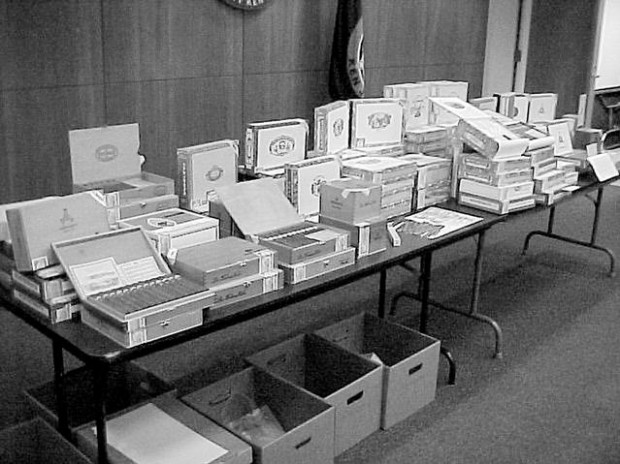
Law enforcement and cigar-industry officials say counterfeiters are marketing millions of dollars in fake upscale cigars, some even pretending to be authentic Cubans that are illegal to sell in the United States. A recent crackdown has uncovered several major counterfeit operations, including one in Miami that resulted in the seizure of more than $20 million in fake stogies, labels and packaging.
"The person that's hurt the most is the consumer," said Theo Folz, president and chief executive officer of Fort Lauderdale-based Altadis USA, the world's largest maker and distributor of cigars. "We have developed products and built up on image and built up an expectation among the consumers. Guys put their money down. They want the real thing."
People are also reading…
With its proximity to Cuba and the Caribbean and large population of Cuban expatriates, South Florida has become a national hotbed for cigar counterfeiters. Federal and state law enforcement officials, at the request of Altadis, have made more than a dozen arrests over the past six months with investigators now focusing on higher-level organizers.
Still, what was seized late last year from several warehouses in Miami astounded both police and industry officials. There were enough counterfeit cigar bands, boxes, cellophane and other materials for between 30 million and 50 million cigars — sufficient to make a significant dent in the legitimate premium market.
"We've all gotten an appreciation that the counterfeiting problem is much greater than we thought it was," said Norman Sharp, president of the Washington-based Cigar Association of America.
According to federal government statistics, Americans smoked about 5.1 billion large cigars in 2005 and spent about $3.2 billion on all cigars. Of those, about 321 million were classified as premium — that is, they were handmade, usually comprising long tobacco filler instead of chopped tobacco, and retailed for at least $1 apiece. Such cigars can run upward of $30 each.
Altadis USA, part of Spanish tobacco giant Altadis SA, holds the trademark rights to many of the best-known Cuban cigar brands including Montecristo, Romeo y Julieta and H. Upmann. New York-based General Cigar Co. holds the rights to Cohiba, Partagas, Macanudo and other premium brands.
Because cigars from communist Cuba cannot be sold legally in the United States, Altadis makes its Cuban heritage cigars marketed in this country in the Dominican Republic. The Spanish parent, however, can market the real Cuban cigars around the world under the same brands.
Federal agents say some of the fakes originate in Cuba itself, where workers at national cigar factories frequently steal labels, cigar rings and a special gold-embossed paper that makes them appear more real.
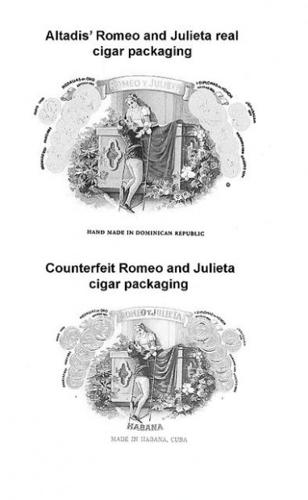
Some counterfeiters simply make their own replica packaging at elaborate operations revolving around Miami, where many Cuban-Americans have experience with cigars. Experts say it's sometimes difficult to tell the difference in labels, but it's usually obvious which ones are fake to an experienced smoker.
"Many of the bad cigars have a bad odor," said Leora Herr-mann, Miami counsel for Altadis USA. "Many of them aren't packed tightly enough, so the cigar feels uneven and lumpy. They might have veins or discoloration."
Real cigars are usually all the same color, she added. They are lined up neatly in the box with all the rings at the same level on each cigar and facing out. Fakes are often of different colors, have loose-fitting rings and can sometimes appear splotchy or moldy.