

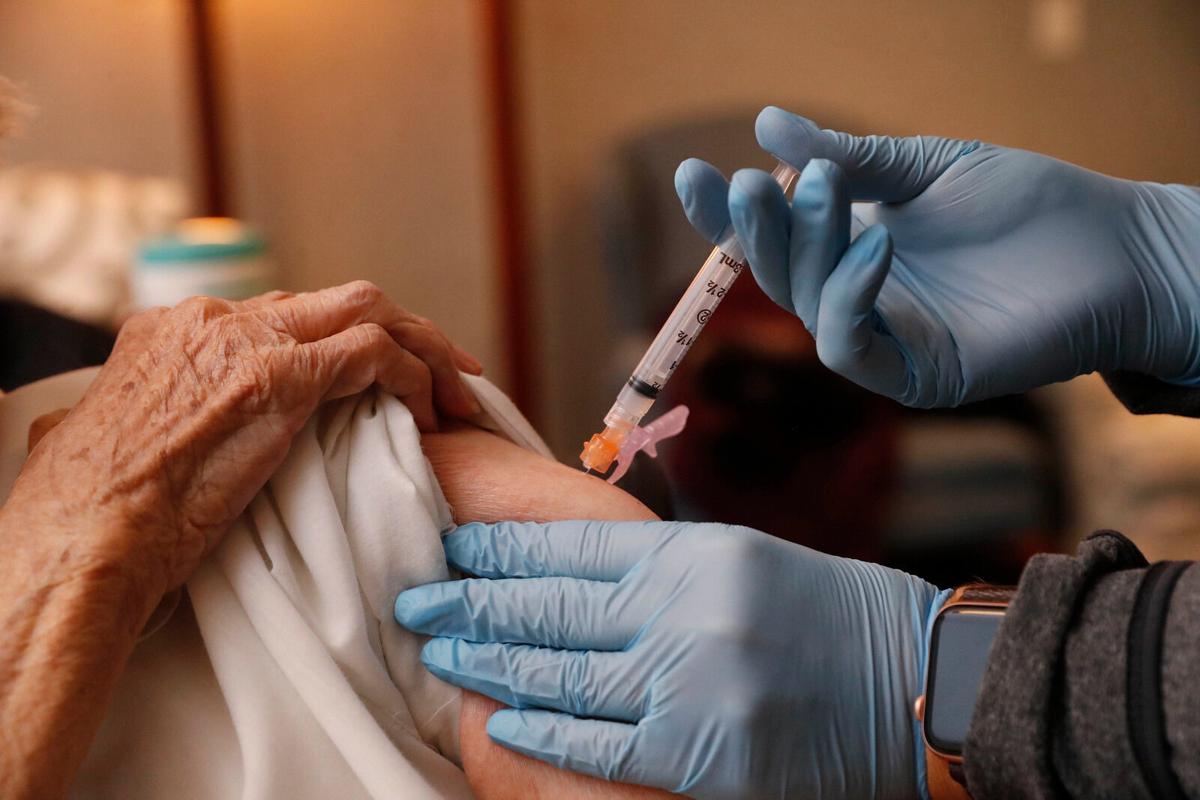
Several hundred unvaccinated health care workers across Western New York who were previously allowed religious exemptions to the state's Covid-19 vaccine mandate have started losing their jobs, worsening a staffing crunch that already is pressuring hospital capacity.
Kaleida Health said it terminated 100 employees Monday who had a religious exemption and chose not to receive their initial vaccination dose by the deadline of Sunday. That is 1% of Kaleida's workforce of about 10,000 employees.
Catholic Health, meanwhile, mailed out termination letters Tuesday to 180 employees, or about 2% of its workforce, who were unvaccinated with religious exemptions. Those employees also were removed from their work schedules, effective Sunday.
As of late last month, Erie County Medical Center Corp. had 147 employees – 127 at the hospital; 20 at Terrace View Long-Term Care facility – who had a religious exemption, about 4% of total payroll.
People are also reading…
It wasn't immediately known how many ECMC workers with religious exemptions lost their jobs.
While the state's vaccine mandate for health care workers went into effect Sept. 27, a court ruling temporarily allowed employees to claim a religious exemption to get around the requirement that they must have a Covid-19 vaccine. That ruling was stayed by a federal appellate court in late October, leaving medical exemptions as the only allowed protections to the mandate.
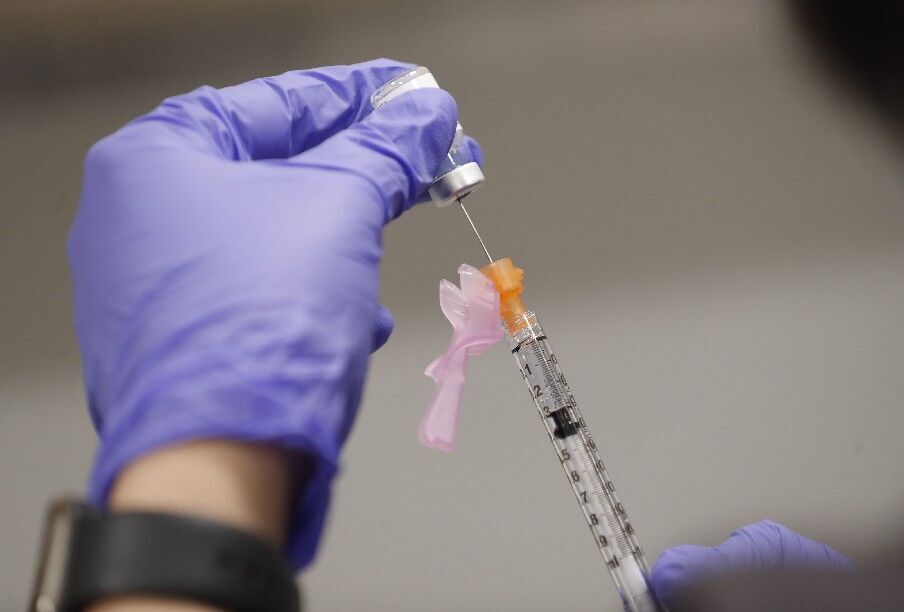
Health care workers who were previously granted religious exemptions to the state's Covid-19 vaccine mandate are losing those exemptions, forcing them to get a valid medical exemption or get vaccinated if they want to keep their jobs.
Following the ruling, New York health care employers started notifying workers of the change in mid-November after receiving guidance from the state Health Department. Across the state, that left 10,985 health care workers with religious exemptions – 1.1% of the New York's total health care workforce – in jeopardy of losing their jobs unless they had a change of heart and opted to get vaccinated.
It appears at least some of them did.
Some got the shot
While Kaleida parted ways with 100 workers Monday, that is lower than the 190 employees who were working there with a religious exemption as of two weeks ago.
The health system had performed a "good faith inquiry" into whether those employees could work remotely. If not, they had to get their first vaccine dose by Sunday. For those who received the first shot of the Pfizer and Moderna vaccines, they will have to get their second dose by Jan. 4 to keep working at Kaleida.
Catholic Health also was terminating the employment of fewer employees than it had expected in late November.
As of Nov. 23, roughly 300 Catholic Health employees were unvaccinated with religious exemptions – 120 more than ended up being terminated.
"We implemented an aggressive education campaign, including having our infectious disease specialists and other vaccine advocates go unit-to-unit and department-to-department to address any questions or concerns our staff had about the Covid-19 vaccine," William Pryor, Catholic Health executive vice president and chief administrative officer, said in a statement. "Dozens of individuals were vaccinated in the last week alone, and we are grateful to all those who stepped up to protect themselves and our patients and long-term care residents."
The employees with religious exemptions who lost their jobs are in addition to those health care workers who were terminated after not getting vaccinated before the state's original Sept. 27 deadline.

When the state's vaccination mandate for health care workers became effective Sept. 27, some Western New York hospitals opted to place unvaccinated workers on a 30-day unpaid leave. With that period now expired, just how many unvaccinated workers lost their jobs?
That first round of cuts in late September included 100 employees at Kaleida and 60 workers at Niagara Falls Memorial Medical Center and Schoellkopf Health Center.
Some health systems here opted to put unvaccinated workers without an approved exemption on a 30-day unpaid leave that expired in late October. When that leave ended, terminations totaled 26 at Catholic Health, 25 each at Roswell Park Comprehensive Cancer Center and ECMC, and 17 at Terrace View.
Adjusting operations
While the number of workers who lost or are losing their jobs is a small percentage of total workers, every little bit hurts amid a staffing shortage that means hospitals can't operate as many beds – especially during yet another wave of Covid-19 hospitalizations.
Across the five-county Western New York region, about 91% of staffed acute care beds were occupied as of Sunday, according to Health Department data.
"Given the reduction in workforce, the subsequent reduction in staffed beds, the significant rise in Covid-19 hospitalization across our facilities and the spike in Covid-19 cases in our region," Kaleida Health said Monday it is proactively postponing non-essential elective inpatient surgeries at Buffalo General Medical Center and Millard Fillmore Suburban Hospital.
"We continue to consult with our physician leadership as well as surgical leadership teams to manage the number of elective inpatient surgeries on a daily basis that require an overnight stay," said Dr. Michael Mineo, chief medical officer at Buffalo General and Millard Fillmore. "This will ensure that, as a health system, we are appropriately managing patient care and community need amid this current surge in COVID-19 cases."
There are other factors pressuring local hospitals, from employee shortages to difficulties discharging patients who need to be in long-term care facilities that don't have room.
Many hospitals have been postponing elective surgeries for some time.
ECMC hasn't done inpatient elective surgeries since September. Catholic Health began postponing inpatient elective procedures at its hospitals in early November in response to rising Covid-19 patients and a surge in hospital capacity across Western New York.
Under an executive order signed by Gov. Kathy Hochul, the Health Department will soon be allowed to limit nonessential, non-urgent procedures at hospitals with less than 10% of staffed acute care beds available.
As of Monday, the state Health Department determined 32 hospitals, including six in Western New York, meet that criteria, meaning the Health Department can limit nonessential procedures at those hospitals scheduled to occur on or after Thursday.
Those facilities must defer all nonessential elective inpatient and outpatient procedures completed within the hospital. Further, if an affected facility has occupancy of 95% or higher based on a seven-day average, it must also defer nonessential elective ambulatory procedures.
That order does not apply to essential procedures, such as cancer treatments, neurosurgery, intractable pain, transplants, trauma and procedures for patients who are at a high risk of harm if their procedures are not completed.


