

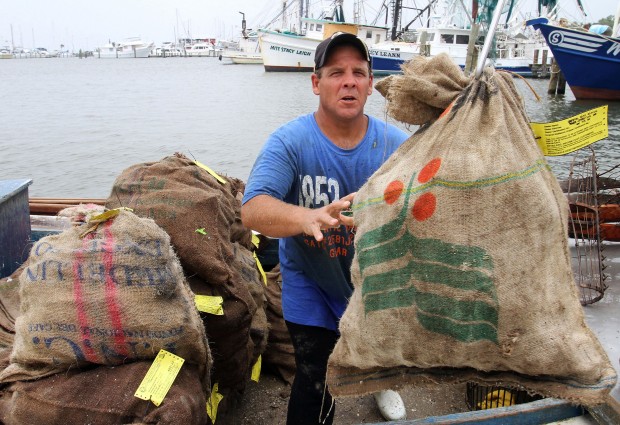
The Gulf Coast fishing industry, financially whipped by four hurricanes since 2005, is bracing for a man-made calamity.
Oil gushing from an out-of-control well after an April 20 rig blast in the Gulf of Mexico poses a severe threat to the livelihood of Louisiana's commercial fishers, who were allowed to get an early jump on shrimp season Thursday under a special state-government order.
On Friday, the spreading slick reached coastal wetlands near the mouth of the Mississippi River.
With the spill still spreading, it's impossible to estimate its eventual impact on local fisheries. But the stakes are undeniably high.
Louisiana is the No. 1 provider of shrimp, oysters, crab and crawfish in the United States, making up 33 percent of the seafood consumed in America. These shellfish add $2.4 billion a year to the state's economy, according to the Louisiana Seafood Promotion & Marketing Board.
People are also reading…
What's more, if the slick is not contained, it could cost many jobs. The seafood industry accounts for 1 of every 70 jobs in Louisiana.
Luck may be on their side.
"It looks like it (oil) may stay east of the Mississippi (River)," said Ewell Smith, executive director of the Louisiana Seafood Promotion & Marketing Board. "We'll have a better feel of in the next couple days."
This could save the state's commercial fishers from financial ruin - 77 percent of their total catch comes from waters west of the Mississippi River, he added.
Smith stressed consumers shouldn't be worried about the safety of Louisiana seafood. There is plenty already caught and frozen that is safe to eat.
Shrimp is Louisiana's biggest money-maker with an economic value of $1.3 billion, followed by oysters at $317 million and crabs at $293 million.
Commercial fishermen in neighboring Mississippi, Alabama, Texas and Florida are also fretting over the spill's possible impact on their operations.
"We spent million upon million of dollars rehabilitating the oyster reefs, and they just started producing last year," said Larry Simpson, executive director of the Gulf States Marine Fisheries Commission. "I just can't imagine what all of this is going to do."
"I just can't imagine what all of this is going to do."
Larry Simpson,
executive director of the Gulf States Marine Fisheries Commission
