

Hiring came almost to a halt across the Buffalo Niagara region last month – a concerning sign that the recovery from the Covid-19 recession is stalling out just as cases are on the rise.
The slowdown in hiring, highlighted in new job data released Thursday by the state Labor Department, shows that the region’s job market is being hampered by a handful of powerful factors that are likely to continue to make it hard for employers to add workers and could even make them more reluctant to do so in the coming months.
“We have stagnation – and at a level that is still substantially down from two years ago,” said Julie Anna Golebiewski, a Canisius College economist. “I think we’ll actually see some declines in employment over the next couple of months.”
That’s a sobering outlook for a regional job market that still is down almost 30,000 jobs from where it was two years ago, before anyone ever heard of Covid-19.
People are also reading…
It means that a recession that started with the loss of 110,000 jobs in a single month still is about 5% short of a full recovery – at a time when there are concerning trends that already have slowed hiring to a crawl.
The region added just 500 jobs from July to August – about 40% of the job growth that normally happens in midsummer. And it followed the region’s loss of 4,000 jobs from June to July, although that decline was more in line with seasonal patterns.
Some of the reasons are all too familiar, starting with the pandemic, which seemed to be coming under control this spring as people flocked to get vaccinated, only to see close to 30% of the adults in the Buffalo Niagara region resist getting the shots. That opened the door for the Delta variant to spark a rise in cases.
“We’re not growing as fast as we would have if Covid wasn’t an issue and hadn’t come back,” said Fred Floss, a SUNY Buffalo State economist.
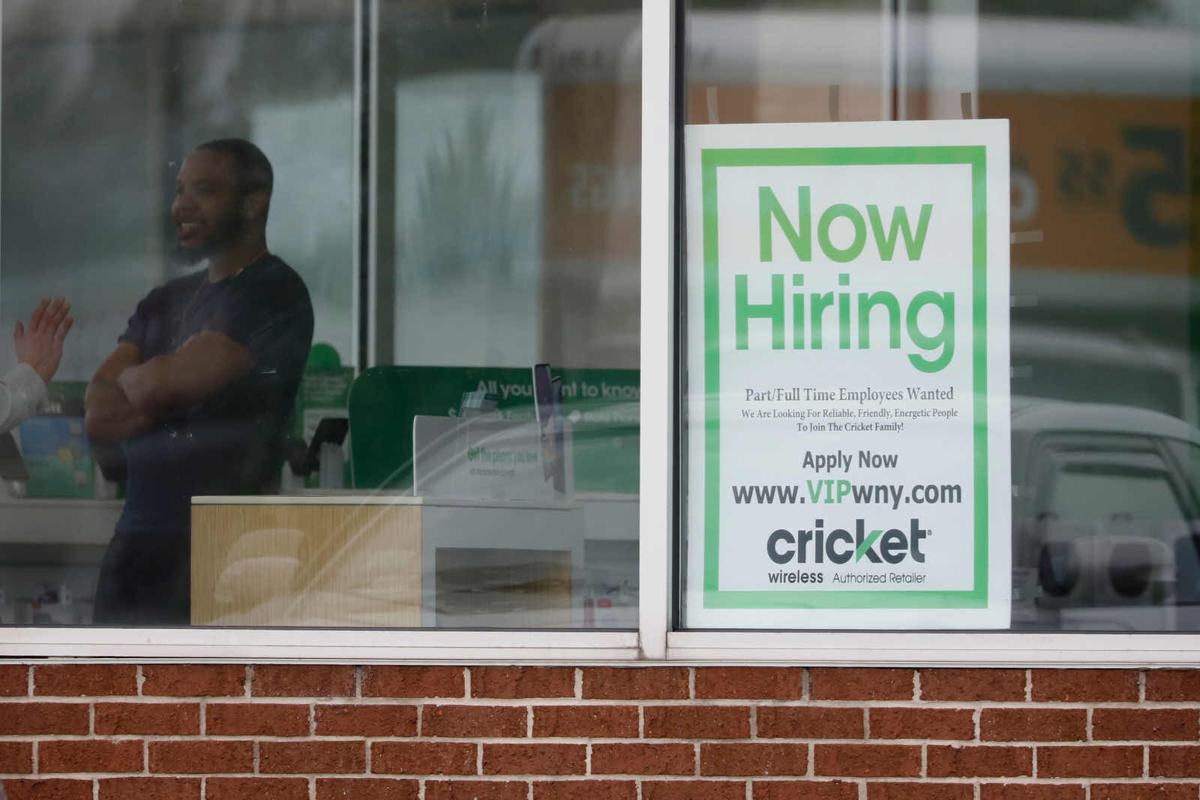
Workers still are in short supply at a time when job openings are plentiful. Local data isn’t available, but across the country, job openings are at a more than 20-year high, and open positions outnumber unemployed workers by more than 20%. The “help wanted” signs that are so common outside businesses are a strong indicator that the hiring squeeze is a big factor here, too.
But the rise of the Delta variant is creating new hurdles. To stem the feared rise in cases as fall arrives and people spend more time indoors, vaccine mandates are on the upswing, putting employers and workers in a tough spot.
For businesses, mandates could convince unvaccinated workers to quit rather than get a shot, leaving businesses short-staffed at a time when it is already hard to hire. For unvaccinated workers, finding a new job may not be quite as easy, as more companies require vaccines, limiting the pool of available jobs open to them. Some may decide to stop looking for a job entirely if mandates become more widespread, Golebiewski said.
“It’s probably going to have some people lose their jobs or switch jobs,” said Timothy Glass, the Labor Department’s regional economist in Buffalo. “It’s a balancing act and nobody’s going to win.”
There’s another side to vaccine requirements, too. Businesses that require customers be vaccinated, like many concert venues and theaters, are facing a more limited pool of customers, making it more difficult to keep their revenues up.
As Covid cases rise, consumers already are becoming more wary. The worry is that will make them less likely to spend, especially on recreation, dining and other activities that attract crowds. If businesses see their customers turning cautious, they could scale back their hiring plans.
“As we hit the colder months, people may not want to go into restaurants because of the Delta variant, even if they’re vaccinated,” Floss said.
All of those factors already are buffeting the local job market. The job growth at bars, restaurants and hotels from July to August was less than 40% of the increase that was typical before the pandemic. Of all the main segments of the Buffalo Niagara economy, only construction has recovered to the point where it now has more jobs than it did two years ago – and it’s just barely above it.
The hope is that the renewed pressure to get vaccinated will succeed and help stave off the type of Covid surge here during the fall that caused so much havoc in the South this summer.
“While we won’t necessarily have a happy fall, maybe by November and December things will turn around a bit,” Floss said.
But it’s too soon to say what will happen.
“It’s so volatile, and there are so many variables, it’s hard to put your finger on what’s going to happen,” Glass said.
For now, though, the signs are pointing in the wrong direction.

