

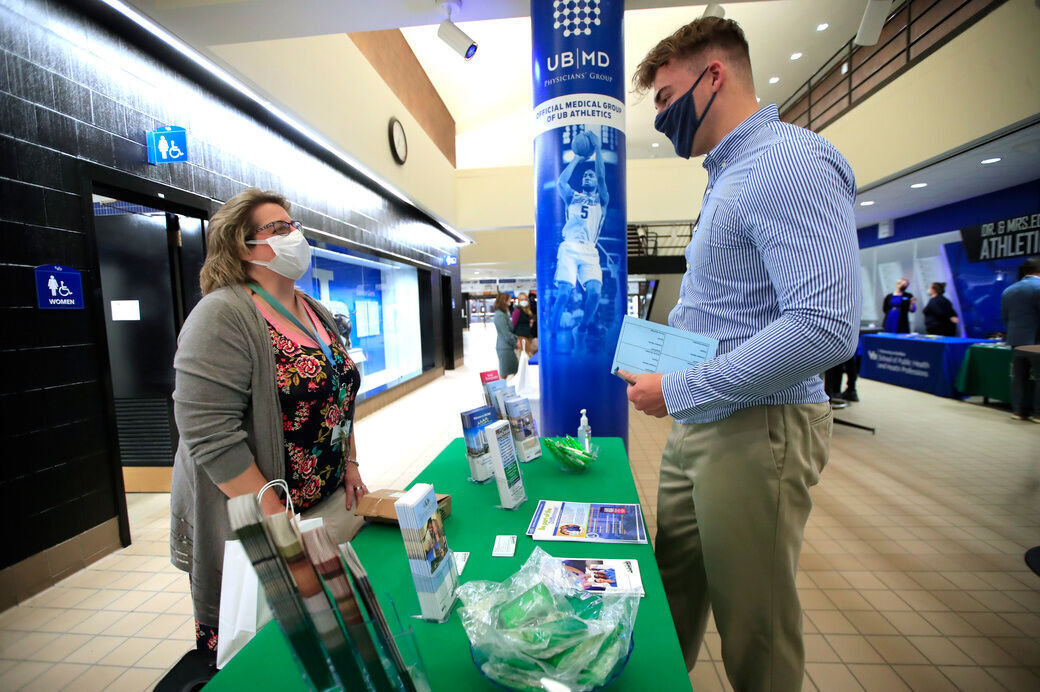
Health care providers across Western New York are scrambling to find employees.
They are beefing up their recruiting teams, offering thousands of dollars in signing bonuses and, just to get by, ponying up hefty premiums in the battle to land traveling workers from staffing agencies.
While staffing issues were at the heart of the recently concluded Mercy Hospital strike, it's something that is being felt by all health care providers across Western New York.
All of the region's major health systems report having hundreds of jobs open.
Kaleida Health has 450 open positions in acute care, including 305 nursing jobs, while Erie County Medical Center is hunting for about 500 new workers.
Catholic Health System, emerging from a 35-day strike at Mercy Hospital in South Buffalo, has about 800 positions available.
People are also reading…
Catholic Health wants to add hundreds of nursing assistants and support staff and has agreed to specific staffing ratios as part of a new four-year labor contract.
But reaching those targets will take time in a tight market for health care workers – especially amid an exhaustive pandemic that has pushed some to take early retirement, chase higher wages as travel employees, trade in their scrubs for medical office jobs or quit the field altogether.
"Right now, it's a workers' market," Catholic Health President and CEO Mark Sullivan said.
It's a situation exacerbated by Covid-19, something health systems, nursing homes and others are tackling with near-term Band-Aids while searching for long-term fixes that would take a more collaborative effort involving government officials.
"We must find immediate relief for current workforce shortages, but more importantly, we must also focus significant attention on long-range solutions," Bea Grause, president of the Healthcare Association of New York State, said in testimony before a state Assembly committee on Wednesday.
The association, which represents nonprofit and public hospitals, nursing homes and other health care organizations, requested that the state spend $1 billion in each of the next two years to help health care providers across the state face workforce challenges.
It's a nationwide problem. Health care employment across the country is down by 524,000 since February 2020, with nursing and residential care facilities making up about 80% of the loss, according to the U.S. Bureau of Labor Statistics.
In the Buffalo Niagara region, health care and social assistance employment slipped from 80,400 in February 2020 to 73,500 in October, state Labor Department data shows. Even before the Mercy strike, hospital employment was down by 600 from pre-pandemic levels.
"Staffing shortages are placing operating and expense pressures on not-for-profit hospitals and nursing facilities even as they continue to struggle with the logistics of treating Covid-19 cases," credit rating agency Fitch Ratings warned last month. It said pressure on operating margins should become more pronounced as labor issues drag on, hitting the lower-rated, smaller hospitals even harder.
Not just Mercy
Just last week, a few nursing home workers stood outside Weinberg Campus in Amherst, eyeing a labor fight of their own as they work to get a long-term contract covering about 200 union members. The workers said they have had to juggle more responsibilities as colleagues have left and have watched as higher-paid workers from outsides agencies have been brought in to help fill the void.

Just under 200 nursing home workers at Weinberg Campus in Amherst are working without a contract while they weigh a job action should their fight for a multiyear contract stall. Complicating matters more is a long-delayed sale of most of the campus.
As strained as staffing is at the region's hospitals, it might be even more stressed at its nursing homes.
And those challenges are often interconnected.
For example, ECMC had 539 patients Wednesday morning, which included 47 people who have been cleared for discharge but can't be accommodated in post-hospitalization settings, such as nursing homes, due to staffing challenges at those facilities, spokesperson Peter Cutler said.
That creates bottlenecks in hospitals and further strains capacity and staff, especially with more Covid-19 patients now coming in.
ECMC Corp. sees the challenges at nursing homes firsthand at its 390-bed Terrace View Long-Term Care Facility.
"While the hospital is a challenge with regard to staffing, Terrace View has been at critical levels with regard to staffing," ECMC President and CEO Thomas J. Quatroche Jr. said.
To adapt, Terrace View closed two units to ensure there's enough staff for the remaining units, he said. ECMC also is dangling sign-on bonuses for licensed practical nurses and certified nursing assistants at Terrace View, and has offered incentives to employees who work extra shifts.
Quatroche said ECMC also has more agency nurses currently working than he can remember at any point in the past. He estimated they have about 20 to 30 agency nurses in the hospital and another 20 in Terrace View, all at about double the rate of pay of a permanent nurse.
ECMC also turned to New York-Presbyterian Hospital for some help last month: Four nurses and one tech from the New York City medical center worked at ECMC for one week, ending Oct. 22.
Landing workers from staffing firms also is competitive – and expensive.
"There is intense competition for traveling nurses, driving costs up," said Dr. Michael Mineo, chief medical officer at Kaleida Health's Buffalo General Medical Center, Millard Fillmore Suburban Hospital and DeGraff Medical Park.
It's a necessary investment right now.
Of the jobs open at Kaleida, about 275 to 300 of the openings are above the health system's normal vacancy level, said CEO Robert Nesselbush. Of those incremental openings, about 50 are being covered through additional hours and overtime, he added.
Kaleida last month agreed to an incentive program with the unions representing many of its workers that allows some employees to earn extra pay for picking up additional shifts.
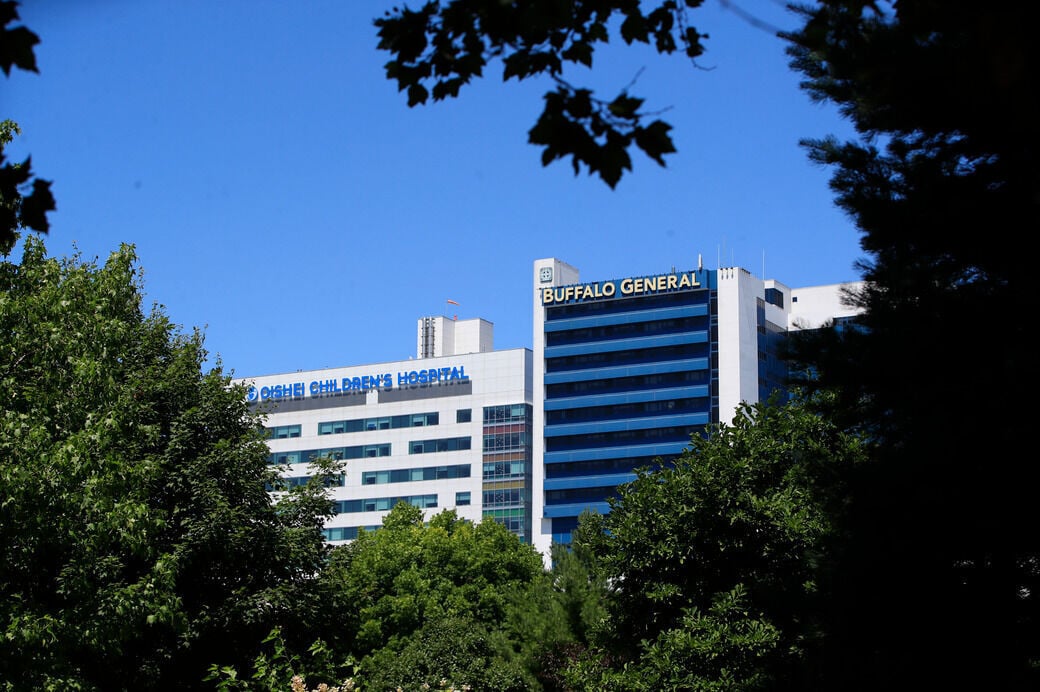
Kaleida's staffing crunch has been aggravated by the pandemic, the state's vaccine mandate and a patient volume increase stemming from an ongoing strike at Mercy Hospital.
On top of that, Kaleida has about 100 agency personnel under contract, 70 of whom it obtained through the state staffing agency contract referral. Nesselbush said the cost of those 70 agency workers, who each work 50-hour weeks, is about $400,000 per week. That means each of those workers, on average, costs Kaleida $5,714 a week, including agency fees.
And Kaleida will soon be negotiating new labor contracts with its 7,300 union workers whose contracts expire at the end of May.
Long-term fix
Despite the challenges, health care employers in Western New York also report some success in luring candidates.
ECMC has hired 215 new staff members, including 88 registered nurses, since Aug. 1, Cutler said.
Catholic Health, meanwhile, has hired 1,770 workers this year, including 353 nurses, Sullivan said. And Catholic Health has seen a significant uptick in applications since the Mercy strike ended.
Of the striking workers who opted to leave Catholic Health during the dispute, Sullivan said 30% to 40% of them are back or are returning. Some workers signed multi-week contracts with traveling nursing companies and are expected back at Catholic Health after their contractual obligation ends, he added.
A major problem in health care, however, is the increasing churn rate among employers.
Martin Boryszak, Catholic Health's senior vice president of acute care services, said the health system's churn rate typically ranged from 7% to 9%. But from January 2020 to current, the rate is closer to 13% to 15% – the result of eligible employees taking early retirement during the pandemic or venturing into travel nursing.
Those nurses who have opted to travel can earn anywhere from $4,000 to $8,000 a week, knowing a job will be available back home when they are ready to return, he said.
Sullivan and the workers' union, the Communications Workers of America, hope their contract can help bring people back.

The agreement union members will vote on this weekend is one that many health care officials in Western New York see as a significant deal that will shape future labor talks at other hospitals.
"I think that's what's led to the increased interest in Catholic Health and having that progressive staffing blueprint really signals to those that want to work in health care that maybe there is a way of doing this," Sullivan said.
While the contract could serve as a model in coming health care labor negotiations, officials know long-term changes are needed.
Hospital officials take aim, in particular, at a reimbursement model that doesn't match their amount of expenses, especially with wage growth.
And the pipeline of graduates and new employees hasn't been sufficient to fill the staffing gaps.
CWA Area Director Debora Hayes said the union had talks with Gov. Kathy Hochul about establishing a statewide commission that dives into the development of a health care workforce. Looking to put a dent in the 9,300 job openings for registered nurses in New York, Hochul on Thursday announced a scholarship program that will cover tuition for 1,000 students who enter a nursing program through the SUNY or CUNY system.
"We need to take a long, hard look at what we're doing to instill interest in younger people, get commitments from folks to go to college and learn a health care profession," Hayes said. "Then our job is going to continue to make sure that the environment of care and the work conditions inside the facilities are such that people feel really comfortable working there."
