



Bringing the next wave in radio to the masses is the aim of a local team of researchers from semiconductor giant Texas Instruments Inc. and the University of Arizona.
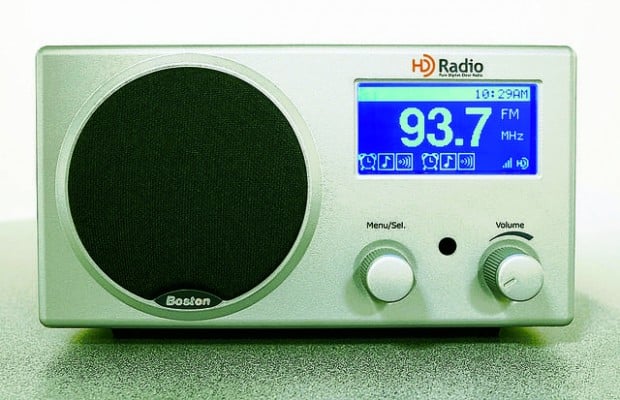
The Texas Instruments-UA team is working to shrink the size and lower the cost of components for High Definition radio, or HD radio, an emerging digital form of terrestrial radio that offers high-quality sound and greater use of radio bandwidth.
More than 1,300 radio stations nationwide, including at least four in the Tucson area, are broadcasting HD radio programming alongside their standard analog signals.
HD Radio can boost the fidelity of AM radio to that of FM radio and improve FM quality, as well as provide extra bandwidth for "multicasting" — essentially offering additional channels on the same frequency that can only be heard on HD radios.
People are also reading…
But to get HD radio, you need an HD receiver, which typically costs $200 to $500 for home sets. Some luxury-car brands, such as BMW, are starting to build HD radios into some models.
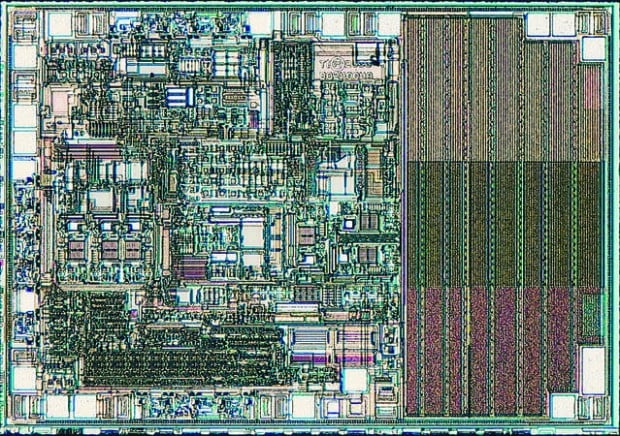
The aim of TI's research is to combine the silicon data-processing chips that allow HD receivers to receive both analog and digital signals, said Paul Prazak, director of analog front-end products for TI in Tucson.
That could lower manufacturing costs, which in turn could encourage more people to buy into HD radio, Prazak said.
"We're trying to take it to the next level in terms of performance, size, power and cost," he said.
Components that are smaller use less power and could allow HD radio receivers to be built into portable devices such as digital music players and wireless phones, Prazak said.
Accomplishing that would allow TI to tap into a "gargantuan" market and help spur HD radio into the mainstream, said Chriss Scherer, editor of Radio magazine in Overland Park, Kan.
"Right now, it's kind of a hard sell unless you want the cutting edge or are involved in it," Scherer said.
Broadcasters are still trying to figure out what to do with HD radio, and technology is just one part of the equation, he said.
"Anything that can be done overall to bring the cost of an HD-enabled receiver down to what a consumer considers an affordable level, that is all part of the puzzle."
The head of a market-research firm that has studied the HD radio market agreed that smaller, cheaper components will help the manufacturing side of HD radio, but said much needs to be done to persuade consumers to buy.
Dave Van Dyke, president of Bridge Ratings LLC in Glendale, Calif., cited a recent survey by his firm that showed that while 70 percent of consumers have heard of HD radio, less 5 percent know what it is and less than 1 percent use it.
"The real issue is ... the listeners don't feel any reason to get it," Van Dyke said.
Bridge Ratings has forecast that the number of HD users nationwide will grow from about 300,000 this year to 2.7 million by 2010.
To tap into that market, TI is sponsoring the work at the UA. It began in early 2006 and is led by Dongsheng (Brian) Ma, assistant professor of electrical and computer engineering, assisted by doctoral student Inshad Chowdhury.
Working with TI, the UA team is developing advanced semiconductor designs to mate the analog and digital processors now on separate silicon chips.
TI already is an industry leader in providing multiple-chipsets now used in HD radios marketed by companies such as Boston Acoustics, said Prazak, a UA alumnus.
Such chipsets basically consist of an "analog front-end" processor chip, a tuner chip and a digital signal processor, or DSP, chip, he said. HD radios can pick up analog signals and can pick up HD radio signals when available at around the same frequency
TI engineers have been working to combine the analog front-end component with the tuner component, Prazak said. The UA team will further that work and optimize the dual component for mating with a digital processor, he said.
That involves a whole new system architecture, Ma said.
"We have to design from the system level down to the circuit level," Ma said. "This is quite interesting technology because it's brand-new, so everything we find is something new."
But the work still faces some major challenges.
Digital processors put out a lot of "noise" that can upset analog signal processing, so researchers have to find a way to isolate those effects, Prazak and Ma said.
Power management also is an issue, as analog and digital components have different power needs, Prazak said.
Other electronics companies, including Samsung and NXP Semiconductors, formerly Philips, are working on some of the same HD radio technology.
The industry is sharing some fundamental research through Connection One, a National Science Foundation industry-university cooperative, Prazak said.
The TI-UA team presented some of its work last week at a National Science Foundation meeting in San Diego last week.